
How to invest in ETFs - A beginner's guide [2025]

Starting your investment journey or looking to add to your portfolio? Exchange-traded funds (ETFs) are often considered an accessible entry point into investing, and this is your guide to the essentials. We’ll break down how ETFs work, how to get started, and what to look for when comparing them.
Here are some stats to show the serious traction ETFs have gained:
- Roughly 2 million Australians now hold ETFs. That's about 20% of all investors.
- 40% of Gen Z and 34% of Millennials already use ETFs.
- There is $246b sitting in Australian ETFs as of late 2024.[1]
What is an ETF?
Think of an exchange-traded fund (ETF) as a pre-built investment portfolio that trades on the stock market just like a stock. Instead of picking individual companies and building a balanced portfolio yourself, professional fund managers have done the work for you.
You might buy one ETF that includes the top 300 Australian companies, or another that tracks the largest 500 U.S. companies.
ETFs come in several types, here's a few popular options:
- Stock ETFs follow sharemarket indices or focus on specific industries
- Bond ETFs provide exposure to government or corporate debt
- Commodity ETFs track assets like gold, silver, oil, or other resources
- Currency ETFs follow foreign exchange rates
The major advantage over individual stock picking? Instant diversification. Rather than concentrating risk in one or two companies, you're spreading it across hundreds of investments with a single purchase.
What's the difference between ETFs and managed funds?
While both ETFs and managed funds pool investor money, there are important differences if you’re a beginner:
Feature | ETFs | Managed Funds |
|---|---|---|
Trading | Buy/sell anytime during market hours | Orders processed once daily |
Fees | Generally lower management fees | Often higher fees |
Minimum investment | Low minimum (fractional shares available) | Often $500-$1,000 minimum |
Transparency | Holdings disclosed daily | Holdings disclosed monthly/quarterly |
Tax efficiency | Generally more tax-efficient structure | May generate more taxable events |
For many beginners, ETFs offer advantages due to their flexibility, lower costs and ability to start with small amounts.
Steps on how to invest in ETFs in Australia
As a beginner investor, you might be asking yourself, how do I invest in ETFs? There's a pretty clear process to get started. Let’s break it into steps:
1. Open an investing account
To buy ETFs, you need access to the sharemarket. This means setting up an account with a platform that lets you trade on the ASX (Australian Securities Exchange) or international markets (a popular one is the U.S. market, including exchanges like the NYSE and Nasdaq).
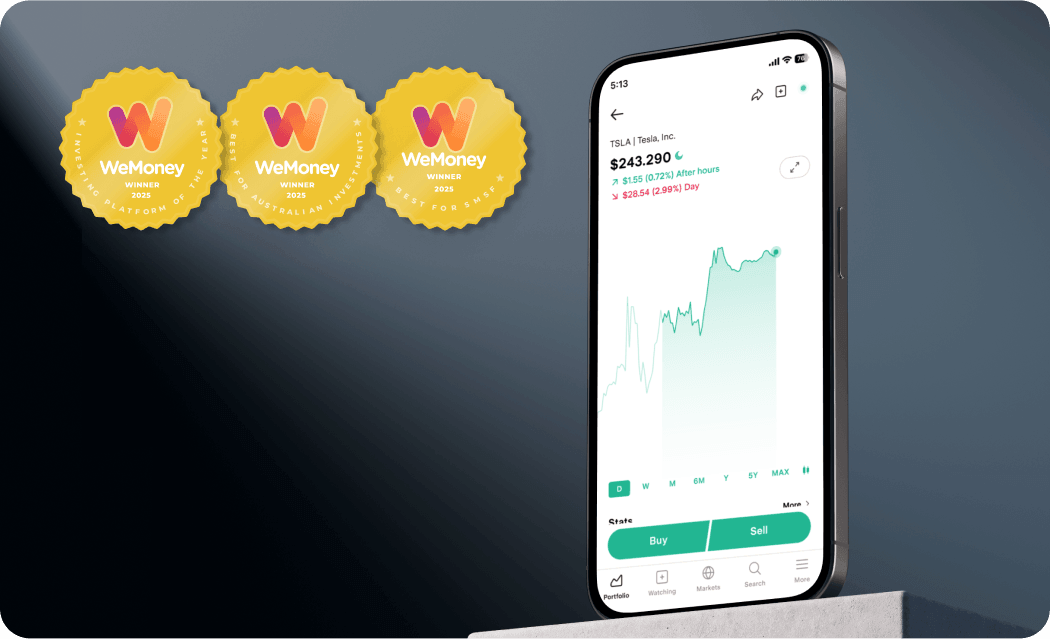
Some platforms, like Stake, provide both Australian and U.S. markets in one account. That way you diversify your investments across different markets without needing to manage multiple platforms.
Sign up in minutes and get access to a CHESS-sponsored platform, where your ETFs are held in your own name.
2. Fund your account
Once you're set up, you'll need to deposit funds to invest. Most platforms support bank transfers, debit and credit cards, or even Apple/Google Pay.
Many platforms let you start investing with small amounts, but the minimum investment may also depend on which market you're accessing.
3. Research ETFs that match your goals
This is where many investors start comparing options based on their goals. Look for ETFs that align with your investment objectives.
Want broad market exposure? Interested in specific sectors? Looking to go global?
Use your platform's search function to look up ETFs by name or ticker symbol. Take time to understand what each one tracks and whether it fits your strategy. Always do your own research before investing.
4. Choose an order type and buy
When you're ready to invest, select how to place your order:
- Market orders execute immediately at the current price
- Limit orders let you set the maximum price you're willing to pay (lower than the current price)
- Stop orders help manage risk by setting price triggers
Some beginners prefer market orders during trading hours due to their simplicity, but you should consider your own buying strategy.
You might also want to consider dollar cost averaging – investing a set amount regularly instead of trying to time the market.
5. Keep an eye on your investment
Once you've purchased your ETF, you can track performance through your platform. Remember, ETF investing is typically a long-term strategy. You'll receive dividend payments and sometimes voting rights for underlying companies.
Stay informed on how the asset is performing but don't feel the need to check the charts daily.
✅ Explore our list of all the available Australian stocks and ETFs→
How much do you need to invest in an ETF?
ETF investing is more accessible than many think.
With fractional shares, you can start with as little as US$10 on platforms like Stake. This means you don't need to buy a whole ETF unit – you can purchase a portion based on your available funds.
Monthly investment strategy
Instead of investing a large lump sum, many beginners benefit from regular monthly contributions – whether it's $500, $100 or whatever fits your budget. As mentioned above, this approach is called dollar cost averaging and helps smooth out market volatility in the long term.
Risk management through position sizing
An important principle: consider your financial situation before investing. You should only invest funds you don't expect to need in the short term. Many people start by allocating 5-10% of their savings to ETFs or utilise the 50 30 20 rule, then gradually increase as they become more comfortable.
Your monthly ETF investment should align with your budget and goals, but consistency typically beats trying to time the market perfectly.
How to choose your first ETF
Selecting your first ETF doesn't need to be overwhelming. Just focus on the basics. Here's a straightforward approach:
Start broad, then get specific
A typical way to start is with an ETF that provides broad market exposure rather than narrow sector focus. Consider ETFs that track:
- ASX 200 for Australian market exposure
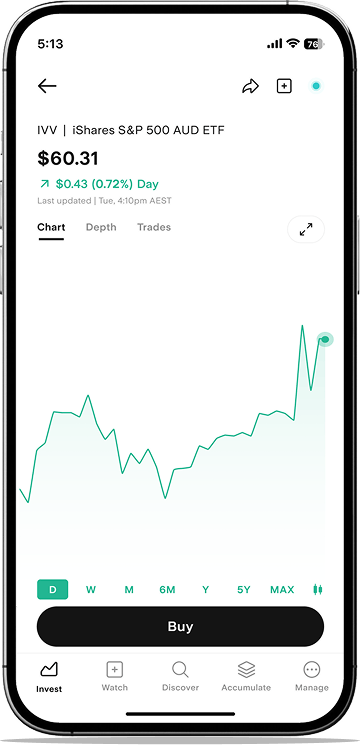
- S&P 500 for U.S. market exposure
- Global indices for worldwide diversification
- Multiple asset classes for broader diversification with an all-in-one approach
Key factors to weigh up
Expense ratio: This is the annual fee the ETF charges. Lower is generally better for long-term returns. Look for expense ratios under 0.5% for broad market ETFs.
Tracking difference: How closely does the ETF follow its benchmark index? Smaller differences indicate better fund management.
Liquidity: Popular ETFs (with high trading volumes) are easier to buy and sell without affecting price.
Geographic diversification: Decide whether you want domestic, international or global exposure based on your diversification goals.
Questions to consider
Before selecting an ETF, evaluate:
- What are you trying to achieve? (Growth, income, risk diversification)
- How much risk can you tolerate?
- When will you need access to this money?
- Do you want Australian or international exposure, or both?
How to choose which ETF to invest in ultimately comes down to matching these factors with the fund's investment strategy.
✅ Related: Discover what are the best ETFs to pair together→
What are the most popular ETFs in Australia?
It can be informative to know what ETFs are commonly traded by other investors. Popular ETFs among Australian investors include:
Australian market ETFs
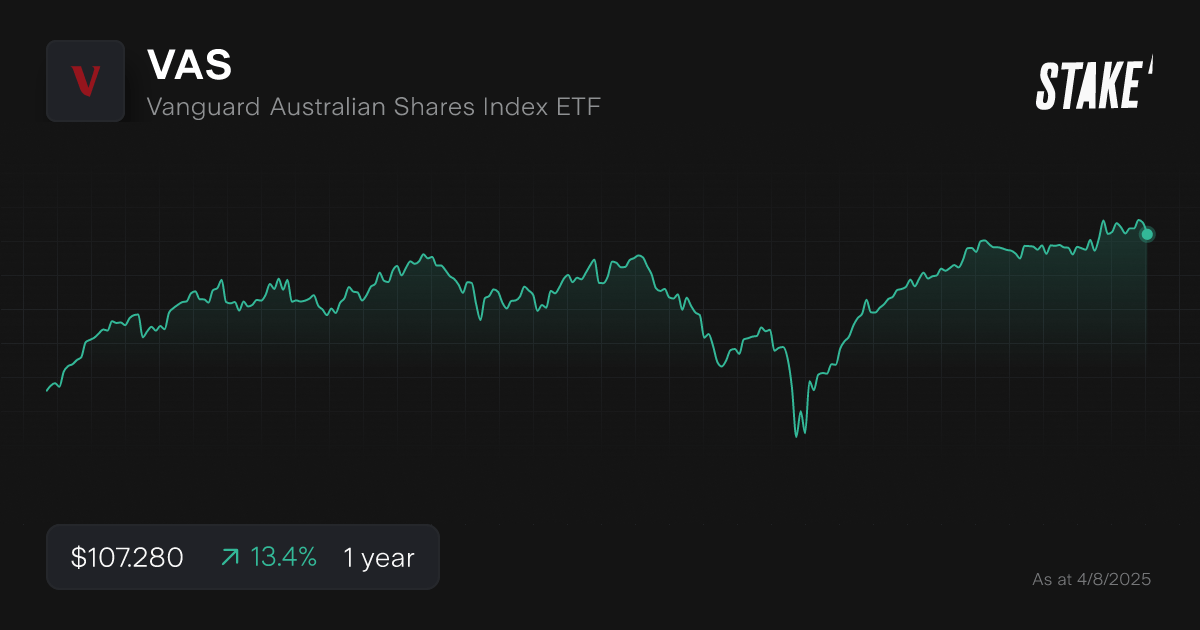
Vanguard Australian Shares Index ETF ($VAS)
Australia's largest ETF, with over $20b in assets under management. Tracks the ASX 300, providing exposure to Australia's largest companies. ETFs like $VAS are popular thanks to their low 0.07% expense ratio and broad diversification.
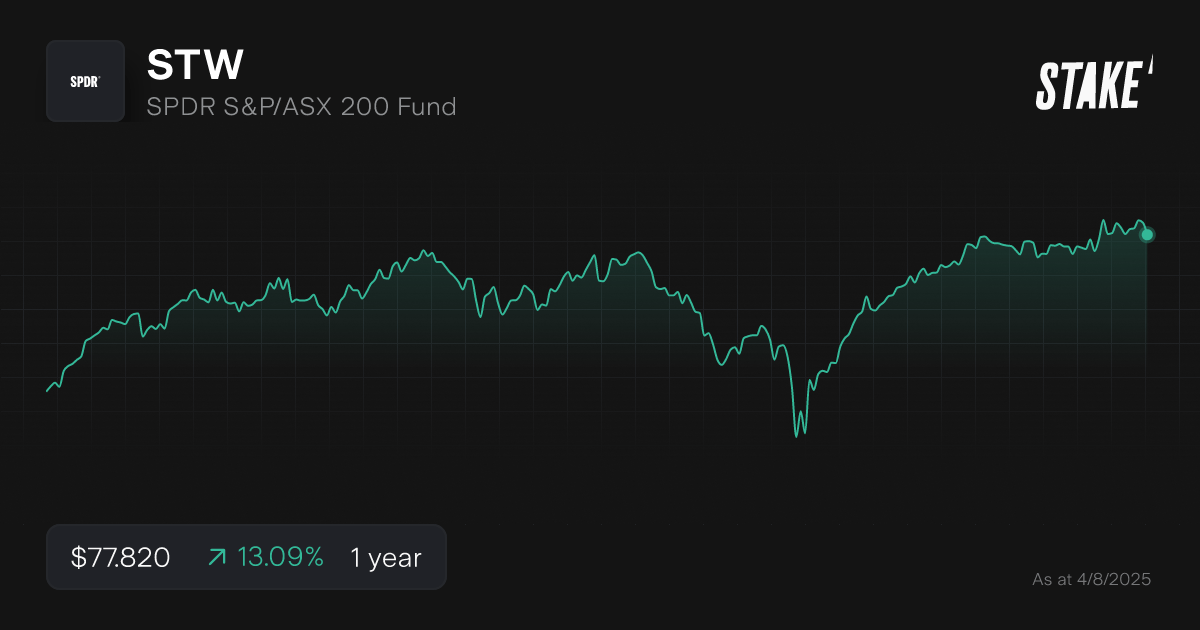
SPDR S&P/ASX 200 ETF ($STW)
Follows the ASX 200 index, focusing on Australia's top 200 companies by market capitalisation.
International ETFs
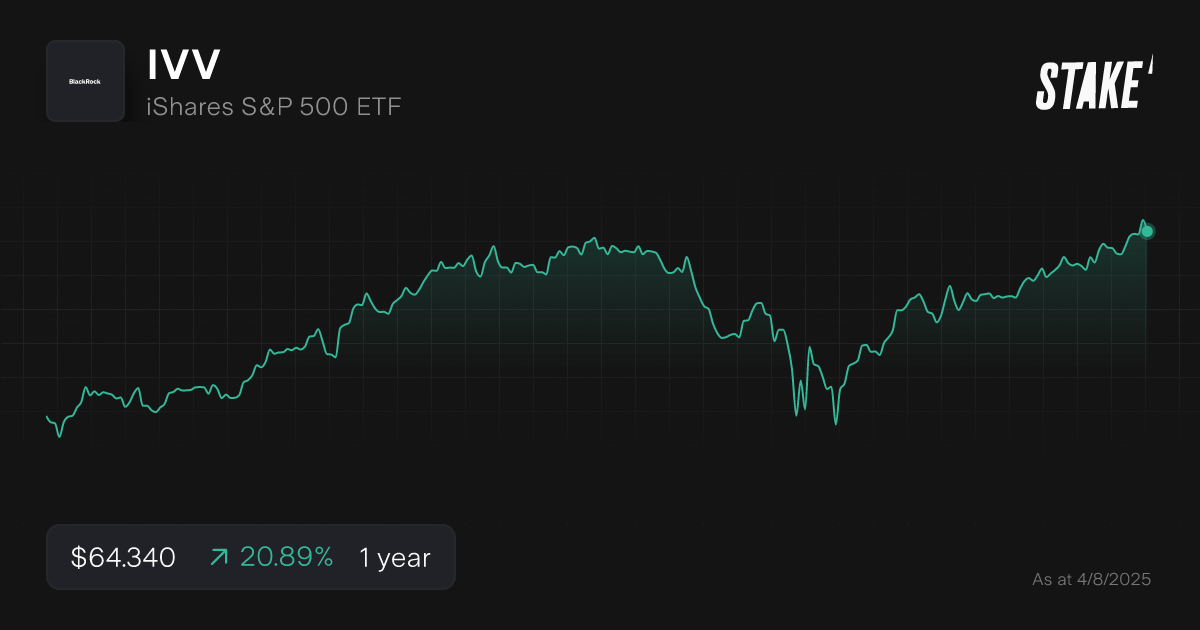
iShares Core S&P 500 ETF ($IVV)
Provides exposure to the 500 largest U.S. companies. With approximately $8.3b in assets under management and a low 0.04% expense ratio, it's one of the commonly chosen options for Australians seeking U.S. sharemarket access.
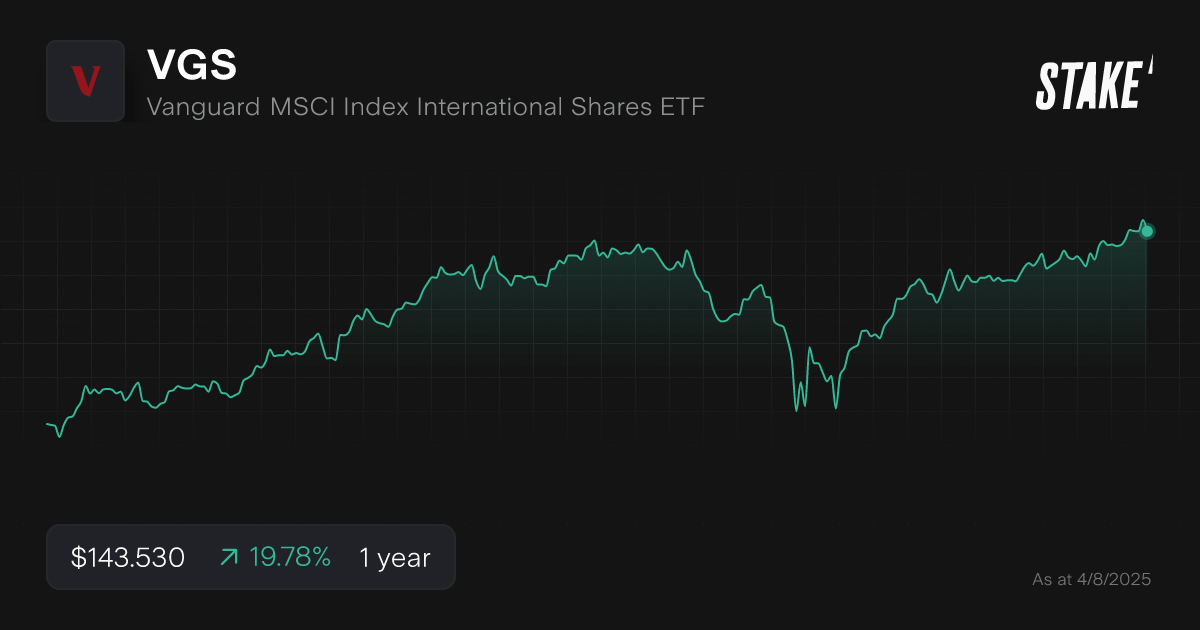
Vanguard MSCI Index International Shares ETF ($VGS)
The international ETF from Vanguard provides global diversification through 1,300 companies from developed countries like U.S., Japan, Canada and more (excludes Australia).
Sector-specific options
- Healthcare ETFs: Focus on pharmaceutical and healthcare companies for exposure to medical innovation and biotechnology, like Betashares Global Healthcare ETF ($DRUG).
Bond ETFs
These track various bond indices and can provide income and portfolio stability. Popular options include Vanguard Australian Government Bond Index ETF ($VGB) and iShares Core Composite Bond ETF ($IAF).
🔥 Related: Discover which are the best performing ETFs on the ASX→
Most actively traded ASX ETFs on Stake in 2025
Ticker | ETF Name | Share Price | AUM |
IVV | iShares S&P 500 ETF | $64.34 | $11b |
VAS | Vanguard Australian Shares Index ETF | $107.28 | $21b |
VGS | Vanguard MSCI Index International Shares ETF | $143.53 | $12b |
NDQ | BetaShares NASDAQ 100 ETF | $51.98 | $6b |
DHHF | Betashares Diversified All Growth ETF | $38.09 | $800m |
This data above shows real investor behaviour on the Stake platform, priced as of 4 August 2025. The stats give you an idea of the ETFs Stake investors are most actively buying and selling.
What do the trading volumes of these ETFs indicate? A broad appeal for different strategies – from local market exposure ($VAS) to international diversification ($IVV, $VGS) and growth-focused investing ($NDQ, $VDHG).
These funds are popular because they offer broad market exposure with low fees. They rank among the most traded securities on the ASX in general.
ETF comparison: What's the main difference between popular ETFs?
On practical differences, here's how major ETFs compare:
ETF | What it tracks | Expense Ratio | Commonly used for |
ASX 300 (Australian companies) | 0.07% | Local market exposure, index tracking | |
S&P 500 (U.S. companies) | 0.04% | U.S. market exposure, index tracking | |
Nasdaq 100 (U.S. tech focus) | 0.48% | Technology sector exposure, growth focus |
The main differences include:
- Geographic focus: Australian vs international markets
- Sector concentration: Broad market vs specific sectors
- Costs: Expense ratios can vary significantly
- Currency exposure: Australian dollar vs foreign currency risk
Beginners often start with index funds ETFs like $VAS or $IVV before exploring sector-specific options.
Are ETFs a risky investment?
All investments carry risk, and ETFs are no exception. But understanding the risk profile can help you make informed decisions.
ETF risk vs individual stocks
Because they’re more diversified, ETFs may present lower risk than individual stocks. If you own shares in one company and it underperforms, you could lose a significant portion of your investment. An ETF holds hundreds of companies, so poor performers are typically balanced by others that perform well.
Types of risk to understand
Market risk: ETFs generally move with the broader market. When the sharemarket falls, your ETF will likely fall too.
Currency risk: International ETFs expose you to currency fluctuations between the Australian dollar and foreign currencies.
Sector risk: ETFs focused on specific industries can be more volatile than broad market funds.
Leveraged ETFs: Higher risk category
Some ETFs use leverage to amplify returns, but they also amplify losses. These can behave more like speculative investments than traditional investing. Generally, they aren't suitable for beginners.
The key is matching your ETF choices with your risk tolerance and investment timeline. Long-term investors can typically weather more volatility than those who might need their funds within a year or two.
Investment strategies for ETF beginners
A strategy helps you invest without emotion and keeps you focused on long-term objectives.
Dollar cost averaging (ideal for beginners)
With dollar cost averaging, you invest a fixed amount regularly, regardless of market conditions. Like investing $300 every month into your chosen ETFs. Here's why many beginners like it:
- Eliminates the guesswork of market timing
- Benefits from market volatility over time
- Creates a disciplined investing habit
- Works well with automated investing
🎓 Read more about how dollar cost averaging works.
Buy and hold
A passive approach where you purchase ETFs and hold them for years. It's based on the principle that markets generally trend upward over time, despite any short-term volatility.
Rebalancing
As your ETFs grow at different rates, the balance might drift from your original plan. Rebalancing means adjusting your holdings to return to your target allocation.
Most beginners find that dollar cost averaging, combined with a buy-and-hold approach, provides a balance of simplicity and effectiveness they’re comfortable with.
Pros and cons of investing in ETFs
Understand both sides and have realistic expectations:
Pros | Cons |
|---|---|
Instant diversification across multiple investments | Market risk exposure – your investment will fluctuate |
Lower costs compared to most managed funds | No guarantees on returns or capital protection |
Easy to trade during market hours | Currency risk with international ETFs |
Low minimum investment with fractional shares on U.S. markets | Requires basic investment knowledge to choose appropriately |
Professional management of the underlying portfolio | |
Transparency in holdings and performance |
|
Most beginners generally feel the advantages outweigh the disadvantages, particularly if you’re taking a long-term approach.
Getting started with ETFs on Stake
Some platforms provide features that may benefit ETF investors.
For example, platforms like Stake offer access to both Australian and U.S. markets. That allows you to build a diversified ETF portfolio without managing multiple accounts.
With over 700,000 customers as of mid 2025, it's one of several platforms designed to make investing accessible.
Features that some ETF investors find useful include:
- CHESS-sponsored platform so your ETF shares are held under your own name and HIN number
- Access to popular Australian and U.S. ETFs
- Investment return calculator to help plan your investment goals and project potential returns
- Educational resources to support your investing journey
Different platforms may suit different investors depending on their individual needs and circumstances.
🔥 Use our stock calculator to see what past investments in ETFs would be worth today→
Sign up in minutes and get access to a CHESS-sponsored platform, where your ETFs are held in your own name.
FAQs from beginners on ETFs
Disclaimer
The information contained above does not constitute financial product advice nor a recommendation to invest in any of the securities listed. Past performance is not a reliable indicator of future performance. When you invest, your capital is at risk. You should consider your own investment objectives, financial situation and particular needs. The value of your investments can go down as well as up and you may receive back less than your original investment. As always, do your own research and consider seeking appropriate financial advice before investing.
Any advice provided by Stake is of general nature only and does not take into account your specific circumstances. Trading and volume data from the Stake investing platform is for reference purposes only, the investment choices of others may not be appropriate for your needs and is not a reliable indicator of performance.
$3 brokerage fee only applies to trades up to $30k in value (USD for Wall St trades and AUD for ASX trades). Please refer to hellostake.com/pricing for other fees that are applicable.
Article sources
[1] ASX Australian ETF Market Data 2024
Subscribe
By subscribing, you agree to our Privacy Policy.