
Top 8 ASX biotech stocks to watch in 2026
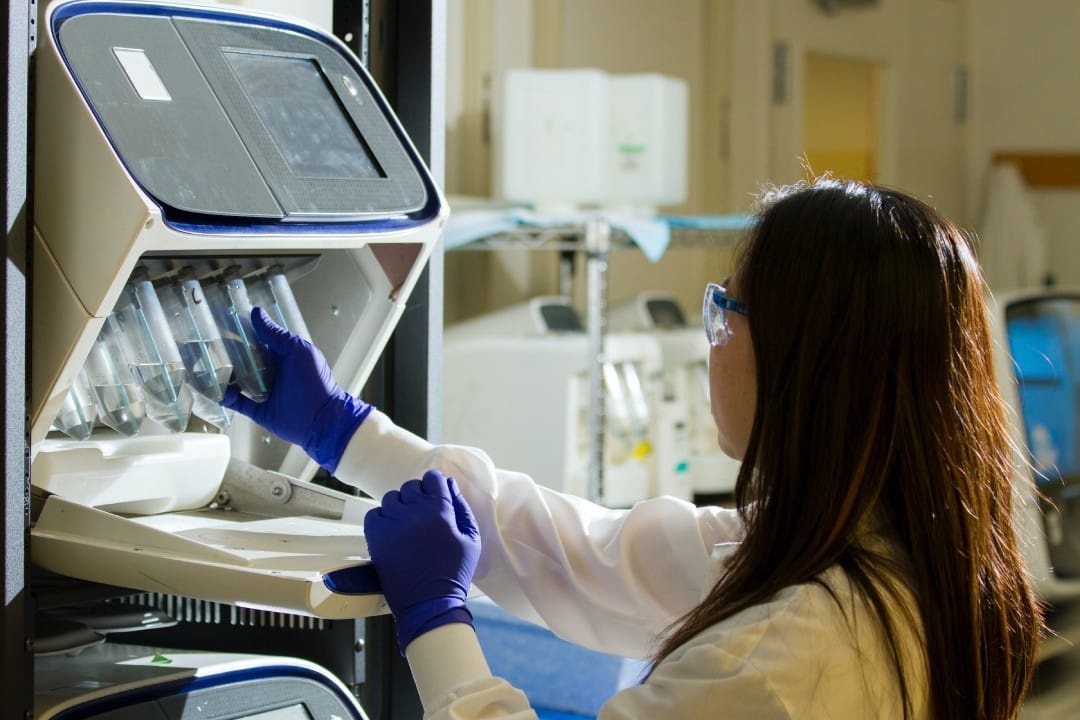
A failed clinical trial can strip most of a biotech's value before any drug reaches market. Companies with approved products face pricing pressure and patent timelines instead.
Biotech stocks on the ASX develop treatments through biological processes – therapies derived from plasma, living cells or RNA sequences, alongside diagnostics that use radioactive isotopes to image and treat tumours. The eight companies here take meaningfully different approaches: CSL Limited ($CSL) works across plasma medicine, influenza vaccines and nephrology, while Telix Pharmaceuticals Limited ($TLX) and Clarity Pharmaceuticals ($CU6) both pursue a radiopharmaceutical path to cancer detection and treatment.
How we built this list: We selected these companies based on their industry and ordered them by market capitalisation. Prices are updated daily, and the list and supporting content are reviewed roughly every quarter. All data is sourced from Stake. This list isn't a recommendation and isn't ordered by suitability.
Company Name | Ticker | Share Price | Market Cap | In Watchlists |
|---|---|---|---|---|
CSL Limited | $178.68 | $85.75B | 16141 | |
Telix Pharmaceuticals Limited | $15.41 | $5.24B | 4863 | |
Mesoblast Limited | $1.97 | $2.55B | 2396 | |
PYC Therapeutics Limited | $2.68 | $2.64B | 447 | |
Clarity Pharmaceuticals | $2.02 | $753.6M | 1816 | |
Cogstate | $3.31 | $569.3M | 440 | |
AVITA Medical | $3.77 | $588.0M | 710 | |
Racura Oncology | $1.86 | $363.7M | 1023 |
Past performance is not a reliable indicator of future performance.
Source: Stake market data. Figures in A$. Data updated as of 6 October 2026.
✅ Learn more: Top 10 pharma stocks to watch in 2026→
1. CSL Limited ($CSL)

CSL Limited (CSL) share price over the last year: started at A$205.72, ended at A$178.68, a change of −13.1%. Range over the period: high A$220.70, low A$92.24. Source: Stake market data. Past performance is not a reliable indicator of future performance.
Price: $178.68 · Daily: 1.0% · Market cap: $85.75B · Sector: Healthcare · Industry: Pharmaceuticals
Plasma medicine sits at the centre of CSL Limited's ($CSL) business. CSL Behring, the company's core segment, manufactures plasma-derived therapies, recombinants and gene therapies for rare and serious diseases. CSL Plasma backs that work by running approximately 325 collection centres across the United States, Europe and China.
CSL Seqirus handles influenza vaccines and pandemic preparedness services for governments. CSL Vifor covers iron deficiency and kidney-related conditions. Gordon Naylor leads 32,698 employees across operations in six countries, including Australia, Germany and China.
2. Telix Pharmaceuticals Limited ($TLX)

Telix Pharmaceuticals Limited (TLX) share price over the last year: started at A$15.41, ended at A$15.41, a change of +0.0%. Range over the period: high A$17.85, low A$8.63. Source: Stake market data. Past performance is not a reliable indicator of future performance.
Price: $15.41 · Daily: -0.9% · Market cap: $5.24B · Sector: Healthcare · Industry: Biotech
Radiopharmaceuticals combine radioactive isotopes with targeting molecules to find cancer cells in the body. Telix Pharmaceuticals Limited ($TLX) develops these for imaging and for treatment – one side of the business aims to detect tumours, the other to deliver radiation directly to them. Its pipeline includes Illuccix (68Ga-PSMA-11) alongside several clinical and commercial-stage products targeting urologic, neurologic, musculoskeletal and hematological cancers.
It's structured across three segments: Therapeutics, Precision Medicine and Telix Manufacturing Solutions. Precision Medicine focuses on diagnostic imaging and also covers MedTech and International operations. Telix Manufacturing Solutions runs a global network of facilities designed to supply patient doses. Around 1,120 people work across $TLX under CEO Chris Behrenbruch.
3. Mesoblast Limited ($MSB)

Mesoblast Limited (MSB) share price over the last year: started at A$2.92, ended at A$1.97, a change of −32.7%. Range over the period: high A$3.07, low A$1.89. Source: Stake market data. Past performance is not a reliable indicator of future performance.
Price: $1.97 · Daily: -3.2% · Market cap: $2.55B · Sector: Healthcare · Industry: Biotech
Allogeneic cellular medicine – treatments derived from bone marrow-sourced mesenchymal stromal cells and made available off-the-shelf rather than customised per patient – is the focus of Mesoblast Limited ($MSB). Its approved therapy, Ryoncil, targets severe inflammatory conditions, while a second candidate, Revascor, is in late-stage development for chronic heart failure and chronic low back pain caused by degenerative disc disease.
Licensees in Japan and Europe handle commercialisation of both products in those markets. $MSB's team of 81 people, led by CEO Silviu Itescu, runs the underlying research and pipeline development.
4. PYC Therapeutics Limited ($PYC)

PYC Therapeutics Limited (PYC) share price over the last year: started at A$1.18, ended at A$2.68, a change of +126.8%. Range over the period: high A$2.91, low A$1.07. Source: Stake market data. Past performance is not a reliable indicator of future performance.
Price: $2.68 · Daily: 5.1% · Market cap: $2.64B · Sector: Healthcare · Industry: Biotech
PYC Therapeutics Limited ($PYC) is a clinical-stage company building RNA therapies for patients with inherited genetic diseases. Its proprietary delivery platform is designed to improve how precision RNA medicines reach their targets inside the body – the company says this enhances their potency compared to conventional approaches. The programs it's advancing target monogenic diseases, conditions caused by a fault in a single gene, which the company regards as having a higher likelihood of success in clinical development.
Its pipeline covers four programs: VP-001 for Retinitis Pigmentosa type 11, a degenerative eye disease; PYC-003 for Polycystic Kidney Disease; PYC-001 for Autosomal Dominant Optic Atrophy; and PYC-002 for Phelan-McDermid Syndrome. Because $PYC is pre-revenue and still in clinical stages, its progress depends on trial outcomes rather than commercial sales.
5. Clarity Pharmaceuticals ($CU6)

Clarity Pharmaceuticals (CU6) share price over the last year: started at A$5.36, ended at A$2.02, a change of −62.3%. Range over the period: high A$5.70, low A$1.82. Source: Stake market data. Past performance is not a reliable indicator of future performance.
Price: $2.02 · Daily: -3.3% · Market cap: $753.6M · Sector: Healthcare · Industry: Biotech
Clarity Pharmaceuticals ($CU6) is a clinical-stage company focused on copper theranostics – a method of using copper isotopes to both detect and treat tumours within a single compound. Its SAR Technology Platform underpins three products in active clinical development.
The lead candidate, SAR-bisPSMA, targets prostate cancer that expresses PSMA (prostate-specific membrane antigen), with three trials running: the SECuRE theranostic study and two Phase III diagnostic trials, CLARIFY and AMPLIFY. SARTATE addresses cancers expressing SSTR2 (somatostatin receptor 2), while SAR-Bombesin is designed to identify patients with GRPr (gastrin releasing peptide receptor) positive tumours, including in breast and prostate cancer.
6. CogState ($CGS)

Cogstate (CGS) share price over the last year: started at A$2.44, ended at A$3.31, a change of +35.7%. Range over the period: high A$3.43, low A$2.06. Source: Stake market data. Past performance is not a reliable indicator of future performance.
Price: $3.31 · Daily: -0.9% · Market cap: $569.3M · Sector: Healthcare · Industry: Biotech
Cogstate Limited ($CGS) builds digital tools that measure brain health – not as a consumer app, but as infrastructure for the pharmaceutical and biotech industry. Its assessments are used inside clinical trials to track how diseases and experimental treatments affect cognitive function in patients, giving drug developers a quantifiable read on what their compounds are actually doing to the brain.
The company's Healthcare segment is developing the same technology for use by primary care physicians and hospitals to detect cognitive decline earlier. Its CEO is Brad O'Connor.
That dual-track model – clinical trials revenue today, healthcare screening as the longer-term avenue – sits at the intersection of neuroscience and digital diagnostics, which places $CGS in a different corner of biotech from the plasma or radiopharmaceutical names elsewhere in this list.
7. AVITA Medical ($AVH)

AVITA Medical (AVH) share price over the last year: started at A$1.62, ended at A$3.77, a change of +132.7%. Range over the period: high A$3.77, low A$1.01. Source: Stake market data. Past performance is not a reliable indicator of future performance.
Price: $3.77 · Daily: 2.7% · Market cap: $588.0M · Sector: Healthcare · Industry: Biotech
AVITA Medical ($AVH) develops wound care technology built around a patient's own biology. Its RECELL system takes a small skin sample and processes it into a cell suspension – which the company calls Spray-On Skin – that clinicians apply directly at the point of care. The technology is designed to support recovery from burns, traumatic injuries and surgical repairs.
Alongside RECELL, AVITA Medical ($AVH) markets PermeaDerm – a biosynthetic wound matrix distributed in the U.S. under multi-year agreements with Stedical – and Cohealyx, which together cover wound bed preparation through to definitive closure. CEO Cary Vance leads a team of 87 employees across the three-product business.
8. Racura Oncology ($RAC)

Racura Oncology (RAC) share price over the last year: started at A$4.22, ended at A$1.86, a change of −56.0%. Range over the period: high A$4.70, low A$1.86. Source: Stake market data. Past performance is not a reliable indicator of future performance.
Price: $1.86 · Daily: -3.9% · Market cap: $363.7M · Sector: Healthcare · Industry: Biotech
Racura Oncology ($RAC), formerly Race Oncology Limited, is a clinical-stage biopharmaceutical company developing treatments for cancer. Its lead compound, RCDS1, works by binding to DNA and RNA structures inside cancer cells, which suppresses a growth regulator called MYC.
$RAC is advancing a formulation of RCDS1, called RC220, across several clinical programs. The most advanced is a Phase III trial in acute myeloid leukaemia (AML), a blood cancer. Two Phase I programs are also underway: one targeting non-small cell lung cancer driven by epidermal growth factor receptor (EGFR) mutations, and another pairing RC220 with the chemotherapy drug doxorubicin. In that combination study, the company is focused on both enhanced tumour-fighting activity and cardioprotection for solid tumour patients.
➡️ Top 10 ASX blue chip shares to watch in 2026→
Common questions
How do I invest in ASX biotech stocks in Australia?
All eight companies in this list trade on the ASX, so you can buy shares directly through a share trading platform by searching the ticker and placing an order. Shares settle through CHESS, the ASX's central clearing system. Some investors access the sector through a biotech-focused ETF rather than picking individual stocks, though that's a separate product with its own fee structure and constituent mix.
What are the key risks of ASX biotech stocks?
Clinical trial failure is the sharpest risk – a drug that misses its endpoints can dramatically affect a company's value, particularly for those built around a single lead asset. Regulatory approval adds another layer of uncertainty, since strong trial data doesn't guarantee a therapy reaches market. Pre-revenue companies face cash burn risk, often needing to raise capital to fund ongoing development. Many of these companies generate revenue or run trials in the U.S., so movements in the AUD/USD rate can affect reported results.
What's the difference between clinical-stage and commercial-stage biotech companies?
A clinical-stage company is still running trials – its value rests primarily on pipeline data and the prospect of regulatory approval, not on product revenue. A commercial-stage company has approved therapies generating sales, which gives it a more visible financial base, though pipeline and competitive risks don't disappear. This list covers both ends of that spectrum, from $CSL's multiple approved product lines to companies like $PYC and $CU6 that are still advancing their lead programs through clinical development.
More resources
✅ Top 10 medical device stocks to watch in 2026→
Disclaimer
Past performance is not a reliable indicator of future performance. When you invest, your capital is at risk. You should consider your own investment objectives, financial situation, and particular needs before making an investment decision. The value of your investments can go down as well as up and you may receive back less than your original investment. As always, do your own research and consider seeking appropriate financial advice before investing.
This is not personal financial advice nor a recommendation to invest in the securities listed. Any advice provided by Stake is of general nature only and does not take into account your specific circumstances. Trading and volume data from the Stake investing platform is for reference purposes only, the investment choices of others may not be appropriate for your needs and is not a reliable indicator of performance.
Please refer to hellostake.com/pricing for the fees that apply. When you trade securities priced in another currency, currency conversion fees may apply and movements in the exchange rate may affect your returns.

Stake Desk
The freshest market insights
This article combines AI and human review from our analysts to bring you accurate, informative investing content at speed. For questions or suggestions, contact stakedesk@stake.com.au.
Subscribe
By subscribing, you agree to our Privacy Policy.