
Top 10 AI stocks to watch in 2026
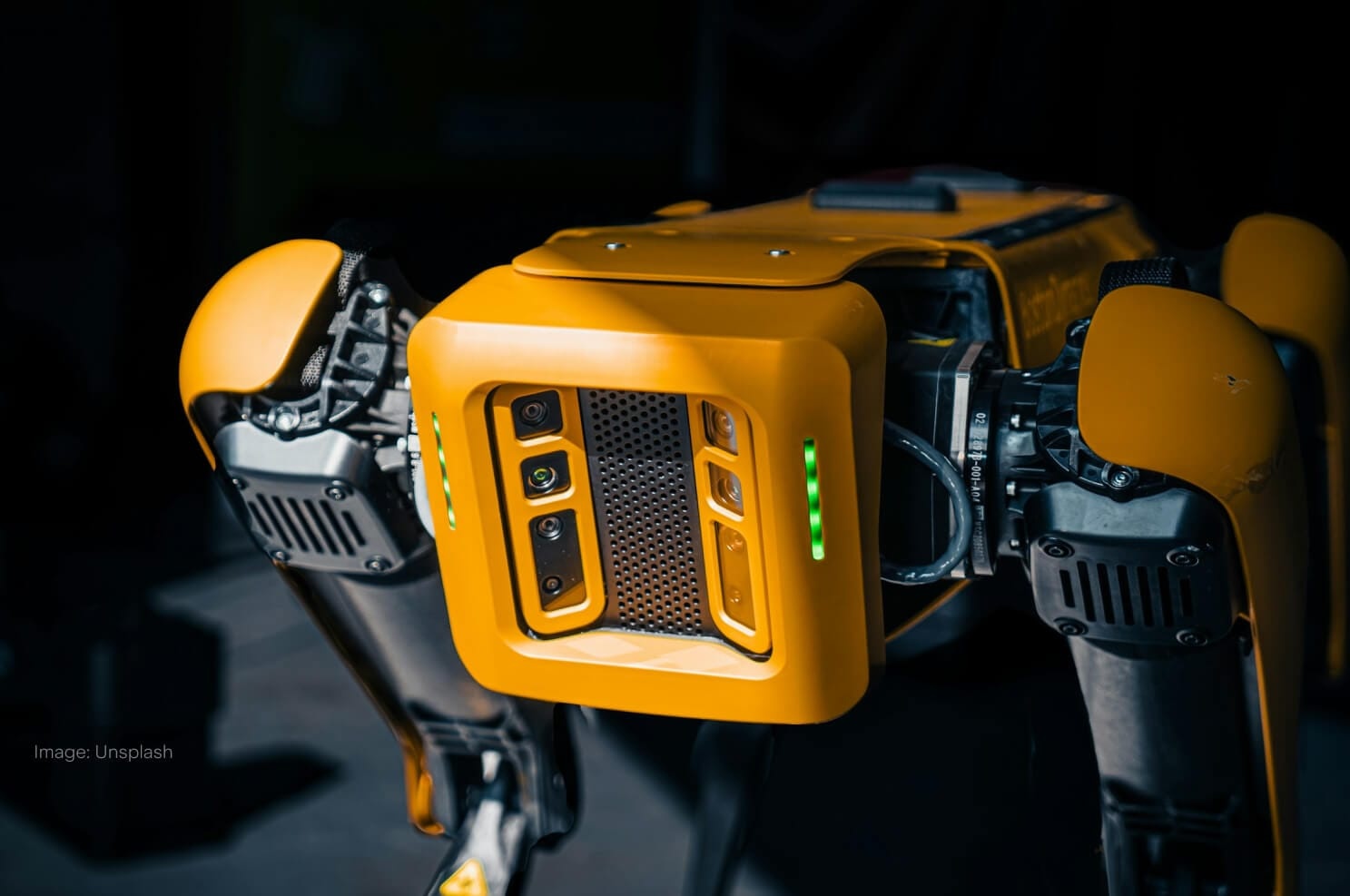
AI's supply chain runs from chip fabrication plants to voice assistants fielding drive-thru orders. Hardware makers face export controls and supply constraints that software platforms generally don't.
Some of these ten U.S.-listed companies build the chips and infrastructure that AI runs on; others put AI to work through cloud services, enterprise software and consumer products. Scale varies widely too: NVIDIA Corporation ($NVDA) carries the largest market cap on this list at $5.32T – more than 1,700 times that of SoundHound AI ($SOUN) at $3.10B.
How we built this list: We selected these companies based on their industry and ordered them by market capitalisation. Prices are updated daily, and the list and supporting content are reviewed roughly every quarter. All data is sourced from Stake. This list isn't a recommendation and isn't ordered by suitability.
Company Name | Ticker | Share Price | Market Cap | In Watchlists |
|---|---|---|---|---|
NVIDIA | $239.24 | $5.76T | 462607 | |
Apple | $333.63 | $4.86T | 472798 | |
Alphabet | $347.68 | $4.22T | 52105 | |
Microsoft | $529.30 | $3.90T | 70404 | |
Taiwan Semiconductor Manufacturing Company | $482.30 | $2.11T | 28031 | |
Meta Platforms | $738.88 | $1.89T | 445992 | |
Tesla | $380.68 | $1.50T | 493402 | |
AMD | $649.42 | $1.03T | 50531 | |
Palantir Technologies | $192.07 | $455.14B | 432056 | |
SoundHound AI | $5.72 | $2.86B | 5065 |
Past performance is not a reliable indicator of future performance.
Source: Stake market data. Figures in US$. Data updated as of 6 October 2026.
✅ Learn more: Top 10 next-gen tech ETFs to watch in 2026→
1. NVIDIA ($NVDA)

NVIDIA (NVDA) share price over the last year: started at US$185.54, ended at US$239.24, a change of +28.9%. Range over the period: high US$239.24, low US$165.17. Source: Stake market data. Past performance is not a reliable indicator of future performance.
Price: US$239.24 · Daily: 0.1% · Market cap: US$5.76T · Sector: Technology · Industry: Semiconductors
NVIDIA Corporation ($NVDA) designs graphics processing units (GPUs) – chips built to accelerate the complex calculations that data centre and AI workloads demand. Its Compute & Networking segment covers those data centre platforms, AI software solutions, and automotive systems for electric and autonomous vehicles. The company's foundational software layer is CUDA, a development platform that runs across all $NVDA GPUs and supports hundreds of AI libraries and developer tools. CEO Jensen Huang leads 42,000 employees across the business.
Gaming and professional graphics round out the portfolio. NVIDIA Corporation ($NVDA) sells GeForce GPUs for consumer gaming and personal computers, and the Quadro and NVIDIA RTX lines for enterprise workstation graphics.
2. Apple ($AAPL)

Apple (AAPL) share price over the last year: started at US$256.69, ended at US$333.63, a change of +30.0%. Range over the period: high US$341.07, low US$245.27. Source: Stake market data. Past performance is not a reliable indicator of future performance.
Price: US$333.63 · Daily: 0.2% · Market cap: US$4.86T · Sector: Technology · Industry: Consumer Electronics
Apple Inc. ($AAPL) designs and sells hardware that ranges from the iPhone and Mac to iPad, Apple Watch and AirPods. The Apple Vision Pro extends the lineup into spatial computing. $AAPL also operates the App Store, which serves as the distribution point for apps, games, music, video, books and podcasts.
Apple Music, Apple TV+, Apple Fitness+, Apple Arcade and Apple News+ run on subscription models. Apple Inc. ($AAPL) also offers payment services, AppleCare, advertising and cloud services. The company employs 166,000 people across its design, manufacturing and services operations.
3. Alphabet ($GOOGL)

Alphabet (GOOGL) share price over the last year: started at US$250.43, ended at US$347.68, a change of +38.8%. Range over the period: high US$402.62, low US$236.57. Source: Stake market data. Past performance is not a reliable indicator of future performance.
Price: US$347.68 · Daily: 0.3% · Market cap: US$4.22T · Sector: Technology · Industry: Software & IT
Alphabet ($GOOGL) is the holding company behind Google, whose products cover Search, YouTube, Android, Maps, Chrome and digital advertising.
Google Cloud is the enterprise arm of the business, offering AI tools through the Vertex AI platform and Gemini models, alongside data analytics, cybersecurity and Google Workspace – the collaboration suite covering Gmail, Docs, Drive and Meet. CEO Sundar Pichai leads the company's 190,820 employees, and the Other Bets segment covers healthcare and internet services outside the main Google business.
4. Microsoft ($MSFT)

Microsoft (MSFT) share price over the last year: started at US$528.57, ended at US$529.30, a change of +0.1%. Range over the period: high US$542.07, low US$352.83. Source: Stake market data. Past performance is not a reliable indicator of future performance.
Price: US$529.30 · Daily: 0.8% · Market cap: US$3.90T · Sector: Technology · Industry: Software & IT
Microsoft Corporation ($MSFT) runs three businesses under one roof: the productivity tools most office workers use daily, a cloud computing arm built around Azure, and a consumer division covering Windows, gaming and search. Under chief executive Satya Nadella, $MSFT has woven AI into nearly all of them – Copilot features now sit inside Office products, GitHub and Azure, while the Nuance acquisition brought clinical AI into healthcare workflows.
With 223,000 employees, the company has the scale to push AI across its existing installed base of enterprise and consumer products rather than treating it as a separate line. That breadth – spanning software subscriptions, cloud infrastructure and developer tooling – is what places $MSFT on a list otherwise populated by hardware makers and pure-play AI names.
5. Taiwan Semiconductor Manufacturing Company ($TSM)

Taiwan Semiconductor Manufacturing Company (TSM) share price over the last year: started at US$302.40, ended at US$482.30, a change of +59.5%. Range over the period: high US$485.80, low US$275.06. Source: Stake market data. Past performance is not a reliable indicator of future performance.
Price: US$482.30 · Daily: -0.7% · Market cap: US$2.11T · Sector: Technology · Industry: Semiconductors
Taiwan Semiconductor Manufacturing Company ($TSM) makes chips for other companies rather than selling its own branded designs. It operates as a foundry: customers supply the integrated circuit blueprints, and $TSM handles fabrication using advanced processes that include silicon stacking, photomask production and packaging technologies.
The end markets those chips serve include artificial intelligence, high-performance computing, automotive systems and consumer electronics. The company also describes supporting a comprehensive design ecosystem – meaning the infrastructure that helps customers move from chip design to finished product.
6. Meta Platforms ($META)

Meta Platforms (META) share price over the last year: started at US$715.66, ended at US$738.88, a change of +3.2%. Range over the period: high US$777.59, low US$525.72. Source: Stake market data. Past performance is not a reliable indicator of future performance.
Price: US$738.88 · Daily: -0.4% · Market cap: US$1.89T · Sector: Technology · Industry: Software & IT
Meta Platforms ($META) runs Facebook, Instagram, WhatsApp, Messenger and Threads through its Family of Apps division, with AI woven into content discovery and advertising across each platform. Led by CEO Mark Zuckerberg and employing 78,865 people, the company has pushed AI further into product development beyond recommendation systems alone. A separate Reality Labs division develops Meta Quest VR headsets and mixed reality hardware, supported by software and content through the Meta Horizon Store.
7. Tesla ($TSLA)

Tesla (TSLA) share price over the last year: started at US$453.25, ended at US$380.68, a change of −16.0%. Range over the period: high US$489.88, low US$298.32. Source: Stake market data. Past performance is not a reliable indicator of future performance.
Price: US$380.68 · Daily: 0.5% · Market cap: US$1.50T · Sector: Consumer Discretionary · Industry: Cars & Auto Parts
Tesla, Inc. ($TSLA) designs and manufactures fully electric vehicles – the Model 3, Y, S, X and Cybertruck – alongside energy storage products including the Powerwall and Megapack. The automotive segment also covers used vehicles, insurance, charging infrastructure and parts.
Autonomous driving software is central to Tesla's ($TSLA) AI development, with the company building systems designed to enable full self-driving capability across its vehicle fleet. CEO Elon Musk leads a workforce of 134,785 people across the automotive and energy segments.
8. AMD ($AMD)

AMD (AMD) share price over the last year: started at US$203.71, ended at US$649.42, a change of +218.8%. Range over the period: high US$649.42, low US$190.95. Source: Stake market data. Past performance is not a reliable indicator of future performance.
Price: US$649.42 · Daily: 2.8% · Market cap: US$1.03T · Sector: Technology · Industry: Semiconductors
Advanced Micro Devices ($AMD) designs chips for data centres, consumer PCs and embedded systems. AI accelerators sit within the data centre segment, alongside server CPUs sold under the EPYC brand and GPUs. On the consumer side, $AMD's Ryzen line covers processors and graphics cards for desktops and notebooks. CEO Lisa Su leads the company's 31,000 employees.
9. Palantir Technologies ($PLTR)

Palantir Technologies (PLTR) share price over the last year: started at US$179.53, ended at US$192.07, a change of +7.0%. Range over the period: high US$207.18, low US$107.27. Source: Stake market data. Past performance is not a reliable indicator of future performance.
Price: US$192.07 · Daily: 1.4% · Market cap: US$455.14B · Sector: Technology · Industry: Software & IT
Palantir Technologies ($PLTR) started as a software company built for counterterrorism investigations. Gotham, one of its four platforms, is designed to surface patterns buried in signals intelligence and other complex datasets. Foundry acts as a central operating system for an organisation's data, restructuring how that data moves through day-to-day operations.
Apollo manages ongoing updates, security patches and platform configurations as a cloud-agnostic control layer across critical systems. The Palantir Artificial Intelligence Platform (AIP) is built to bring large language models and other AI into enterprise environments in a controlled way. CEO Alexander Karp leads a team of 4,429 employees.
10. SoundHound AI ($SOUN)

SoundHound AI (SOUN) share price over the last year: started at US$18.25, ended at US$5.72, a change of −68.7%. Range over the period: high US$21.40, low US$5.70. Source: Stake market data. Past performance is not a reliable indicator of future performance.
Price: US$5.72 · Daily: -2.7% · Market cap: US$2.86B · Sector: Technology · Industry: Software & IT
SoundHound AI ($SOUN) builds voice and conversational AI for businesses, embedding the technology in customer-facing services across restaurants, automotive, healthcare, retail, financial services and smart devices. Its products include Smart Answering, Smart Ordering, Dynamic Drive Thru and Amelia AI Agents. CEO Keyvan Mohajer leads a team of 954 people.
SoundHound AI ($SOUN) runs Houndify, an open developer platform that gives external teams access to its voice AI and a library of more than 100 content domains, including weather, flight status, sports and points of interest. The company also offers SoundHound Chat AI, a voice assistant built around generative AI. Across its full product range, $SOUN processes billions of interactions each year for business customers.
➡️ Magnificent 7 stocks: How to invest in 2026→
Common questions
How do I invest in AI stocks in Australia?
Every stock in this list is U.S.-listed, so you'd buy them through a share trading platform that offers U.S. market access. You search the ticker, place an order in USD and hold the shares in your account. Because you're transacting in USD, movements between the AUD and the USD will affect the Australian dollar value of your position.
What are the key risks of AI stocks?
Companies in this space can be sensitive to shifts in enterprise and cloud spending, and share prices can move sharply on changes in earnings expectations or product cycles. Semiconductor names face export-control and supply-chain risks that software-focused companies generally don't. Smaller companies carry more company-specific risk – a narrower revenue base and less established financials than the megacap names in this list. All positions here are priced in USD, so a stronger AUD reduces the Australian dollar value of your holdings even when the underlying share price is unchanged.
What separates the different types of companies in this list?
The names here sit across distinct layers of AI. $TSM manufactures the chips; $NVDA and $AMD design the processors and accelerators that run AI workloads in data centres. $GOOGL, $MSFT, $META and $PLTR build the software platforms, cloud infrastructure and enterprise applications that sit on top of that hardware. $AAPL and $TSLA incorporate AI into consumer and automotive hardware, while $SOUN focuses specifically on voice and conversational AI solutions for businesses. Each layer has different underlying economics and different exposure to technology spending cycles.
More resources
✅ Top 9 robotics stocks to watch in 2026→
Disclaimer
Past performance is not a reliable indicator of future performance. When you invest, your capital is at risk. You should consider your own investment objectives, financial situation, and particular needs before making an investment decision. The value of your investments can go down as well as up and you may receive back less than your original investment. As always, do your own research and consider seeking appropriate financial advice before investing.
This is not personal financial advice nor a recommendation to invest in the securities listed. Any advice provided by Stake is of general nature only and does not take into account your specific circumstances. Trading and volume data from the Stake investing platform is for reference purposes only, the investment choices of others may not be appropriate for your needs and is not a reliable indicator of performance.
Please refer to hellostake.com/pricing for the fees that apply. When you trade securities priced in another currency, currency conversion fees may apply and movements in the exchange rate may affect your returns.

Stake Desk
The freshest market insights
This article combines AI and human review from our analysts to bring you accurate, informative investing content at speed. For questions or suggestions, contact stakedesk@stake.com.au.
Subscribe
By subscribing, you agree to our Privacy Policy.