
Top 9 robotics stocks to watch in 2026
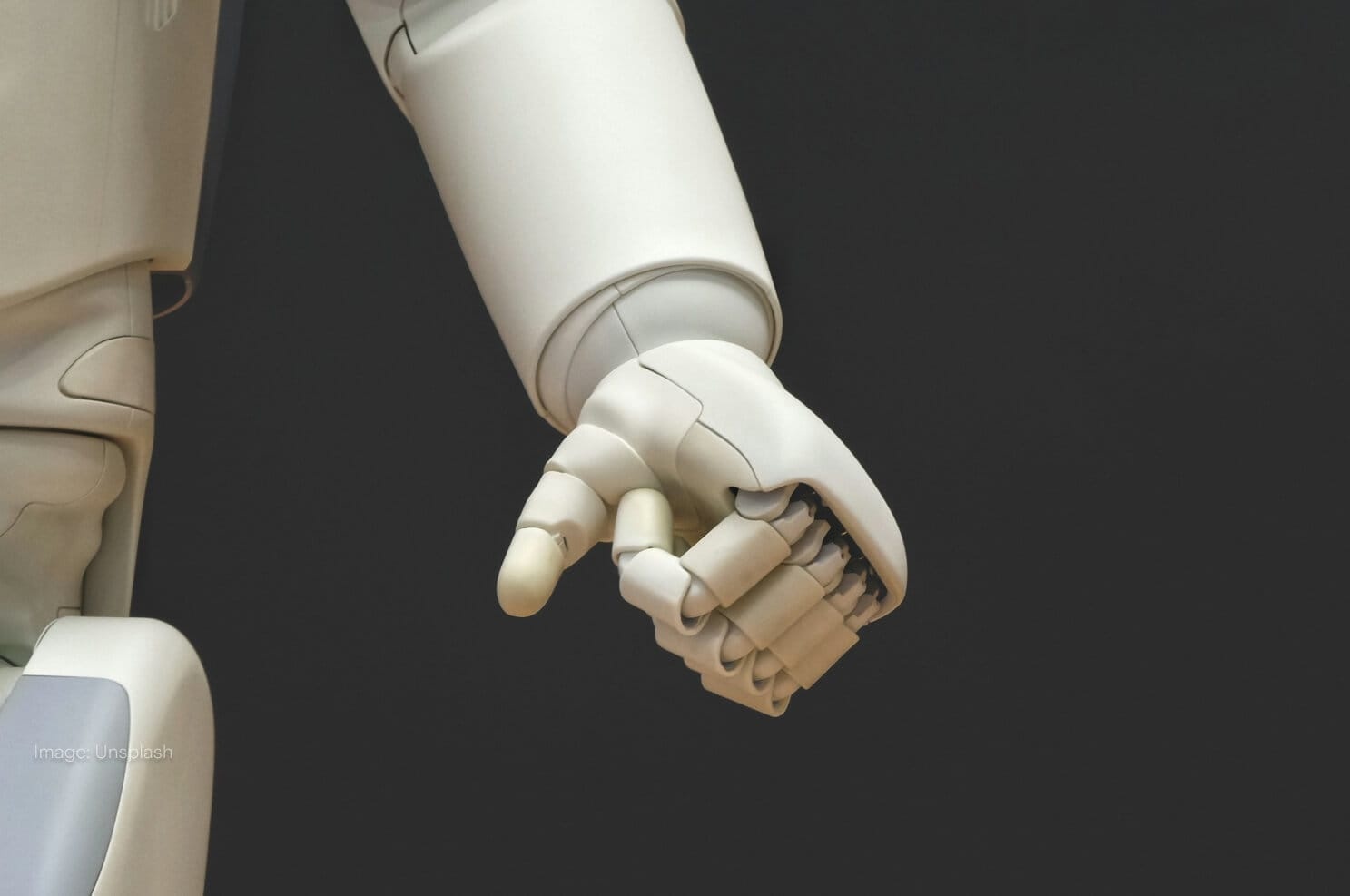
Software that automates back-office paperwork sits in the same investment category as a surgical robot arm.
Robotics stocks cover companies that design or build the hardware, software or components that make automated systems work – from surgical robot arms to the semiconductors and lab instruments those machines depend on. Four of the nine here sit in healthcare, and UiPath ($PATH) is the only name on this list whose business is entirely software – its AI platform automates business processes end-to-end.
How we built this list: We selected these companies based on their industry and ordered them by market capitalisation. Prices are updated daily, and the list and supporting content are reviewed roughly every quarter. All data is sourced from Stake. This list isn't a recommendation and isn't ordered by suitability.
Company Name | Ticker | Share Price | Market Cap | In Watchlists |
|---|---|---|---|---|
Tesla | $380.68 | $1.50T | 493403 | |
Texas Instruments | $297.23 | $269.32B | 2572 | |
Thermo Fisher | $656.58 | $250.23B | 1184 | |
Danaher | $215.61 | $155.51B | 570 | |
Intuitive Surgical | $404.76 | $143.60B | 4666 | |
Boston Scientific | $42.19 | $61.45B | 958 | |
Teradyne | $430.32 | $69.50B | 2283 | |
Rockwell Automation | $450.74 | $50.55B | 1127 | |
UiPath | $13.10 | $6.86B | 4352 |
Past performance is not a reliable indicator of future performance.
Source: Stake market data. Figures in US$. Data updated as of 6 October 2026.
✅ Learn more: Top 10 AI stocks to watch in 2026→
1. Tesla ($TSLA)

Tesla (TSLA) share price over the last year: started at US$453.25, ended at US$380.68, a change of −16.0%. Range over the period: high US$489.88, low US$298.32. Source: Stake market data. Past performance is not a reliable indicator of future performance.
Price: US$380.68 · Daily: 0.5% · Market cap: US$1.50T · Sector: Consumer Discretionary · Industry: Cars & Auto Parts
Electric vehicles and battery storage define Tesla, Inc. ($TSLA)'s two business segments. Its vehicle lineup covers the Model 3, Y, S, X and Cybertruck. The energy segment includes the residential Powerwall and the utility-scale Megapack. Both are lithium-ion battery storage products.
The automotive segment earns from more than new car sales. Used vehicles, maintenance services, insurance, supercharging and automotive regulatory credits all feed into it. CEO Elon Musk leads the company's 134,785-strong workforce.
2. Texas Instrument ($TXN)

Texas Instruments (TXN) share price over the last year: started at US$181.81, ended at US$297.23, a change of +63.5%. Range over the period: high US$332.28, low US$153.33. Source: Stake market data. Past performance is not a reliable indicator of future performance.
Price: US$297.23 · Daily: 0.8% · Market cap: US$269.32B · Sector: Technology · Industry: Semiconductors
Texas Instruments Incorporated ($TXN) makes the semiconductors that sit inside almost every piece of electronic equipment – not the flashy processors people talk about, but the chips that manage power, convert signals and keep systems stable. Under CEO Haviv Ilan, the company's 33,000 employees work across two segments: Analog and Embedded Processing.
The Analog segment is where $TXN's robotics relevance is most direct. It produces power management chips that regulate how energy flows through a system, alongside Signal Chain products – amplifiers, data converters, motor drives, sensors and interface chips – that handle the translation between the physical world and digital logic. Motor drives alone are a core building block in robotic joints and actuators.
Embedded Processing covers microcontrollers and processors designed to handle specific tasks rather than general computing. The company's portfolio is designed to let engineers tune for different combinations of performance, power draw and cost depending on the application – which matters in robotics, where a surgical arm and a warehouse conveyor have very different requirements.
3. Thermo Fisher ($TMO)

Thermo Fisher (TMO) share price over the last year: started at US$543.95, ended at US$656.58, a change of +20.7%. Range over the period: high US$679.61, low US$438.34. Source: Stake market data. Past performance is not a reliable indicator of future performance.
Price: US$656.58 · Daily: -3.0% · Market cap: US$250.23B · Sector: Healthcare · Industry: Healthcare Equipment
Thermo Fisher Scientific ($TMO) supplies the tools that laboratories and biopharma companies depend on to do their work – reagents, instruments, consumables and diagnostic test kits used across drug discovery, vaccine production and disease diagnosis. Its four business segments cover life sciences solutions, analytical instruments, specialty diagnostics, and laboratory products alongside biopharma services, meaning the company touches a research project at almost every stage.
Under chief executive Marc Casper, $TMO employs around 125,000 people. The breadth of what it makes – from purification and filtration technologies to the culture media used in clinical labs – puts it across both the research and the commercial sides of healthcare, rather than narrowly within any single therapeutic area.
4. Danaher ($DHR)

Danaher (DHR) share price over the last year: started at US$211.71, ended at US$215.61, a change of +1.8%. Range over the period: high US$242.05, low US$161.91. Source: Stake market data. Past performance is not a reliable indicator of future performance.
Price: US$215.61 · Daily: -2.5% · Market cap: US$155.51B · Sector: Healthcare · Industry: Healthcare Equipment
Danaher Corporation ($DHR) sits at the intersection of biotechnology and diagnostics, building the instruments and consumables that laboratories use to study DNA, RNA, proteins and cells. Its bioprocessing business supplies equipment used in the development and manufacture of biological medicines, while the diagnostics segment covers clinical instruments and patient monitoring tools used in acute care settings.
Under CEO Rainer Blair, $DHR employs around 58,000 people across its three segments – Biotechnology, Life Sciences and Diagnostics. The hardware it produces underpins much of the automation running through modern research and clinical environments.
5. Intuitive Surgical ($ISRG)

Intuitive Surgical (ISRG) share price over the last year: started at US$449.69, ended at US$404.76, a change of −10.0%. Range over the period: high US$592.85, low US$332.02. Source: Stake market data. Past performance is not a reliable indicator of future performance.
Price: US$404.76 · Daily: -0.4% · Market cap: US$143.60B · Sector: Healthcare · Industry: Healthcare Equipment
Intuitive Surgical ($ISRG) is built around the da Vinci surgical system, a robotic platform that puts a surgeon at a console while robotic arms handle instruments on the patient side. The system is cleared for procedures across general surgery, urology, gynaecology, cardiothoracic, and head and neck specialties.
The Ion endoluminal system extends that work into diagnostics. It's a flexible, catheter-based robotic platform designed for minimally invasive lung biopsies – a step beyond operating theatres and into earlier-stage diagnostic procedures. $ISRG employs more than 17,000 people and is led by CEO David Rosa.
6. Boston Scientific ($BSX)

Boston Scientific (BSX) share price over the last year: started at US$96.70, ended at US$42.19, a change of −56.4%. Range over the period: high US$104.98, low US$42.19. Source: Stake market data. Past performance is not a reliable indicator of future performance.
Price: US$42.19 · Daily: -0.5% · Market cap: US$61.45B · Sector: Healthcare · Industry: Healthcare Equipment
Boston Scientific ($BSX) makes the kind of medical devices that turn open surgeries into smaller, more targeted procedures. Its MedSurg segment covers tools for gastrointestinal diagnostics, urological conditions ranging from kidney stones to prostate cancer, and devices that manage chronic pain and neurological movement disorders.
The Cardiovascular segment handles interventional cardiology, electrophysiology, and cardiac rhythm management – a broad slice of the heart-care device market. Under CEO Mike Mahoney, $BSX employs around 59,000 people worldwide.
7. Teradyne ($TER)

Teradyne (TER) share price over the last year: started at US$147.87, ended at US$430.32, a change of +191.0%. Range over the period: high US$483.84, low US$132.08. Source: Stake market data. Past performance is not a reliable indicator of future performance.
Price: US$430.32 · Daily: -3.2% · Market cap: US$69.50B · Sector: Technology · Industry: Semiconductors
Teradyne ($TER) builds the equipment that tests whether semiconductors, circuit boards and wireless systems actually work before they ship. Its Semiconductor Test segment covers the machinery used to verify chips – including storage and system-level testing – while the Product Test segment extends into defence and aerospace instrumentation, circuit-board inspection and silicon photonics testing.
The Robotics segment is a separate thread entirely: Teradyne makes collaborative robotic arms and autonomous mobile robots through that division. With 6,600 employees and CEO Gregory Smith at the helm, the company sits at the intersection of chip manufacturing infrastructure and physical automation.
8. Rockwell Automation ($ROK)

Rockwell Automation (ROK) share price over the last year: started at US$348.57, ended at US$450.74, a change of +29.3%. Range over the period: high US$495.08, low US$333.75. Source: Stake market data. Past performance is not a reliable indicator of future performance.
Price: US$450.74 · Daily: -1.0% · Market cap: US$50.55B · Sector: Industrials · Industry: Machinery & Vehicles
Rockwell Automation ($ROK) builds the hardware, software and services that help manufacturers automate and digitise their production environments. Its Intelligent Devices segment covers the physical layer – motion control, power control, safety and sensing equipment that sit inside industrial machinery. The Software & Control segment runs on top of that, with platforms designed to merge information technology and operational technology so production systems can be managed end-to-end.
The third segment, Lifecycle Services, takes $ROK into consulting work – covering cybersecurity strategy, digital transformation design and the project management needed to roll those programmes out. CEO Blake Moret leads a workforce of 26,000 people across all three segments.
9. UiPath ($PATH)

UiPath (PATH) share price over the last year: started at US$14.52, ended at US$13.10, a change of −9.8%. Range over the period: high US$19.29, low US$9.38. Source: Stake market data. Past performance is not a reliable indicator of future performance.
Price: US$13.10 · Daily: -0.5% · Market cap: US$6.86B · Sector: Technology · Industry: Software & IT
UiPath ($PATH) builds software that automates the repetitive, rules-based work that fills up enterprise back offices – logging into applications, reading emails, filling in forms, moving files between systems. The company describes its approach as agentic automation: AI agents that can independently execute and optimise complex business processes, not just follow a fixed script.
The UiPath Platform brings together several layers of capability. It lets organisations discover where automation makes sense, then build and deploy a digital workforce that works alongside human employees at scale. The platform can combine traditional user interface automation, API integrations and AI-based document understanding inside a single workflow.
Under chief executive Daniel Dines, the company employs roughly 3,981 people. $PATH began with computer vision and user interface automation, and has since broadened into the wider AI-driven process orchestration space its platform covers today.
➡️ Top 10 U.S. data centre stocks to watch in 2026→
Common questions
How do I invest in robotics stocks in Australia?
Every stock in this list trades on U.S. exchanges, so you'll need a trading platform that offers access to U.S. markets. You can buy individual companies directly, or get broader exposure through a U.S.-listed robotics-themed ETF. Because these shares are priced in USD, the AUD/USD exchange rate affects the Australian dollar value of your holdings – when the AUD weakens against the USD, your position is worth more in AUD terms, and vice versa.
What are the key risks of robotics stocks?
The companies here sit across healthcare equipment, semiconductors, industrial machinery and software, so the risks vary by sub-type. Medical device companies navigate lengthy regulatory approval processes and hospital procurement cycles. Semiconductor suppliers face cyclical demand swings tied to broader electronics markets, while industrial and software automation businesses can be exposed to cuts in corporate spending during downturns. For Australian investors holding U.S.-listed shares, currency movements between the AUD and USD add another layer of variability to returns.
What counts as a robotics stock?
The term covers a wider range of businesses than physical robots alone. Some companies here design and sell robotic hardware – surgical systems, collaborative arms, autonomous mobile robots. Others make the semiconductors and scientific instruments that robotic systems depend on. One focuses entirely on software that automates digital tasks without any physical machine involved. That breadth means companies in the same "robotics" theme can behave quite differently from each other, with distinct revenue structures and risk profiles depending on where they sit in the chain.
More resources
✅ Magnificent 7 stocks: How to invest in 2026→
Disclaimer
Past performance is not a reliable indicator of future performance. When you invest, your capital is at risk. You should consider your own investment objectives, financial situation, and particular needs before making an investment decision. The value of your investments can go down as well as up and you may receive back less than your original investment. As always, do your own research and consider seeking appropriate financial advice before investing.
This is not personal financial advice nor a recommendation to invest in the securities listed. Any advice provided by Stake is of general nature only and does not take into account your specific circumstances. Trading and volume data from the Stake investing platform is for reference purposes only, the investment choices of others may not be appropriate for your needs and is not a reliable indicator of performance.
Please refer to hellostake.com/pricing for the fees that apply. When you trade securities priced in another currency, currency conversion fees may apply and movements in the exchange rate may affect your returns.

Stake Desk
The freshest market insights
This article combines AI and human review from our analysts to bring you accurate, informative investing content at speed. For questions or suggestions, contact stakedesk@stake.com.au.
Subscribe
By subscribing, you agree to our Privacy Policy.