OpenAI IPO: How to buy OpenAI shares
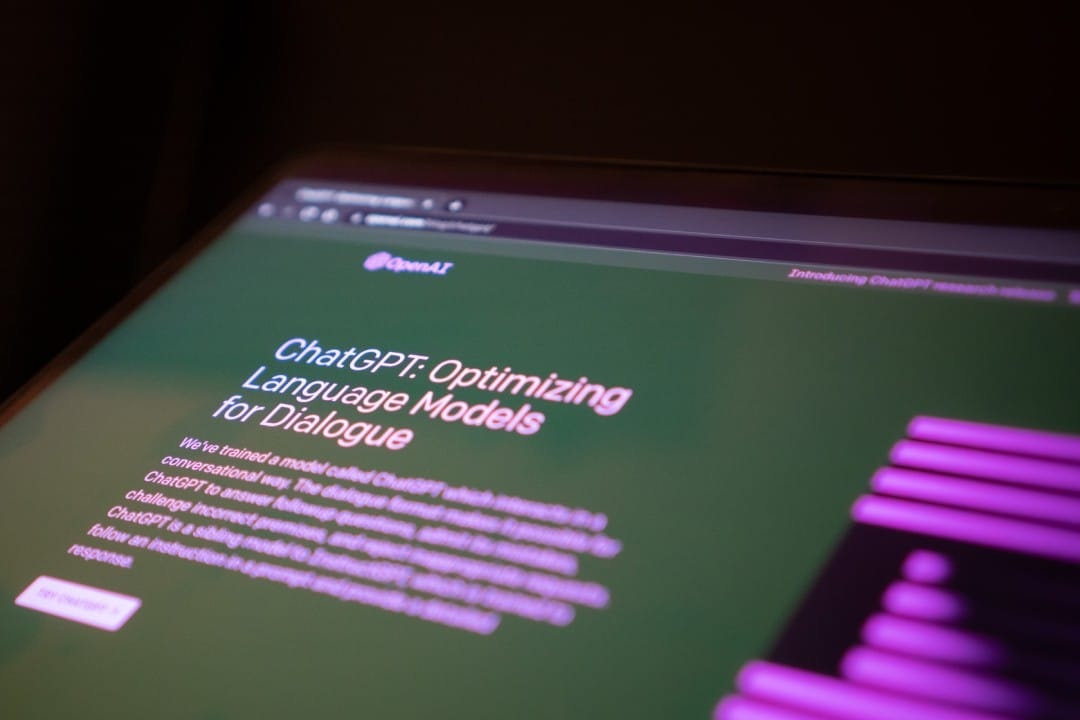
OpenAI isn’t listed on the stock market yet, but growing speculation around a potential IPO has investors paying close attention. This article breaks down OpenAI’s business model, valuation and ownership structure, along with what investors should know if the company eventually goes public.
What does OpenAI do?
OpenAI is an artificial intelligence company known for ChatGPT. The company makes large language models (LLMs) and AI systems used across writing, coding, image generation and enterprise software.
OpenAI makes money through subscriptions (ChatGPT Plus, Team and Enterprise) and by licensing its models to businesses via APIs. Microsoft is OpenAI’s largest strategic partner and integrates its models across products like Azure and Copilot.
What is the OpenAI IPO date?
Nothing has been confirmed at this stage, however OpenAI announced on June 9 it had confidentially filed with the Securities and Exchange Commission (SEC) to pursue an IPO.
Because the IPO filing is confidential, many details remain unknown, including the date OpenAI will go public.
On 20 May 2026, The Wall Street Journal reported the company was drafting its IPO prospectus with Goldman Sachs and Morgan Stanley, and could list as soon as September.
That update came within hours of Elon Musk's SpaceX IPO prospectus being made public and two days after OpenAI had successfully fended off a lawsuit filed by Musk. The closure of the court case simplifies OpenAI's path towards a listing.
In October 2025, Reuters reported that OpenAI was preparing for a US$1T public listing in 2026 or 2027. It followed OpenAI’s restructure into a Public Benefit Corporation (PBC), making it easier to raise capital and potentially setting the groundwork for a public listing.
What is the expected OpenAI IPO share price?
At this stage, there’s no confirmed share price for an OpenAI IPO.
That’s normal. IPO prices are usually set close to listing day and depend on things like company valuation, how many shares are offered and overall market conditions.
OpenAI valuation
OpenAI is currently valued at around US$852B, following a US$122B capital raise disclosed in March 2026.
The company’s valuation has risen rapidly alongside growing demand for generative AI tools, enterprise adoption and its partnership with Microsoft.
OpenAI valuation timeline
- 2019: No valuation reported however OpenAI received a US$1B investment from Microsoft.
- 2021: Valuation estimated to be around ~US$14B in numerous reports
- April 2023: A US$300M share sale reportedly valued OpenAI at ~US$27–29B
- April 2024: Closed a record-breaking US$40B funding round, valuing the firm at US$300B
- October 2024: Completed a US$6.6B capital raise by investors including Microsoft and Nvidia, valuing the company at US$157B
- October 2025: An employee share sale valued the firm at US$500B
- March 2026: A funding round raised US$122 billion and valued OpenAI at US$852B
What is the ticker symbol for OpenAI?
OpenAI doesn’t have a ticker symbol yet. If the company does go public, its ticker will be announced closer to the IPO.
Who is underwriting the IPO?
No underwriters have been announced, however sources close to the matter have disclosed Goldman Sachs and Morgan Stanley have helping to draft an IPO prospectus, according to The Wall Street Journal.
How to buy shares in OpenAI
OpenAI is currently not listed, which means you can’t yet buy shares. Your best bet is to buy shares in major stakeholders of OpenAI, such as Microsoft ($MSFT) and Softbank ($SFTBY).
When OpenAI does complete an IPO, you can follow the steps below to buy shares in the company on Stake.
1. Open a stock investing account
If you want to buy OpenAI stock, you'll need to sign up to an investing platform with access to the U.S. stock exchanges. Lucky for you, Stake has access to the Nasdaq and NYSE.
2. Fund your account
Complete an application with your personal and financial details. Fund your account with a bank transfer or debit card.
3. Search for OpenAI or look for their ticker symbol
Find the asset by searching for the name or ticker symbol. Do your own research to ensure it is the right investment product for your own circumstances.
4. Choose an order type and buy the asset
Buy on any trading day using a market order or limit order to delay your purchase of the asset until it reaches your desired price. You may wish to look into dollar cost averaging to spread out your risk, which smooths out buying at consistent intervals.
5. Monitor your investment
Once you own a stock, you should keep an eye on its performance. Check your portfolio regularly to ensure your investment is aligning with your financial goals.
Sign up in minutes and get access to this company when it enters the market.
Can you buy OpenAI pre IPO?
For most investors, no. OpenAI is still private, which means shares are typically limited to employees, early backers and large institutional investors. While some private market platforms offer access to late-stage companies, these options usually aren’t available to everyday retail investors.
Learn more about the ways you can indirectly invest in OpenAI.
Who owns OpenAI?
OpenAI has an unusual structure, combining a nonprofit parent company (OpenAI Foundation) with a for-profit subsidiary (OpenAI Group PBC), following a restructure in 2025. The newly formed OpenAI Group means the company can raise extra capital for research and expansion.
To date, OpenAI Foundation holds a 26% stake in the for-profit OpenAI Group. Microsoft holds around 27% and the remaining is held by employees and investors.
In simple terms, ownership is spread across:
- Microsoft, its biggest investor and strategic partner
- OpenAI staff and leadership
- Early venture investors
- The OpenAI nonprofit, which keeps governance control
It’s not a typical corporate setup. OpenAI’s mixed nonprofit and for-profit model mean future shareholders may face limits on returns and less direct control than in a traditional public company. It’s a structure investors will want to understand carefully if the company ever lists.
Who are OpenAI’s competitors?
Company Name | Description | Share Price (9 June 2026) |
|---|---|---|
Alphabet ($GOOGL) | Owner of Google DeepMind and creator of Gemini AI models. | US$361 |
Baidu ($BIDU) | Chinese tech company behind the Ernie LLM, one of the leading generative AI models in China. | US$119 |
Microsoft ($MSFT) | Builds and commercialises AI tools through Azure and Copilot, while also developing proprietary models alongside its partnership with OpenAI. | US$412 |
Anthropic | AI research company behind the Claude series of models, emphasising safety and steerability alongside performance. | (Privately held) |
Meta Platforms ($META) | Develops large models like LLaMA and invests in generative AI across social and enterprise tools. | US$585 |
Alibaba Group ($BABA) | Developer of Qwen / Tongyi Qianwen models, integrating generative AI into cloud and enterprise services. | US$120 |
Tencent ($TCEHY) | Creator of Hunyuan, a large-scale multimodal LLM positioned at the frontier within China. | US$57 |
DeepSeek | Chinese AI startup developing frontier-scale open models reported to compete with top Western LLMs on cost and performance. | (Privately held) |
How will OpenAI perform going public?
If OpenAI lists, it would be one of the most closely watched IPOs on record.
The company has strong brand recognition and a leading position in generative AI. At the same time, expectations would be extremely high, competition among frontier AI labs is intense and regulation around AI continues to evolve.
And history tells us that IPOs, even highly anticipated tech IPOs, can be volatile. Listings like Meta, Snowflake and Arm all drew heavy interest, yet experienced significant price swings after going public as valuations adjusted and the market reassessed growth expectations.
As with most IPOs, OpenAI’s early share price performance would likely be driven by pricing, timing and market conditions, rather than fundamentals alone.
OpenAI IPO details
S-1 filing date | Confidential filing announced June 8 |
Proposed ticker symbol | TBA |
Company Name | OpenAI |
Exchange | Likely Nasdaq or NYSE |
Share price | TBA |
Shares offered | TBA |
We’ll update this article when more information becomes available.
🎓 Learn more: What is an initial public offering and how do they work?→
Disclaimer
The information contained above does not constitute financial product advice nor a recommendation to invest in any of the securities listed. Past performance is not a reliable indicator of future performance. When you invest, your capital is at risk. You should consider your own investment objectives, financial situation and particular needs. The value of your investments can go down as well as up and you may receive back less than your original investment. As always, do your own research and consider seeking appropriate financial advice before investing.
Any advice provided by Stake is of general nature only and does not take into account your specific circumstances. Trading and volume data from the Stake investing platform is for reference purposes only, the investment choices of others may not be appropriate for your needs and is not a reliable indicator of performance.
$3 brokerage fee only applies to trades up to $30k in value (USD for Wall St trades and AUD for ASX trades). Please refer to hellostake.com/pricing for other fees that are applicable.

Senior Markets Commentator
Kylie Purcell is an investments analyst and finance journalist with over a decade of experience covering global markets, investment products and digital assets. Her commentary has been featured in publications including the Australian Financial Review, Yahoo Finance and The Motley Fool. She has a Masters Degree in International Journalism from Cardiff University and a Certificate of Securities and Managed Investments (RG146).
Subscribe
By subscribing, you agree to our Privacy Policy.