
Top 10 medical device stocks to watch in 2026
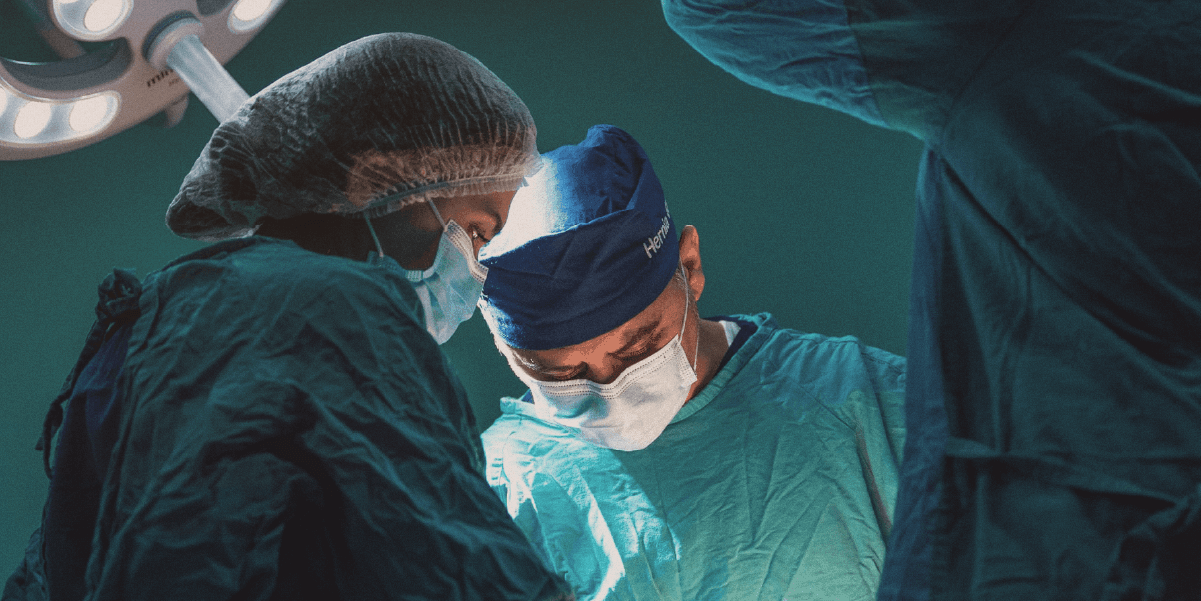
Medical devices go into joints, onto skin and into IV lines. Getting a device there requires a regulator's sign-off and a reimbursement decision from insurers.
Medical device companies design and manufacture the physical tools clinicians reach for every day – glucose monitors, orthopedic implants, surgical kits, infusion systems, and sterilisation equipment. The ten U.S.-listed companies in this list cover a wide range of that territory. Some, like Abbott Laboratories ($ABT), don't limit themselves to a single category – they operate across diagnostics, nutrition, pharmaceuticals, and devices all at once. Others, like DexCom ($DXCM), concentrate on a single area; in that case, continuous glucose monitoring systems for people managing diabetes.
How we built this list: We selected these companies based on their industry and ordered them by market capitalisation. Prices are updated daily, and the list and supporting content are reviewed roughly every quarter. All data is sourced from Stake. This list isn't a recommendation and isn't ordered by suitability.
Company Name | Ticker | Share Price | Market Cap | In Watchlists |
|---|---|---|---|---|
Abbott | $98.16 | $173.21B | 1756 | |
Medtronic | $87.09 | $112.53B | 1439 | |
BD | $180.30 | $49.21B | 359 | |
Medline | $35.55 | $47.07B | 99 | |
Dexcom | $83.39 | $32.79B | 1178 | |
West Pharmaceutical Services | $372.64 | $26.51B | 239 | |
STERIS | $208.65 | $20.58B | 62 | |
Zimmer Biomet | $89.68 | $17.47B | 213 | |
Solventum | $87.04 | $14.98B | 48 | |
Baxter International | $24.36 | $12.52B | 387 |
Past performance is not a reliable indicator of future performance.
Source: Stake market data. Figures in US$. Data updated as of 6 October 2026.
✅ Learn more: Top 9 robotics stocks to watch in 2026→
1. Abbott ($ABT)

Abbott (ABT) share price over the last year: started at US$133.74, ended at US$98.16, a change of −26.6%. Range over the period: high US$134.27, low US$82.56. Source: Stake market data. Past performance is not a reliable indicator of future performance.
Price: US$98.16 · Daily: -1.9% · Market cap: US$173.21B · Sector: Healthcare · Industry: Healthcare Equipment
Four distinct business segments make up Abbott Laboratories ($ABT): diagnostics, nutritional products, established pharmaceuticals, and medical devices. Under CEO Robert Ford, $ABT employs around 115,000 people and sells products in more than 160 countries.
The diagnostics division supplies testing systems and tests to blood banks, hospitals, commercial laboratories and alternate-care sites. In medical devices, the portfolio covers heart rhythm management, electrophysiology, structural heart, neuromodulation and diabetes care.
The pharmaceutical segment concentrates on branded generic medicines sold internationally. The nutritional arm produces both adult and paediatric products across global markets.
2. Medtronic ($MDT)

Medtronic (MDT) share price over the last year: started at US$98.43, ended at US$87.09, a change of −11.5%. Range over the period: high US$105.35, low US$73.75. Source: Stake market data. Past performance is not a reliable indicator of future performance.
Price: US$87.09 · Daily: -1.0% · Market cap: US$112.53B · Sector: Healthcare · Industry: Healthcare Equipment
Medtronic Public Limited Company ($MDT) operates across a remarkably broad slice of the medical device world. Under CEO Geoff Martha, the Ireland-based company employs 95,000 people and makes products that clinicians use across cardiac rhythm management, spinal and orthopedic surgery, neurological treatment, renal care, and respiratory support – among many other categories.
The cardiac side includes implantable electronic devices and aortic stent graft products, while the surgical side stretches from ear, nose and throat tools to gynaecological and urological equipment. $MDT also offers software platforms like CareLink, which handles therapy management for patients with implanted cardiac devices.
Beyond hardware, $MDT provides services including care management, digital connectivity support, and healthcare consulting – so the relationship with hospitals and clinics extends well past the sale of a device.
3. BD ($BDX)

BD (BDX) share price over the last year: started at US$150.88, ended at US$180.30, a change of +19.5%. Range over the period: high US$192.00, low US$138.62. Source: Stake market data. Past performance is not a reliable indicator of future performance.
Price: US$180.30 · Daily: -0.2% · Market cap: US$49.21B · Sector: Healthcare · Industry: Healthcare Equipment
Becton, Dickinson and Company ($BDX) manufactures the equipment hospitals and clinics use across a wide range of everyday procedures – from medication delivery and IV systems to specimen management and patient monitoring. Its five segments also reach into surgical devices, peripheral intervention, urology, and the tools used in biopharmaceutical manufacturing. The company employs around 72,000 people and sells to healthcare institutions, clinical laboratories and life science researchers globally.
4. Medline ($MDLN)

Medline (MDLN) share price over the last year: started at US$41.00, ended at US$35.55, a change of −13.3%. Range over the period: high US$49.99, low US$31.64. Source: Stake market data. Past performance is not a reliable indicator of future performance.
Price: US$35.55 · Daily: -0.7% · Market cap: US$47.07B · Sector: Healthcare · Industry: Healthcare Equipment
Medline Inc. ($MDLN) sits behind the scenes of everyday clinical care, supplying the consumables and procedural products that hospitals, surgery centres, physician offices and post-acute facilities go through constantly. Its catalogue runs to roughly 335,000 products – surgical kits, gloves, wound care, urological supplies and lab diagnostics among them – organised under three categories: Front Line Care, Surgical Solutions, and Laboratory and Diagnostics.
The second piece of the business, Supply Chain Solutions, goes beyond the $MDLN brand to procure and distribute third-party products from national manufacturers, with logistics and optimisation services on top. With 45,000 employees and CEO James Boyle at the helm, the company operates at a scale where it touches nearly every point along the care continuum.
5. Dexcom ($DXCM)

Dexcom (DXCM) share price over the last year: started at US$66.36, ended at US$83.39, a change of +25.7%. Range over the period: high US$92.34, low US$54.84. Source: Stake market data. Past performance is not a reliable indicator of future performance.
Price: US$83.39 · Daily: -4.0% · Market cap: US$32.79B · Sector: Healthcare · Industry: Healthcare Equipment
DexCom ($DXCM) designs continuous glucose monitoring (CGM) systems – wearable biosensors that track blood sugar levels in real time without repeated finger stick tests. Its G7 system is cleared for adults and children aged two and up living with type 1 or type 2 diabetes, including those with gestational diabetes.
The Stelo product takes a different approach: it's the first over-the-counter glucose biosensor in the U.S., built for people with type 2 diabetes who don't use insulin. $DXCM also offers the Share remote monitoring system, which lets caregivers and clinicians follow a patient's glucose readings through a companion app.
6. West Pharmaceutical Services ($WST)

West Pharmaceutical Services (WST) share price over the last year: started at US$268.07, ended at US$372.64, a change of +39.0%. Range over the period: high US$376.76, low US$230.95. Source: Stake market data. Past performance is not a reliable indicator of future performance.
Price: US$372.64 · Daily: -1.1% · Market cap: US$26.51B · Sector: Healthcare · Industry: Healthcare Equipment
West Pharmaceutical Services ($WST) sits at the point where packaging meets precision medicine. The company designs and manufactures the containment and delivery systems that injectable drugs travel through – think the stoppers, seals, and self-injection devices that pharmaceutical and biotech companies rely on to get a drug from vial to patient safely. Its Proprietary Products segment covers packaging, containment solutions and analytical lab services for biologic, generic and pharmaceutical customers, while its West Vantage segment focuses on the automated assembly of complex devices and combination products.
With around 10,800 employees and collaborations extending to affiliates in Japan and Mexico, $WST operates across a broad customer base that includes diagnostic and medical device companies alongside pharma. CEO Michel Lagarde leads a business that sits behind many drug delivery products rather than in front of them – its name rarely appears on a medicine box, but the components it makes are embedded in the manufacturing process of the companies that do.
7. STERIS ($STE)

STERIS (STE) share price over the last year: started at US$240.64, ended at US$208.65, a change of −13.3%. Range over the period: high US$268.65, low US$199.40. Source: Stake market data. Past performance is not a reliable indicator of future performance.
Price: US$208.65 · Daily: -1.1% · Market cap: US$20.58B · Sector: Healthcare · Industry: Healthcare Equipment
STERIS Plc ($STE) sits at an unglamorous but essential corner of healthcare – keeping things sterile. The company makes and services the equipment that hospitals, operating rooms and endoscopy suites rely on to prevent infection, covering everything from sterilisation systems to consumable products and specialty maintenance.
Beyond hospital walls, $STE runs a contract sterilisation network for medical device and pharmaceutical manufacturers through its Applied Sterilization Technologies segment. That business processes products that can't be sterilised in-house, alongside laboratory testing and integrated equipment systems. A third segment, Life Sciences, focuses on biopharmaceutical and medical device manufacturing facilities, particularly those built around aseptic – that is, contamination-free – production. Chief Executive Daniel Carestio leads the company, which employs close to 18,000 people.
8. Zimmer Biomet ($ZBH)

Zimmer Biomet (ZBH) share price over the last year: started at US$98.83, ended at US$89.68, a change of −9.3%. Range over the period: high US$103.98, low US$79.58. Source: Stake market data. Past performance is not a reliable indicator of future performance.
Price: US$89.68 · Daily: -2.1% · Market cap: US$17.47B · Sector: Healthcare · Industry: Healthcare Equipment
Zimmer Biomet ($ZBH) concentrates almost entirely on what happens to bones and joints – the implants surgeons use to replace knees and hips, fix trauma injuries and repair soft tissue. Its knee portfolio runs from the Persona Knee and NexGen Knee Implants through to the Oxford Partial Knee, while its hip range covers several distinct systems including the Taperloc Hip System and the Avenir Complete Hip System.
The company has also moved into surgical robotics with its ROSA Robotics platform, which is designed to guide surgeons through procedures without relying on pre-operative imaging. That puts $ZBH across the physical implant and the digital tooling used to place it. CEO Ivan Tornos leads a workforce of 17,000 people, with operations grouped across the Americas, EMEA and Asia Pacific.
9. Solventum ($SOLV)

Solventum (SOLV) share price over the last year: started at US$73.78, ended at US$87.04, a change of +18.0%. Range over the period: high US$92.44, low US$62.49. Source: Stake market data. Past performance is not a reliable indicator of future performance.
Price: US$87.04 · Daily: -1.1% · Market cap: US$14.98B · Sector: Healthcare · Industry: Healthcare Equipment
Wound dressings, IV site management, sterilisation equipment, surgical supplies – these are the kinds of products Solventum Corporation ($SOLV) makes and sells to healthcare providers. Chief executive Bryan Hanson leads the company's 20,000 employees across three segments. MedSurg, the clinical hardware segment, covers everything from negative pressure wound therapy systems to stethoscopes and medical electrodes.
$SOLV's Dental Solutions segment handles orthodontics and restorative dentistry, with brackets, aligners, and dental cement in its product range. Health Information Systems, the third segment, operates in software: physician documentation tools, medical coding, and billing automation for hospital systems. The company describes its approach as drawing on material science, data science, and digital capabilities across all three areas.
10. Baxter International ($BAX)

Baxter International (BAX) share price over the last year: started at US$23.15, ended at US$24.36, a change of +5.2%. Range over the period: high US$28.35, low US$15.80. Source: Stake market data. Past performance is not a reliable indicator of future performance.
Price: US$24.36 · Daily: 0.6% · Market cap: US$12.52B · Sector: Healthcare · Industry: Healthcare Equipment
The supplies that keep hospital wards running – sterile IV solutions, infusion systems, parenteral nutrition therapies – sit at the core of what Baxter International ($BAX) makes and sells. $BAX also builds the connected infrastructure clinicians use day-to-day: smart bed systems, patient monitoring equipment, respiratory health devices and operating room integration tools.
The third segment covers pharmaceuticals – specialty injectables, inhaled anaesthesia and drug compounding services. All three areas put $BAX products into hospitals, rehabilitation centres and ambulatory surgery centres. Chief executive Andrew Hider oversees a workforce of 37,500 people.
➡️ Top 10 pharma stocks to watch in 2026→
Common questions
How can Australian investors buy medical device stocks?
All ten stocks in this list trade on U.S. exchanges, so you'd need a share trading platform with access to U.S. markets. Purchases are settled in USD, which means you exchange Australian dollars at the prevailing AUD/USD rate when you buy or sell. That exchange rate movement sits alongside the share price itself as a separate source of return and risk.
What are the key risks of medical device stocks?
Regulatory requirements are a constant factor – products sold in the U.S. need authorisation from the Food and Drug Administration (FDA), and that process can be slow, conditional, or unsuccessful. Beyond that, reimbursement decisions by insurers and public health systems shape how widely a product can be adopted and at what price. Other risks include product liability claims, manufacturing disruption, and competition from next-generation technologies.
How do focused specialists compare to diversified companies in this list?
The companies here range from single-category device makers to broad healthcare businesses. Dexcom concentrates entirely on continuous glucose monitoring systems, for example. Abbott, by contrast, operates across medical devices, diagnostics, pharmaceuticals and nutritional products. A specialist's results are more tightly tied to one technology or therapeutic area; a diversified company's performance reflects many product lines at once.
How does currency exposure work for Australian investors buying these stocks?
Because all ten stocks are priced and traded in USD, Australian investors carry AUD/USD exposure on top of any share price movement. When the Australian dollar strengthens against the USD, returns convert back to fewer AUD; when it weakens, AUD returns increase. Unlike some exchange-traded funds that offer a currency-hedged share class, individual stocks don't carry a built-in hedge – the exchange rate movement flows directly through to AUD-denominated returns.
More resources
✅ Top 8 ASX biotech stocks to watch in 2026→
Disclaimer
Past performance is not a reliable indicator of future performance. When you invest, your capital is at risk. You should consider your own investment objectives, financial situation, and particular needs before making an investment decision. The value of your investments can go down as well as up and you may receive back less than your original investment. As always, do your own research and consider seeking appropriate financial advice before investing.
This is not personal financial advice nor a recommendation to invest in the securities listed. Any advice provided by Stake is of general nature only and does not take into account your specific circumstances. Trading and volume data from the Stake investing platform is for reference purposes only, the investment choices of others may not be appropriate for your needs and is not a reliable indicator of performance.
Please refer to hellostake.com/pricing for the fees that apply. When you trade securities priced in another currency, currency conversion fees may apply and movements in the exchange rate may affect your returns.

Stake Desk
The freshest market insights
This article combines AI and human review from our analysts to bring you accurate, informative investing content at speed. For questions or suggestions, contact stakedesk@stake.com.au.
Subscribe
By subscribing, you agree to our Privacy Policy.