
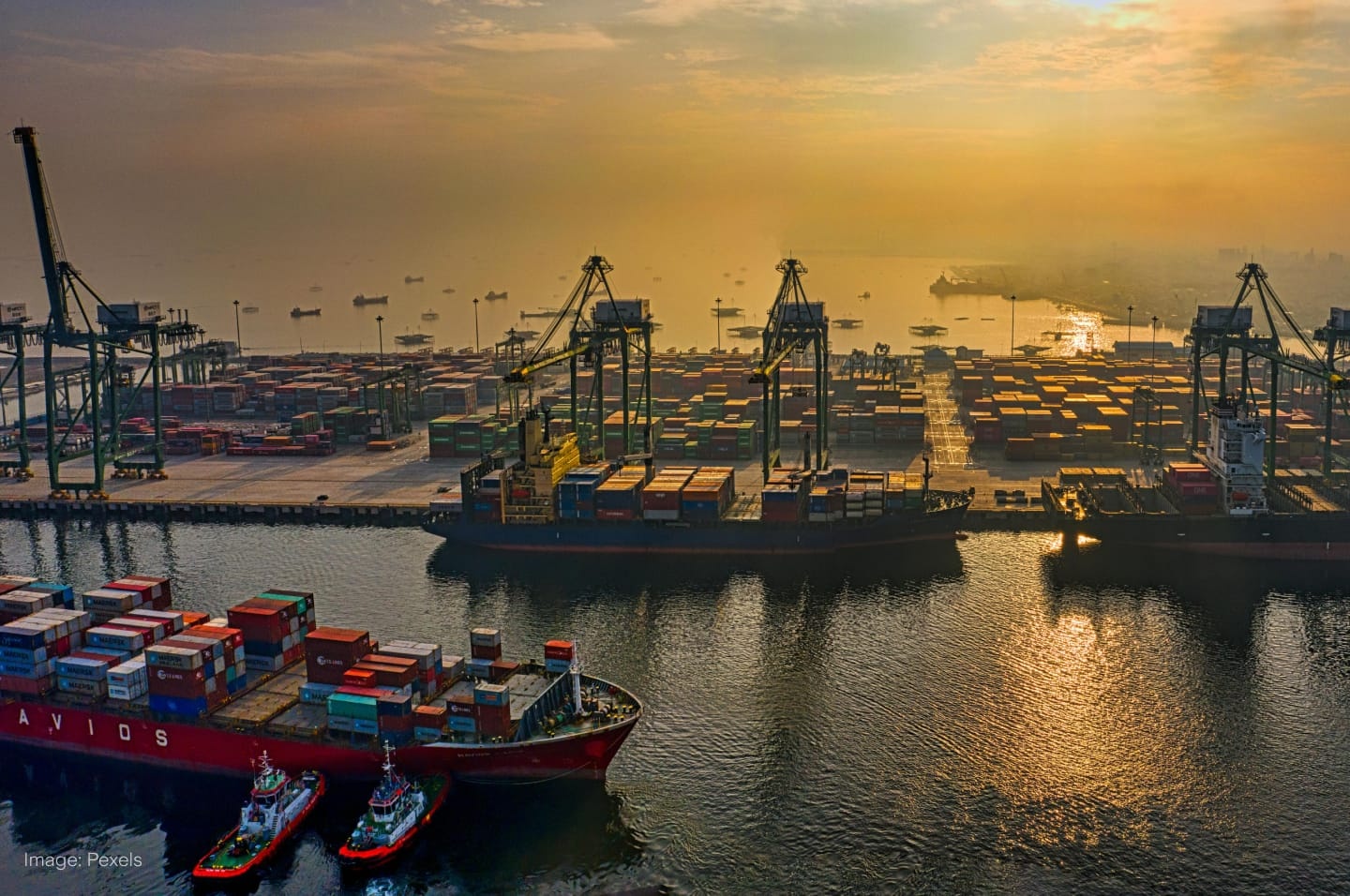
Freight rates are what these companies sell, and they move with vessel supply against cargo demand. Crude, product and LPG markets diverge, so fleet type shapes each company's rate sensitivity.
Tanker companies own and operate fleets of vessels that carry crude oil and refined petroleum products – gasoline, jet fuel and naphtha among them – between ports across international trade routes. Most of the stocks on this list transport oil or petroleum products, but BW LPG ($BWLP) focuses on liquefied petroleum gas, operating a fleet of very large gas carriers (VLGCs) built to move LPG rather than liquid oil.
How we built this list: We selected these companies based on their industry and ordered them by market capitalisation. Prices are updated daily, and the list and supporting content are reviewed roughly every quarter. All data is sourced from Stake. This list isn't a recommendation and isn't ordered by suitability.
Company Name | Ticker | Share Price | Market Cap | In Watchlists |
|---|---|---|---|---|
Hafnia | $10.85 | $56.10B | 52 | |
BW LPG | $25.78 | $39.53B | 29 | |
Torm PLC | $41.11 | $26.83B | 142 | |
Frontline | $59.04 | $12.52B | 740 | |
CMB.TECH | $20.79 | $5.71B | 275 | |
International Seaways | $125.04 | $5.79B | 331 | |
Scorpio Tankers | $88.75 | $4.23B | 512 | |
DHT Holdings | $26.59 | $3.82B | 482 | |
Teekay Tankers | $106.39 | $3.76B | 265 | |
Okeanis Eco Tankers | $99.26 | $3.50B | 37 |
Past performance is not a reliable indicator of future performance.
Source: Stake market data. Figures in US$. Data updated as of 13 October 2026.
Sign up in minutes and get access to a CHESS-sponsored platform, where you can explore Tanker stocks and more.
1. Hafnia ($HAFN)
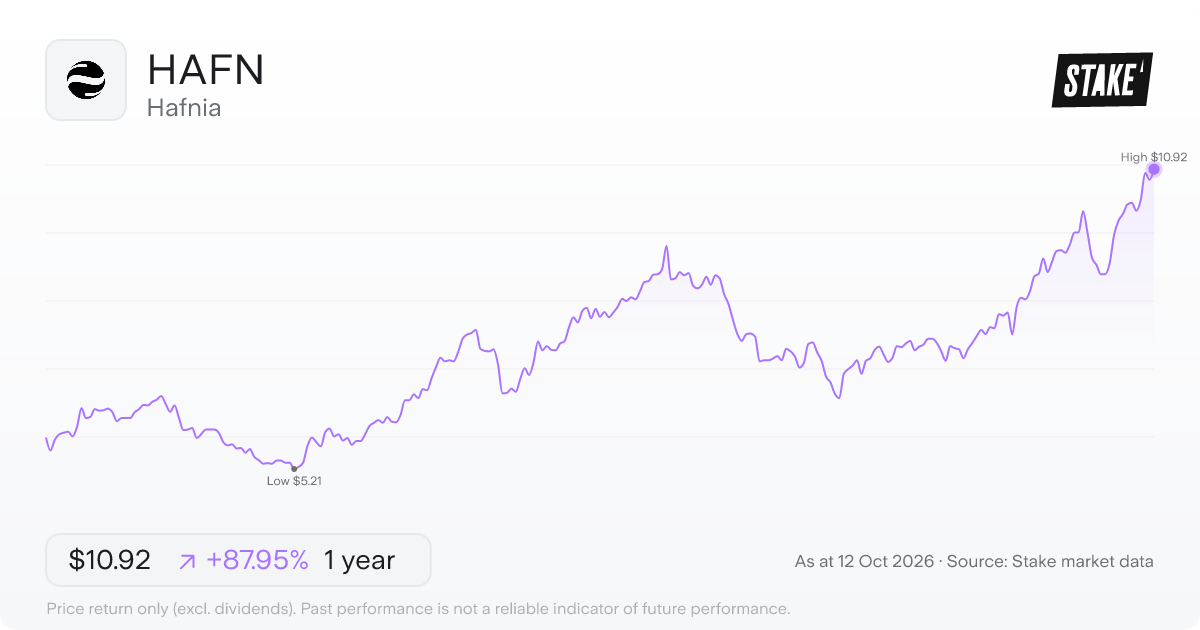
Hafnia (HAFN) share price over the last year: started at US$6.20, ended at US$10.13, a change of +63.4%. Range over the period: high US$10.28, low US$5.21. Source: Stake market data. Past performance is not a reliable indicator of future performance.
Price: US$10.85 · Daily: -0.6% · Market cap: US$56.10B · Sector: Energy · Industry: Oil & Gas Services
Product tankers come in a wide range of sizes, and Hafnia Limited ($HAFN) has vessels in almost every class. Its fleet stretches from specialised ships as small as 5,000 deadweight tons (DWT) up to Long Range II carriers reaching 124,999 DWT. Those larger ships are built for clean petroleum oil products; Long Range I vessels, one tier down, handle both clean and dirty petroleum cargoes.
The Handy segment, at 25,000 to 39,999 DWT, takes the broadest cargo mix in the fleet: clean and dirty oil products, vegetable oil, and easy chemicals. Soren Jensen serves as CEO, leading a workforce of 4,876 people across $HAFN's operating subsidiaries.
2. BW LPG ($BWLP)
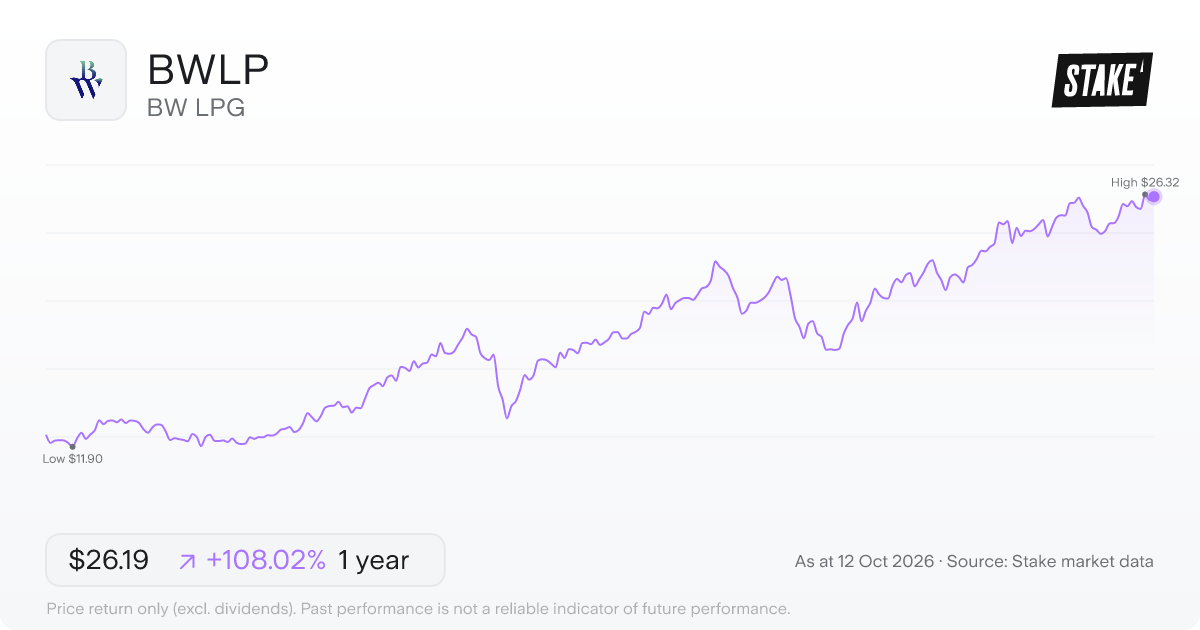
BW LPG (BWLP) share price over the last year: started at US$13.70, ended at US$25.59, a change of +86.8%. Range over the period: high US$26.14, low US$11.90. Source: Stake market data. Past performance is not a reliable indicator of future performance.
Price: US$25.78 · Daily: -1.7% · Market cap: US$39.53B · Sector: Energy · Industry: Oil & Gas Services
BW LPG Limited ($BWLP) is a Singapore-based company that owns and operates over 54 very large gas carriers (VLGCs) – vessels built to transport LPG in bulk across international trade routes. Their combined carrying capacity exceeds four million cubic metres. Named ships in the fleet include BW Aries, BW Balder, BW Chinook and BW Gemini, among others.
The business goes beyond straightforward ship ownership. $BWLP's in-house product services team purchases LPG directly and delivers it to buyers and receivers, making it an integrated logistics operation. The company also holds downstream terminal infrastructure and LPG distribution assets.
Twenty-nine of its VLGCs run on dual-fuel propulsion technology, retrofitted to burn LPG alongside conventional fuel. CEO Kristian Soerensen leads a team of 1,444 employees across shipping, product services and infrastructure.
3. Torm ($TRMD)
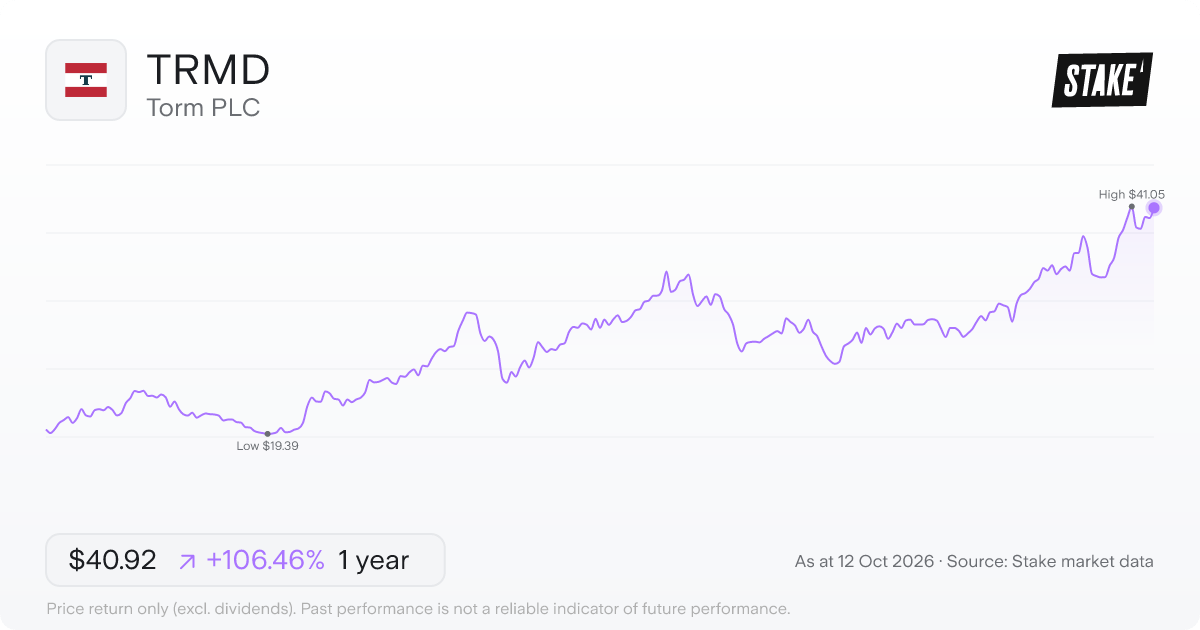
Torm PLC (TRMD) share price over the last year: started at US$21.38, ended at US$39.05, a change of +82.6%. Range over the period: high US$41.05, low US$19.39. Source: Stake market data. Past performance is not a reliable indicator of future performance.
Price: US$41.11 · Daily: 0.5% · Market cap: US$26.83B · Sector: Energy · Industry: Oil & Gas Services
Torm ($TRMD) moves refined petroleum products – gasoline, jet fuel and naphtha – from refineries to their end destinations. Its wholly owned fleet of around 90 product tankers covers the LR2, LR1 and MR vessel classes, with vessels ranging from 45,000 to 115,000 deadweight tonnes.
Alongside the tanker operations, $TRMD runs a Marine Engineering segment that develops and produces advanced marine equipment. CEO Jacob Meldgaard leads a team of 613 employees across both sides of the business.
4. Frontline ($FRO)
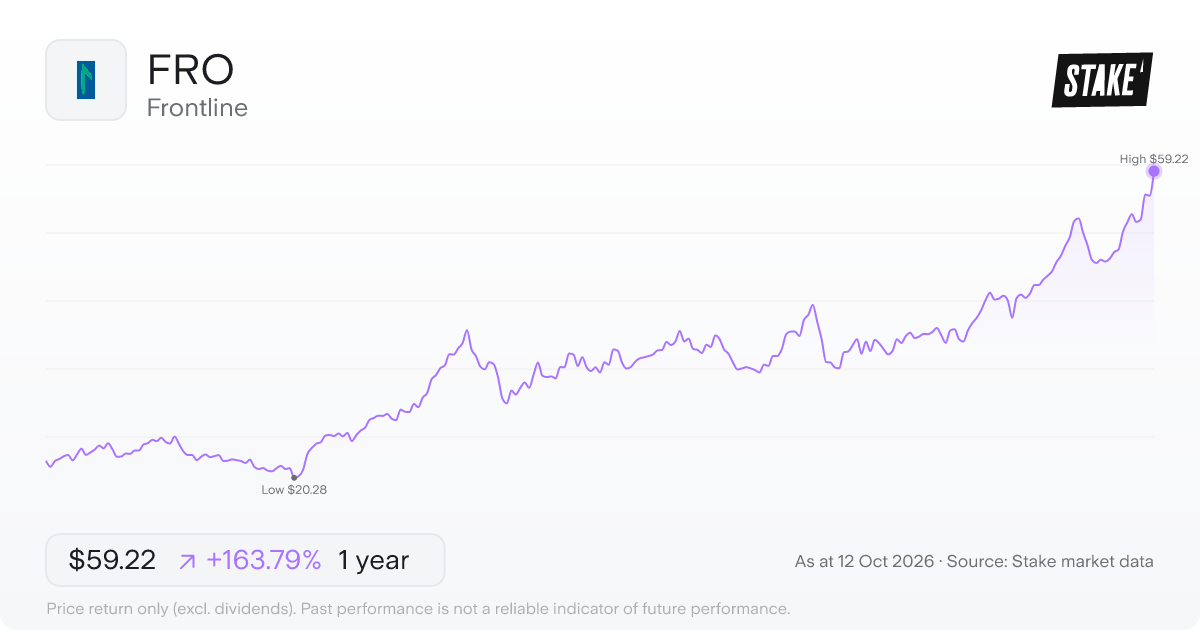
Frontline (FRO) share price over the last year: started at US$22.64, ended at US$52.77, a change of +133.1%. Range over the period: high US$53.75, low US$20.28. Source: Stake market data. Past performance is not a reliable indicator of future performance.
Price: US$59.04 · Daily: -0.3% · Market cap: US$12.52B · Sector: Energy · Industry: Oil & Gas Services
Frontline ($FRO) moves crude oil and refined petroleum products by sea, running a fleet of very large crude carriers (VLCCs), Suezmax tankers and LR2/Aframax tankers across international routes. Those three vessel classes cover different cargo volumes and draft depths, giving $FRO flexibility across a range of port types and trade lanes worldwide.
The company is Cyprus-based and operates under the leadership of CEO Lars Barstad, with a lean headcount of 85 employees – a figure that reflects how much of the day-to-day crewing and logistics sits with third-party operators rather than on the corporate payroll.
5. CMB.TECH ($CMBT)
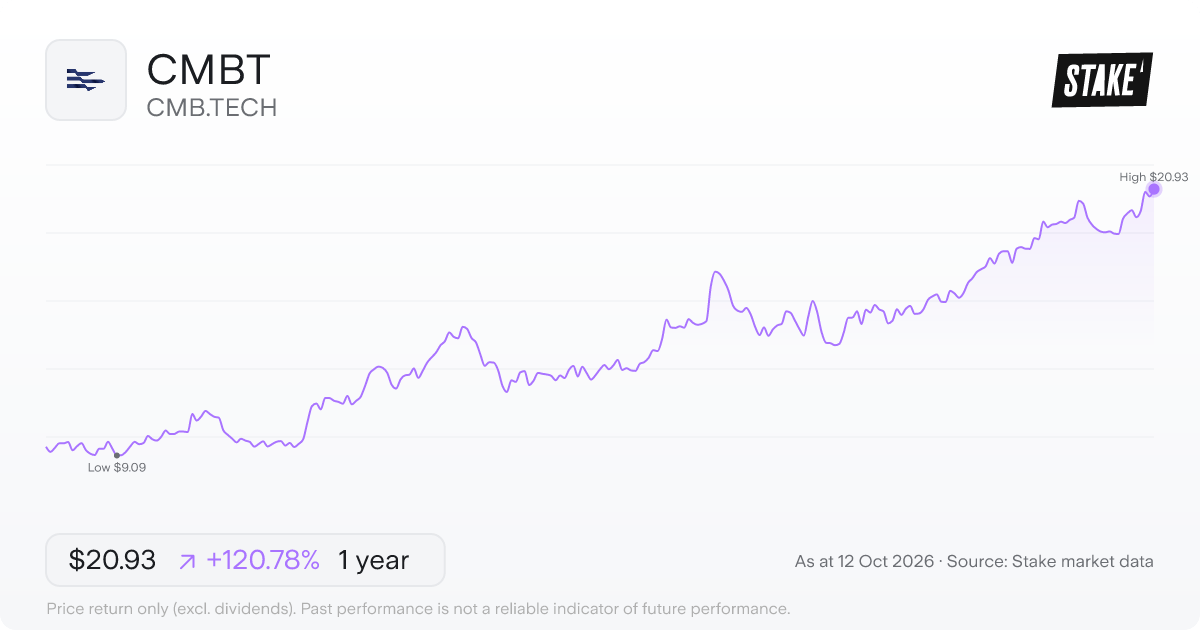
CMB.TECH (CMBT) share price over the last year: started at US$9.42, ended at US$19.68, a change of +108.9%. Range over the period: high US$20.41, low US$9.01. Source: Stake market data. Past performance is not a reliable indicator of future performance.
Price: US$20.79 · Daily: -0.6% · Market cap: US$5.71B · Sector: Energy · Industry: Oil & Gas Services
CMB.TECH NV ($CMBT) is a Belgium-based maritime group with two formal business segments: crude oil tankers trading on international routes, and floating production, storage and offloading – or FPSO – operations that process oil at sea. The group's fleet of more than 250 seagoing vessels covers crude tankers, dry bulk carriers, chemical tankers, container ships, offshore wind vessels, tugboats and ferries. Its crude tanker and offshore oil activities operate under the Euronav brand. The company says it is working on fleet diversification and decarbonisation through large-scale low-carbon marine and industrial applications, with CEO Alexander Saverys leading the group.
Join 1M+ on Stake
Effortless investing in U.S. shares & ETFs
6. International Seaways ($INSW)
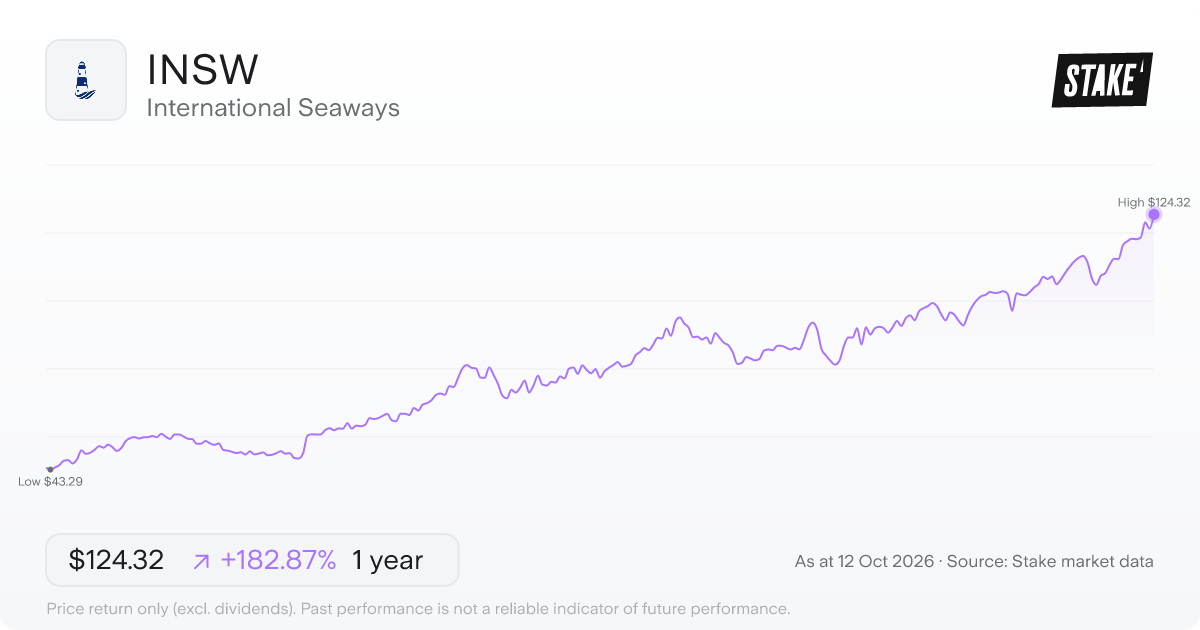
International Seaways (INSW) share price over the last year: started at US$46.04, ended at US$116.46, a change of +153.0%. Range over the period: high US$116.60, low US$43.29. Source: Stake market data. Past performance is not a reliable indicator of future performance.
Price: US$125.04 · Daily: 0.7% · Market cap: US$5.79B · Sector: Energy · Industry: Oil & Gas Services
International Seaways ($INSW) runs a fleet of around 84 tankers split across two distinct businesses. One side moves crude oil on vessels ranging from very large crude carriers (VLCCs) to Suezmaxes and Aframaxes. The other carries refined petroleum products – gasoline, jet fuel and the like – on a mix of medium range (MR) tankers and larger LR1 and LR2 carriers.
$INSW also runs a lightering operation, where it coordinates ship-to-ship crude oil transfers in regions including the U.S. Gulf, U.S. Pacific, Grand Bahama and Panama. That side of the business provides both logistical support and full-service transfers, adding a services layer on top of straightforward vessel hire. Lois Zabrocky leads the company, which employs 2,763 people.
7. Scorpio Tankers ($STNG)
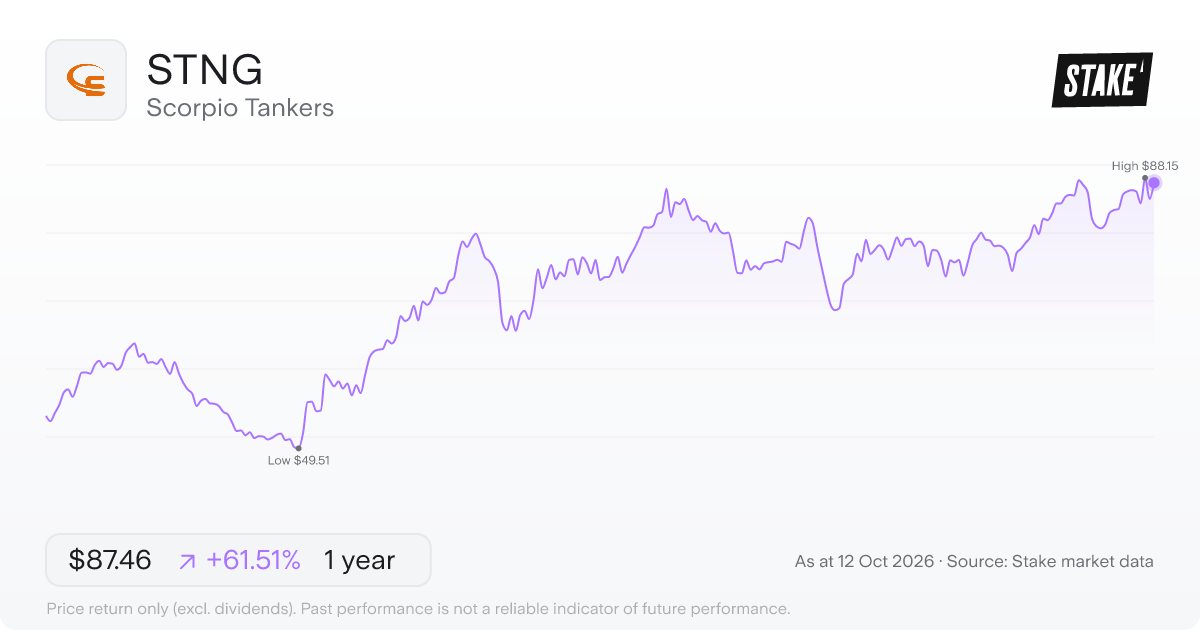
Scorpio Tankers (STNG) share price over the last year: started at US$56.24, ended at US$86.23, a change of +53.3%. Range over the period: high US$87.85, low US$49.51. Source: Stake market data. Past performance is not a reliable indicator of future performance.
Price: US$88.75 · Daily: 1.4% · Market cap: US$4.23B · Sector: Energy · Industry: Oil & Gas Services
Scorpio Tankers ($STNG) is a Monaco-based company that transports refined petroleum products – diesel, gasoline, jet fuel – across international shipping routes. Its fleet of 113 tankers covers four vessel sizes: 14 Handymax ships, 60 medium range (MR) tankers and 39 LR2s, with each class suited to different cargo volumes and voyage lengths.
The company holds those vessels through a mix of outright ownership, finance leases and bareboat charters. CEO Emanuele Lauro runs the operation with just 24 employees on the corporate side.
8. DHT Holdings ($DHT)
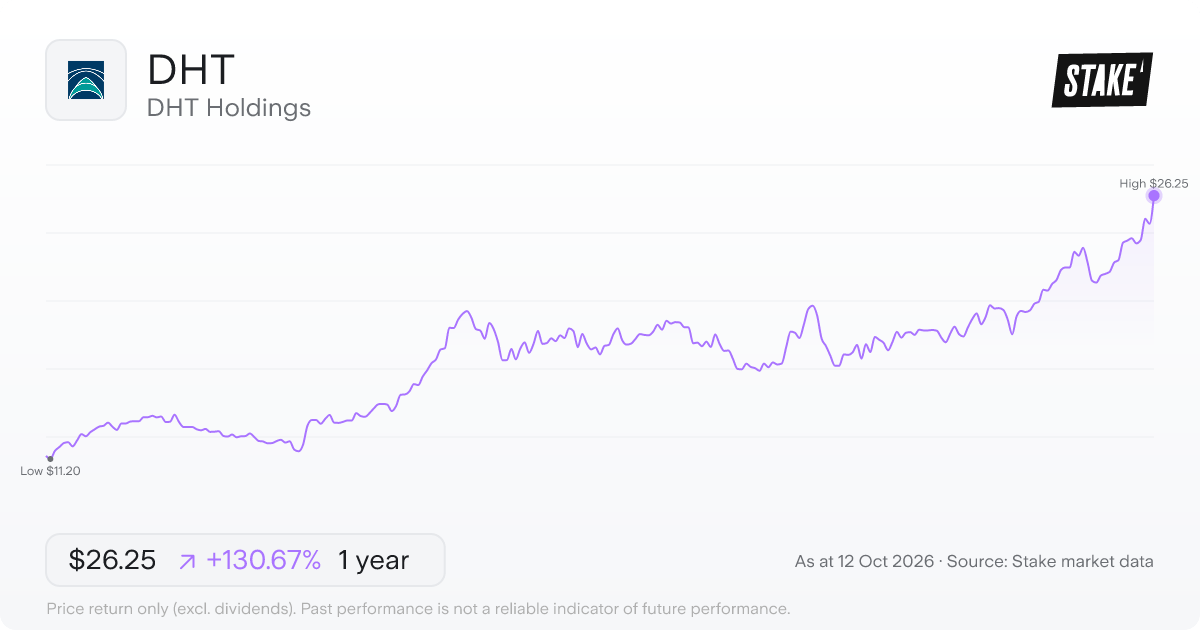
DHT Holdings (DHT) share price over the last year: started at US$11.62, ended at US$23.52, a change of +102.4%. Range over the period: high US$23.82, low US$11.20. Source: Stake market data. Past performance is not a reliable indicator of future performance.
Price: US$26.59 · Daily: 1.4% · Market cap: US$3.82B · Sector: Energy · Industry: Oil & Gas Services
DHT Holdings ($DHT) runs a fleet of around 23 Very Large Crude Carriers – VLCCs, which are among the largest tanker classes afloat – moving crude oil along international shipping routes. Each vessel carries the DHT name followed by an animal or landscape: Jaguar, Leopard, Taiga, Sundarbans and so on, a fleet that operates globally from subsidiary management offices in Monaco, Norway, Singapore and India.
Alongside owning and operating its ships, $DHT provides technical management services as a secondary line of work. Under chief executive Svein Harfjeld, the company employs 737 people across those offices to keep the fleet running.
9. Teekay Tankers ($TNK)
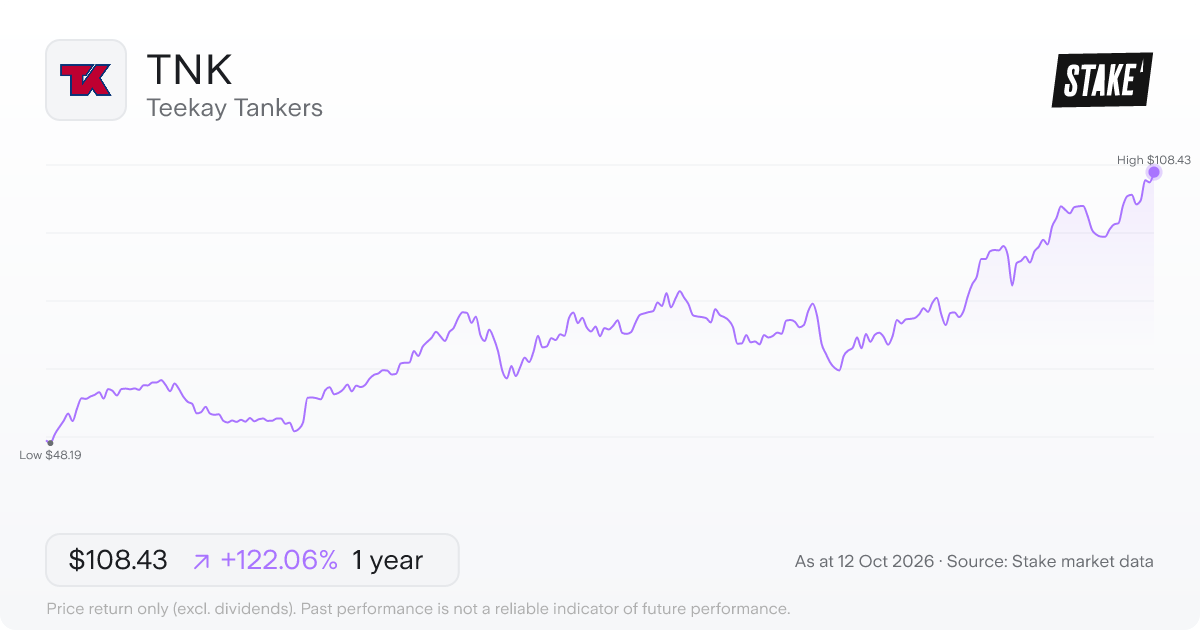
Teekay Tankers (TNK) share price over the last year: started at US$49.90, ended at US$101.24, a change of +102.9%. Range over the period: high US$103.38, low US$48.19. Source: Stake market data. Past performance is not a reliable indicator of future performance.
Price: US$106.39 · Daily: -1.9% · Market cap: US$3.76B · Sector: Energy · Industry: Oil & Gas Services
Teekay Tankers Ltd ($TNK) owns and operates a fleet of crude oil and product tankers, with the Tankers segment forming the core of the business. That segment covers standard tanker operations as well as full-service lightering – a process where cargo transfers between vessels at sea rather than at a fixed port terminal. $TNK runs its U.S.-based ship-to-ship support service as part of those lightering operations.
A separate Marine Services segment provides operational and maintenance services to the Australian government, Australian energy companies and other third parties. Kenneth Hvid serves as CEO.
10. Okeanis Eco Tankers ($ECO)
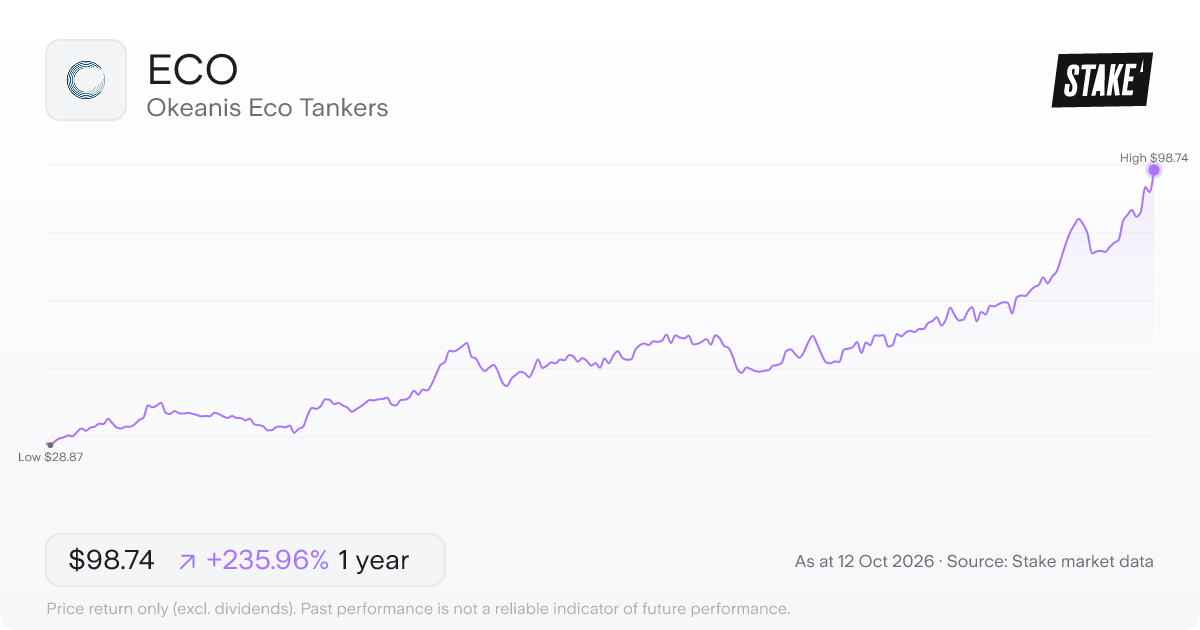
Okeanis Eco Tankers (ECO) share price over the last year: started at US$29.20, ended at US$86.85, a change of +197.4%. Range over the period: high US$88.60, low US$28.20. Source: Stake market data. Past performance is not a reliable indicator of future performance.
Price: US$99.26 · Daily: 0.6% · Market cap: US$3.50B · Sector: Energy · Industry: Oil & Gas Services
Okeanis Eco Tankers Corp ($ECO) is a Greece-based company that charters and operates tanker vessels to move crude oil across international sea routes. Its fleet centres on Suezmax and VLCC (very large crude carrier) vessels, both purpose-built for carrying crude oil in bulk.
Every vessel in the fleet meets ECO-standard specifications, meaning each is designed to consume less bunker fuel than older ship types. All are also fitted with scrubbers – exhaust gas cleaning systems that treat emissions before release – and comply with ballast water treatment regulations.
$ECO's customer network reaches across Singapore, the UK, Hong Kong, Switzerland, Turkey, Brazil and the US, among other countries. CEO Aristidis Alafouzos leads the company with a shore-based team of just 14 employees.
Common questions
How do I invest in tanker stocks in Australia?
Every stock in this list trades on U.S. exchanges, so you'll need a platform that provides access to U.S. markets to buy them. Orders are placed in USD, and the value of those holdings translates back to AUD when you exit – meaning movements in the AUD/USD rate affect what you receive in Australian dollar terms. The companies here differ considerably by vessel type and cargo focus, so the choice of individual stock shapes the kind of shipping exposure the position carries.
What are the key risks of tanker stocks?
Freight rates are the primary driver of tanker revenue, and they can move sharply in either direction. A fall in global oil trade volumes, an oversupply of vessels, or a shift in trade patterns can all weigh on rates quickly. Australian investors carry an additional layer of currency risk, since these companies earn and report in USD while the position's value translates back to AUD. At the company level, debt loads, fleet age and chartering strategy vary across the names here and can amplify or dampen the effect of any rate move.
What's the difference between crude tankers, product tankers and LPG carriers?
Crude tankers move unrefined oil from production points to refineries – the largest vessels (VLCCs and Suezmaxes) can carry over two million barrels per voyage. Product tankers carry the refined outputs: gasoline, jet fuel, diesel and naphtha. LPG carriers are a separate category, transporting liquefied petroleum gas under a demand dynamic tied more to petrochemical feedstocks and heating fuel than to crude oil flows. These three markets can move independently of each other, so fleet mix matters when comparing companies across this list.
What drives tanker freight rates?
Rates are set by the balance between cargo volumes and available vessel capacity at any given moment. When oil moves in large volumes and ships are fully employed, rates rise; when new vessels enter service or trade slows, they can fall quickly. Route length plays a role too – longer voyages keep ships occupied for more time, which effectively tightens supply without any change in fleet size. On the demand side, refinery output levels, seasonal fuel patterns and shifts in where oil is produced relative to where it's consumed all shape how much shipping capacity the market requires.
Disclaimer
Past performance is not a reliable indicator of future performance. When you invest, your capital is at risk. You should consider your own investment objectives, financial situation, and particular needs before making an investment decision. The value of your investments can go down as well as up and you may receive back less than your original investment. As always, do your own research and consider seeking appropriate financial advice before investing.
This is not personal financial advice nor a recommendation to invest in the securities listed. Any advice provided by Stake is of general nature only and does not take into account your specific circumstances. Trading and volume data from the Stake investing platform is for reference purposes only, the investment choices of others may not be appropriate for your needs and is not a reliable indicator of performance.
Please refer to hellostake.com/pricing for the fees that apply. When you trade securities priced in another currency, currency conversion fees may apply and movements in the exchange rate may affect your returns.

Stake Desk
The freshest market insights
This article combines AI and human review from our analysts to bring you accurate, informative investing content at speed. For questions or suggestions, contact stakedesk@stake.com.au.
Subscribe
By subscribing, you agree to our Privacy Policy.