
Top 10 next-gen tech ETFs to watch in 2026
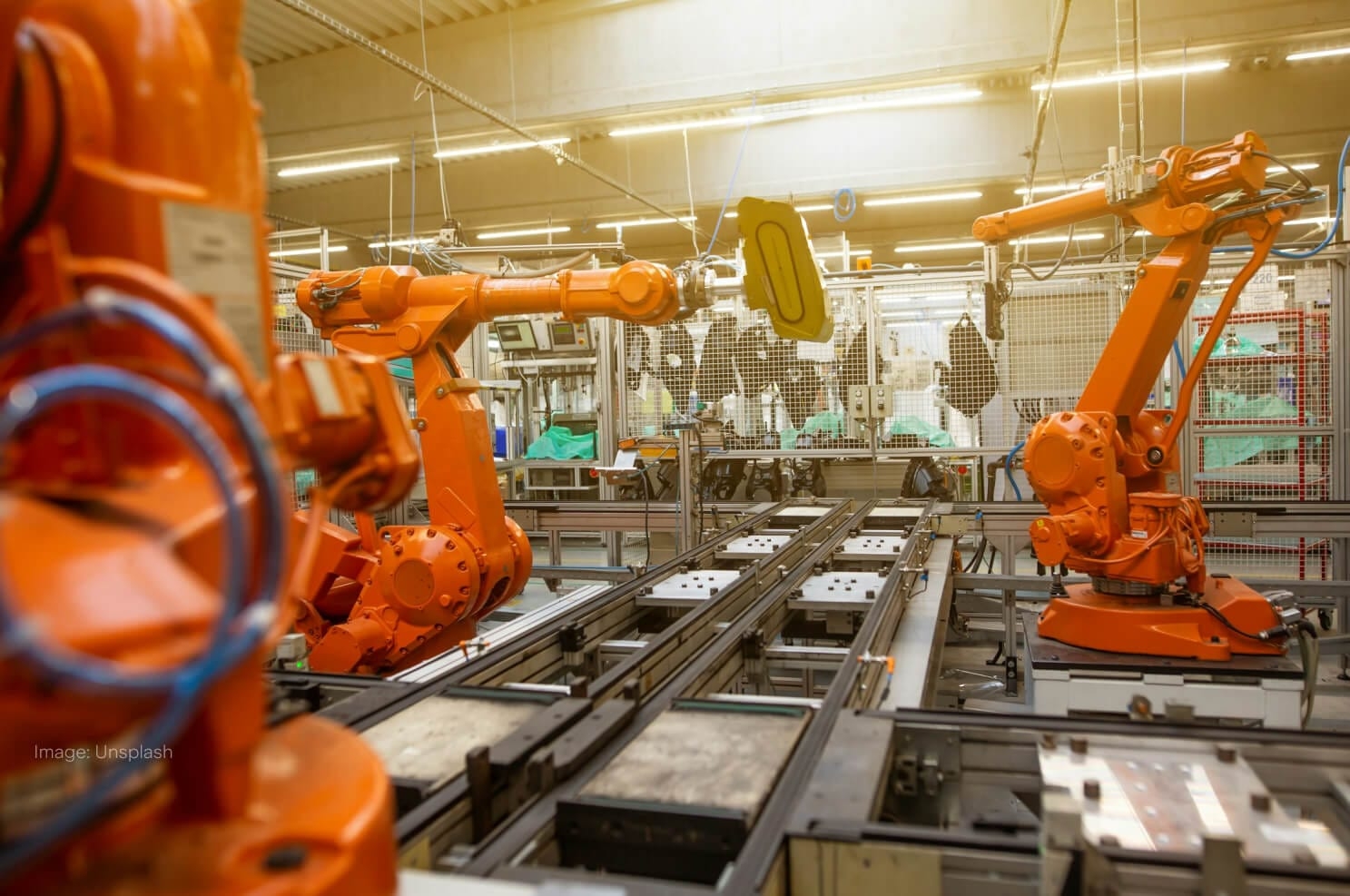
The companies in these funds build the robots on factory floors and the AI inside software products. Annual fees run from 0.40% to 0.95%.
These ETFs track companies developing the technologies reshaping modern computing – from artificial intelligence and big data to robotics, quantum computing and autonomous vehicles. All ten are U.S.-listed. The themes here range further than the label "next-gen tech" might suggest: Global X Autonomous & Electric Vehicles ETF ($DRIV) focuses on EV and self-driving makers, while Defiance Quantum ETF ($QTUM) targets quantum computing and machine learning specifically – a narrower angle than the broader AI-focused funds on this list.
How we built this list: We selected these funds based on their industry or investment category and ordered them by assets under management. Prices are updated daily, and the list and supporting content are reviewed roughly every quarter. All data is sourced from Stake. This list isn't a recommendation and isn't ordered by suitability.
ETF Name | Ticker | Share Price | AUM | Expense Ratio | In Watchlists |
|---|---|---|---|---|---|
Global X Artificial Intelligence & Technology ETF | $67.05 | $10.56B | 0.68% | 2209 | |
Defiance Quantum ETF | $157.39 | $5.85B | 0.40% | 4278 | |
iShares Future AI & Tech ETF | $81.24 | $4.36B | 0.47% | 1228 | |
Global X Robotics and Artificial Intelligence ETF | $36.17 | $3.41B | 0.68% | 4686 | |
ROBO Global Robotics and Automation Index ETF | $83.40 | $2.09B | 0.95% | 1561 | |
ARK Autonomous Technology & Robotics ETF | $127.20 | $1.97B | 0.75% | 5538 | |
Invesco AI and Next Gen Software ETF | $103.20 | $1.51B | 0.57% | 230 | |
First Trust Nasdaq AI and Robotics ETF | $60.89 | $798.4M | 0.66% | 399 | |
WisdomTree AI and Innovation Fund | $45.60 | $705.0M | 0.45% | 154 | |
Global X Autonomous & Electric Vehicles ETF | $33.94 | $366.3M | 0.68% | 763 |
Past performance is not a reliable indicator of future performance.
Source: Stake market data. Figures in US$. Data updated as of 6 October 2026.
✅ Learn more: Top AI stocks to watch in 2026→
1. Global X Artificial Intelligence & Technology ETF ($AIQ)

Global X Artificial Intelligence & Technology ETF (AIQ) share price over the last year: started at US$51.06, ended at US$67.05, a change of +31.3%. Range over the period: high US$70.14, low US$44.78. Source: Stake market data. Past performance is not a reliable indicator of future performance.
Price: US$67.05 · Daily: 0.3% · AUM: US$10.56B · MER: 0.68%
Global X Artificial Intelligence & Technology ETF ($AIQ) is designed to track the Indxx Artificial Intelligence & Big Data Index. The fund aims to match the index's price and yield performance, before fees and expenses. The index follows companies involved in developing and applying artificial intelligence and big data.
That scope covers two distinct types of companies. Some develop the AI and big data technology itself; others apply it across their products and services. $AIQ's holdings draw from both sides of that mandate.
2. Defiance Quantum ETF ($QTUM)

Defiance Quantum ETF (QTUM) share price over the last year: started at US$112.56, ended at US$157.39, a change of +39.8%. Range over the period: high US$168.76, low US$100.36. Source: Stake market data. Past performance is not a reliable indicator of future performance.
Price: US$157.39 · Daily: 0.6% · AUM: US$5.85B · MER: 0.40%
Defiance Quantum ETF ($QTUM) aims to track the BlueStar Quantum Computing and Machine Learning Index, a benchmark built around companies whose products or services are predominantly tied to quantum computing and machine learning. The index uses a modified equal-weighted approach, which means no single company dominates the portfolio the way it might in a market-cap-weighted structure.
The focus is deliberately narrow. Where other funds on this list cast a broader net across artificial intelligence and emerging technology, $QTUM concentrates specifically on quantum computing and machine learning – two fields that overlap but aren't identical. That specificity shapes what the fund holds and how it moves.
3. iShares Future AI & Tech ETF ($ARTY)

iShares Future AI & Tech ETF (ARTY) share price over the last year: started at US$48.43, ended at US$81.24, a change of +67.7%. Range over the period: high US$81.24, low US$44.20. Source: Stake market data. Past performance is not a reliable indicator of future performance.
Price: US$81.24 · Daily: 0.5% · AUM: US$4.36B · MER: 0.47%
iShares Future AI & Tech ETF ($ARTY) tracks the Morningstar Global Artificial Intelligence Select Index, which is designed to measure the performance of companies with exposure to AI technologies. The mandate covers both U.S. and non-U.S. listed companies, so the index looks beyond American tech names to capture AI-related businesses elsewhere in the world.
The fund holds companies that the index methodology expects to contribute to AI – across products and services tied to the technology. Its MER is 0.47%.
4. Global X Robotics and Artificial Intelligence ETF ($BOTZ)

Global X Robotics and Artificial Intelligence ETF (BOTZ) share price over the last year: started at US$37.40, ended at US$36.17, a change of −3.3%. Range over the period: high US$41.63, low US$31.99. Source: Stake market data. Past performance is not a reliable indicator of future performance.
Price: US$36.17 · Daily: -0.08% · AUM: US$3.41B · MER: 0.68%
Global X Robotics and Artificial Intelligence ETF ($BOTZ) aims to track the INDXX Global Robotics & Artificial Intelligence Thematic Index, giving the portfolio a thematic focus on companies involved in robotics and AI. The fund's 80% investment policy – meaning at least 80% of assets are intended to be held in securities that match the index – is non-fundamental, so it can be changed with 60 days' written notice to shareholders.
The MER sits at 0.68%, which is the cost deducted annually from the fund's assets to cover management and operating expenses. With $3.31B in assets under management, $BOTZ has attracted substantial capital since launch, though past flows say nothing about future ones.
5. ROBO Global Robotics and Automation Index ETF ($ROBO)

ROBO Global Robotics and Automation Index ETF (ROBO) share price over the last year: started at US$69.00, ended at US$83.40, a change of +20.9%. Range over the period: high US$90.34, low US$63.04. Source: Stake market data. Past performance is not a reliable indicator of future performance.
Price: US$83.40 · Daily: 0.07% · AUM: US$2.09B · MER: 0.95%
ROBO Global Robotics and Automation Index ETF ($ROBO) is designed to track the ROBO Global Robotics and Automation Index, which aims to measure the performance of companies in the robotics and automation space. The fund holds at least 80% of its assets in securities from that index, covering businesses involved in building or applying robotic and automated technologies.
The focus is fairly specific – $ROBO doesn't try to capture broad tech but instead concentrates on companies whose work sits directly in robotics and automation. That narrower mandate means the fund's fortunes track how that corner of the technology industry performs.
6. ARK Autonomous Technology & Robotics ETF ($ARKQ)

ARK Autonomous Technology & Robotics ETF (ARKQ) share price over the last year: started at US$122.05, ended at US$127.20, a change of +4.2%. Range over the period: high US$143.82, low US$101.26. Source: Stake market data. Past performance is not a reliable indicator of future performance.
Price: US$127.20 · Daily: 1.1% · AUM: US$1.97B · MER: 0.75%
Industrial innovation is the organising theme behind ARK Autonomous Technology & Robotics ETF ($ARKQ), which holds domestic and foreign equities in companies developing autonomous technology and robotics. The portfolio is concentrated in the industrials and information technology sectors. The fund's stated objective is long-term capital growth rather than income generation.
7. Invesco AI and Next Gen Software ETF ($IGPT)

Invesco AI and Next Gen Software ETF (IGPT) share price over the last year: started at US$56.99, ended at US$103.20, a change of +81.1%. Range over the period: high US$108.11, low US$54.18. Source: Stake market data. Past performance is not a reliable indicator of future performance.
Price: US$103.20 · Daily: -0.5% · AUM: US$1.51B · MER: 0.57%
Invesco AI and Next Gen Software ETF ($IGPT) is designed to track the STOXX World AC NexGen Software Development Index, which covers companies with significant exposure to technologies contributing to future software development. The key phrase in the fund's mandate is 'direct revenue' – at least 90% of assets are intended to sit in securities where these technologies are a meaningful source of income, not a side note.
That direct-revenue requirement gives $IGPT a more focused construction than a broad software or technology index might imply. Companies where AI or next-generation software is peripheral to the core business aren't the target here.
8. First Trust Nasdaq AI and Robotics ETF ($ROBT)

First Trust Nasdaq AI and Robotics ETF (ROBT) share price over the last year: started at US$55.68, ended at US$60.89, a change of +9.4%. Range over the period: high US$61.06, low US$44.32. Source: Stake market data. Past performance is not a reliable indicator of future performance.
Price: US$60.89 · Daily: -0.3% · AUM: US$798.4M · MER: 0.66%
First Trust Nasdaq AI and Robotics ETF ($ROBT) aims to track the Nasdaq CTA Artificial Intelligence and Robotics Index. That index is designed to cover companies involved in artificial intelligence and robotics across the technology and industrial sectors, and others beyond the usual tech classification.
The fund's mandate is broader than a pure software play. By pulling in industrial names alongside tech companies, $ROBT is intended to reflect the full chain of where AI and robotics actually show up – from the algorithms to the machines that use them.
9. WisdomTree AI and Innovation Fund ($WTAI)

WisdomTree AI and Innovation Fund (WTAI) share price over the last year: started at US$30.08, ended at US$45.60, a change of +51.6%. Range over the period: high US$48.35, low US$26.73. Source: Stake market data. Past performance is not a reliable indicator of future performance.
Price: US$45.60 · Daily: 0.02% · AUM: US$705.0M · MER: 0.45%
WisdomTree AI and Innovation Fund ($WTAI) is designed to track the WisdomTree Artificial Intelligence & Innovation Index, which aims to capture equity securities of companies globally involved in AI and innovation. The scope goes beyond pure-play software names – the index is designed to cast broadly across companies that the index methodology identifies as meaningfully tied to the AI and innovation theme.
At a 0.45% management expense ratio, the cost of access sits above what you'd pay for a plain market-cap index, though that reflects the more targeted construction of the underlying index. The fund holds $668.8M in assets. For a thematic fund with a global mandate, that's a meaningful pool – though it's the index methodology, not the fund's size, that determines what gets held.
10. Global X Autonomous & Electric Vehicles ETF ($DRIV)

Global X Autonomous & Electric Vehicles ETF (DRIV) share price over the last year: started at US$29.56, ended at US$33.94, a change of +14.8%. Range over the period: high US$42.53, low US$27.58. Source: Stake market data. Past performance is not a reliable indicator of future performance.
Price: US$33.94 · Daily: 0.7% · AUM: US$366.3M · MER: 0.68%
Electric vehicles and autonomous vehicle technology are the twin themes of this fund. Global X Autonomous & Electric Vehicles ETF ($DRIV) is designed to track the Solactive Autonomous & Electric Vehicles Index, which covers exchange-listed companies involved in developing both.
The index includes companies focused on either technology or both, so $DRIV's portfolio can hold EV-focused names alongside companies working on autonomous systems. Any exchange-listed company involved in developing these technologies falls within the fund's scope – the mandate isn't limited to finished vehicle manufacturers. That relatively broad definition gives the index room to capture different types of companies working across these two areas of transportation technology.
Common questions
How do I invest in next-gen tech ETFs in New Zealand?
All ten ETFs on this list trade on U.S. exchanges, so you'll need a share trading platform that offers U.S. market access. Once you have an account, you search the ticker and place an order during U.S. market hours. Settlement works the same as for any other U.S.-listed stock.
What are the key risks of next-gen tech ETFs?
Some of the key risks include theme concentration – individual funds here focus on specific areas like quantum computing or autonomous vehicles, and performance can move sharply if a particular technology develops more slowly than expected. Regulatory frameworks around AI, autonomous systems and data vary across markets and can change, which may affect individual companies held within a fund. Because all ten funds are U.S.-listed and priced in USD, NZ investors face NZD/USD exchange rate exposure: movements between the two currencies affect what a purchase costs and what any proceeds are worth in NZ dollars. Funds focused on earlier-stage technologies may also hold companies without established revenue, which carries additional company-specific risk.
How do the themes across this list differ?
The funds here cover genuinely distinct corners of technology. Some aim to track AI and big data broadly, others concentrate on robotics and industrial automation, and a few target narrower areas like quantum computing or autonomous and electric vehicles. Those differences matter because the underlying companies – and the regulatory, commercial and technical risks they face – can vary considerably from one theme to another.
How much do fees vary across these ETFs?
The annual management expense ratios (MERs) on this list run from 0.40% ($QTUM) to 0.95% ($ROBO), with most funds sitting in the 0.45% to 0.68% range. $ARKQ (0.75%) and $ROBO (0.95%) sit above that cluster. Because MERs are deducted from fund assets each year, the difference between a 0.40% and a 0.95% fee compounds over time.
Disclaimer
Past performance is not a reliable indicator of future performance. When you invest, your capital is at risk. You should consider your own investment objectives, financial situation, and particular needs before making an investment decision. The value of your investments can go down as well as up and you may receive back less than your original investment. As always, do your own research and consider seeking appropriate financial advice before investing.
This is not personal financial advice nor a recommendation to invest in the securities listed. Any advice provided by Stake is of general nature only and does not take into account your specific circumstances. Trading and volume data from the Stake investing platform is for reference purposes only, the investment choices of others may not be appropriate for your needs and is not a reliable indicator of performance.
Please refer to hellostake.com/pricing for the fees that apply. When you trade securities priced in another currency, currency conversion fees may apply and movements in the exchange rate may affect your returns.

Stake Desk
The freshest market insights
This article combines AI and human review from our analysts to bring you accurate, informative investing content at speed. For questions or suggestions, contact stakedesk@stake.com.au.
Subscribe
By subscribing, you agree to our Privacy Policy.