Under the Spotlight: Marvell Technology ($MRVL)
.png&w=3840&q=95)
Nvidia's Jensen Huang just called Marvell the next trillion-dollar company. We drill down.
.png)
ICYMI: Do your own research and make your own decisions. This article drills down on a specific company, however, it is not a recommendation to invest in the company and should not be taken as financial advice. Got a stock you want covered? Tell us here.
At Computex in June, Nvidia ($NVDA) CEO Jensen Huang walked onstage alongside Marvell CEO Matt Murphy and pointed at him. ‘The next trillion-dollar company, ladies and gentlemen,’ Huang told the crowd.
Marvell's stock surged 32.5% that session, its biggest single-day gain ever. The company is currently worth around US$214B. Getting to US$1T would require the stock to roughly quadruple.
Huang isn't the only high-profile fan. U.S. President Donald Trump's financial disclosures show his portfolio managers purchased Marvell stock in February 2026, at a price that has since more than doubled.
The stock's impressive run was enough to land it a coveted spot on the S&P 500.
The question is whether the underlying business justifies that ambition. Let’s put it Under the Spotlight.
What's Marvell's edge
Marvell is a fabless semiconductor company that splits revenue into two buckets: data centre at 76% and communications, covering 5G carrier infrastructure and legacy storage, at 24%.
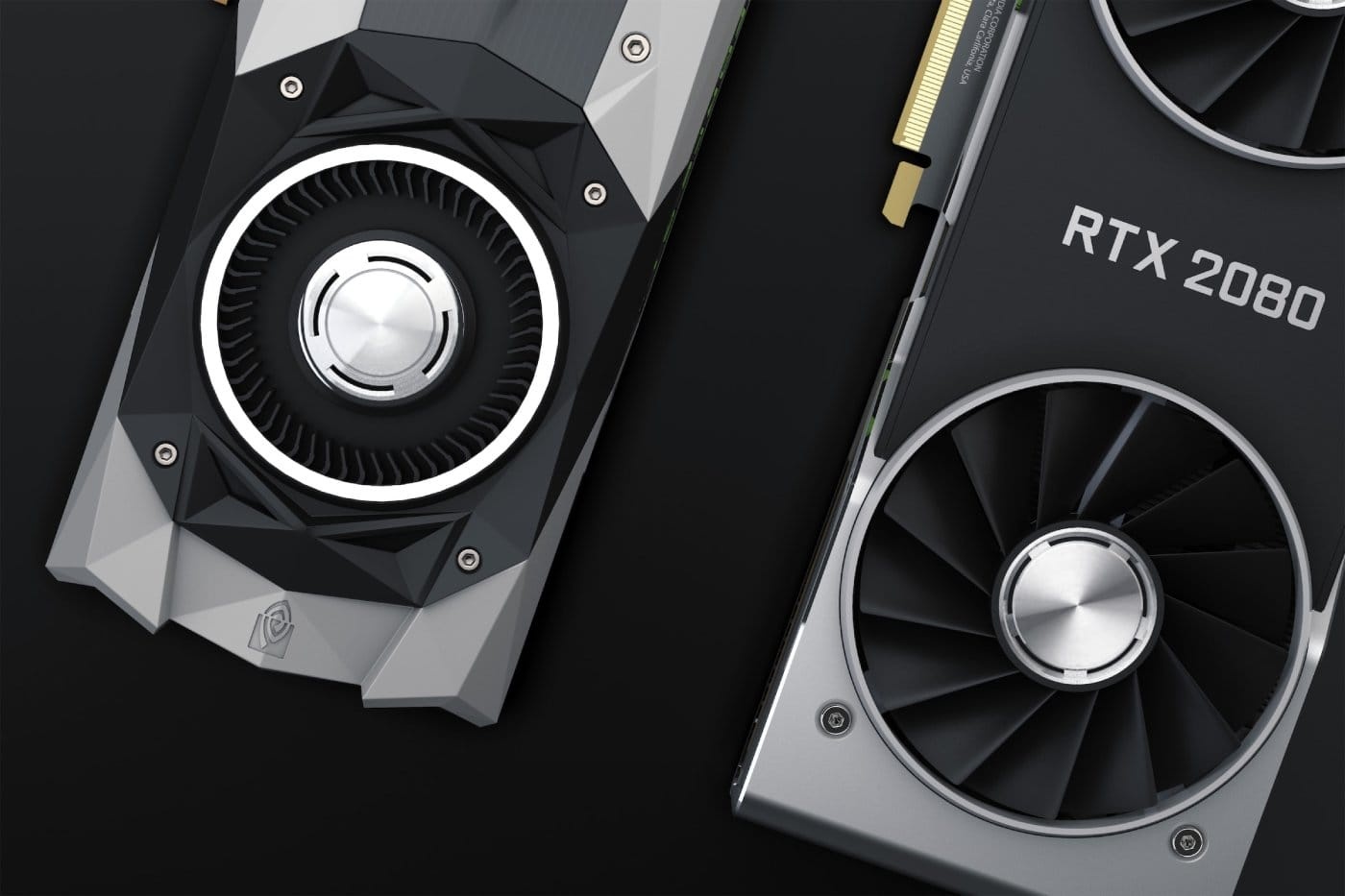
What most investors care about are its custom AI accelerators, called XPUs or ASICs (Application-Specific Integrated Circuit). These are chips designed exclusively to one customer's specification, an increasingly popular choice among Mag7 hyperscalers over off-the-shelf GPUs from players like Nvidia.
.png)
It’s a market that’s expected to boom over the next few years. A recent report by Bloomberg estimated the custom ASIC market should hit US$120B by 2033, at an annual growth rate (CAGR) of 27%. This will be dominated by two players: Broadcom and Marvell.
Marvell is the smaller of the two rivals. But it has picked up two of the most important clients of the AI race. Marvell is a design partner across Amazon's ($AMZN) AWS Trainium and Microsoft's ($MSFT) Maia XPUs.
Marvell also supplies much of the surrounding infrastructure. Its Teralynx switches route data between GPU clusters, and its optical interconnect chips move data between servers. Marvell’s edge is it can provide the custom compute, the networking, and the connectivity layer in a single buildout.
That capability traces back to a pivotal 2019 acquisition: Avera Semiconductor, formerly IBM's custom chip division. This gave Marvell the engineering infrastructure to take on complex, bespoke chip designs at scale. Before that, Marvell was primarily a struggling hard disk drive chip company.
The deals
The scale of Marvell's hyperscaler commitments is what separates it from most semiconductor companies.
Amazon has disclosed over US$225B in Trainium revenue commitments, with AWS CEO Andy Jassy saying on a recent earnings call that its chip business would run at a US$50B annual revenue rate if sold externally. Trainium is now in its third generation, with a fourth in the pipeline, and began its latest production ramp in Q2 2026.
Microsoft's North American data centres source optical interconnect chips from Marvell. The next generation Maia chip is moving to a 2nm process with HBM4 memory, among the most advanced specifications in production globally. Microsoft is on track to spend over US$150B in capital expenditure in 2026 alone.
In March 2026, Nvidia invested US$2B in Marvell via a partnership called NVLink Fusion, integrating Marvell's custom silicon into Nvidia's GPU interconnect architecture.
As if that's not enough, Marvell is also reportedly in discussions with Google ($GOOGL) to develop two new AI chips, a job normally given to Broadcom.
The numbers
In December, 4DMedical expanded its partnership with Philips, which will distribute CT:VQ across North America. The agreement includes a minimum order commitment of around US$10M over 2026 and 2027.
There was also a vote of confidence from ASX medical imaging giant Pro Medicus ($PME) , which made a $10M strategic hybrid investment in 4DMedical last year.
Then came SimonMed. In May 2026, 4DMedical signed a three-year commercial agreement with one of the largest outpatient imaging providers in the U.S., spanning more than 170 centres across ten states. 4DMedical will earn revenue on a per-scan basis.
The numbers
Marvell’s 42% revenue jump to US$8.2B in FY26 came as the AWS and Microsoft chip programs moved into volume production. Revenue had until then been largely flat since 2022.
But this new momentum is expected to continue. Analyst consensus forecasts US$11.5B in FY27 (LSEG) and US$16.7B in FY28. Essentially, analysts expect revenue to roughly double again in two years.
.png)
Earnings are growing faster than revenue, which shows the firm has operating leverage. Adjusted EPS grew 81% in FY26 to US$2.84. LSEG consensus puts FY27 at US$4.06 and FY28 at US$6.15.
Meanwhile, operating cash flow hit a record US$638.8M in Q1 FY27, up from US$332M a year earlier, suggesting the growth is translating into real cash rather than just headline figures.
How it stacks up
Marvell is in a strong position in the AI custom chip space. A report by Bloomberg Intelligence indicates it could hold 20-25% of the AI ASIC design market over the next few years into 2028.
But at 55x forward earnings, investors are paying a premium for that growth. For context, Broadcom, its closest competitor in the ASIC market, trades at around 33x, despite holding significant market share and higher gross margins – around 77% versus Marvell's 59%.
The gap shows the market expects Marvell to grow its earnings significantly faster than Broadcom over the next few years. If that growth arrives, the premium may prove justified. If it slows, the multiple has a long way to compress.
The consensus price target from 44 analysts on LSEG sits at US$243.18, just below the latest trading price of US$245, suggesting the stock has already run past where most analyst models were set before the recent wave of upgrades.
A string of ratings upgrades in June could help to lift the average. UBS delivered a buy rating and US$340 price target, Cantor Fitzgerald US$300, Stifel US$350 and B of A Securities US$365.
The risks
Customer concentration is the most immediate concern. AWS is Marvell's largest customer by a significant margin. A slowdown in the Trainium program or a shift to a different design partner would have a material impact on revenue.
At 68x forward earnings, any deceleration in AI capital spending or a delayed production ramp could compress the multiple sharply, even if absolute revenues hold.
Gross margin pressure is expected to continue as revenue shifts toward custom silicon. Marvell's chips are mostly manufactured by TSMC ($TSM) in Taiwan, making US export controls and geopolitical risk more acute than for companies with diversified fab relationships.
Meanwhile, insiders have sold over US$30M stock over the past three months. The CFO and COO sales were executed under pre-arranged trading plans, though new CFO Dan Durn also sold shares in his first open-market transaction since joining.
Buy or sell?
Marvell's design relationships with AWS and Microsoft span multiple chip generations on three to five year cycles, and the revenue from them is only beginning to ramp. Murphy said on the Q1 FY27 earnings call that AI custom design activity is at an all-time high, with more than 50 opportunities across over 10 customers.
For bullish investors, the case is that Marvell is early in a sustained buildout. If Trainium 3 and 4, Maia 300 and potential Google programs move into production on schedule, the forecast of US$16.7B in FY28 revenue may prove conservative.
For cautious investors, Zacks notes Micron ($MU) reached US$1T at 18x forward earnings. Marvell would need to reach the same milestone at a far higher multiple, meaning it needs to deliver considerably more earnings growth just to justify where it trades today, let alone a US$1T valuation.
This not financial advice nor a recommendation to invest in the securities listed. The information presented is intended to be of a factual nature only. Past performance and forecasts are not a reliable indicator of future performance. The value of your investments can go down as well as up and you may receive back less than your original investment. The author of this article and other employees of Stakeshop Pty Ltd may hold positions or have financial interests in the company (or companies) discussed above. Stakeshop Pty Ltd does not accept any liability for any decisions you may make if you consider and/or use any of the information contained in this article. As always, do your own research and consider seeking financial, legal and taxation advice before investing. This email is subject to our Disclaimers, Terms and Conditions and Privacy Policy. If you are not the intended recipient of this communication, you are not authorised to read, disclose, reproduce, disseminate or otherwise use this information. While we have taken precautions to ensure that no viruses are present in this email, you should rely on your own virus checking systems and processes. You can contact us at support@hellostake.com.

Senior Markets Commentator
Kylie Purcell is an investments analyst and finance journalist with over a decade of experience covering global markets, investment products and digital assets. Her commentary has been featured in publications including the Australian Financial Review, Yahoo Finance and The Motley Fool. She has a Masters Degree in International Journalism from Cardiff University and a Certificate of Securities and Managed Investments (RG146).
Subscribe
By subscribing, you agree to our Privacy Policy.