
Top US retail chain stocks to watch in 2026
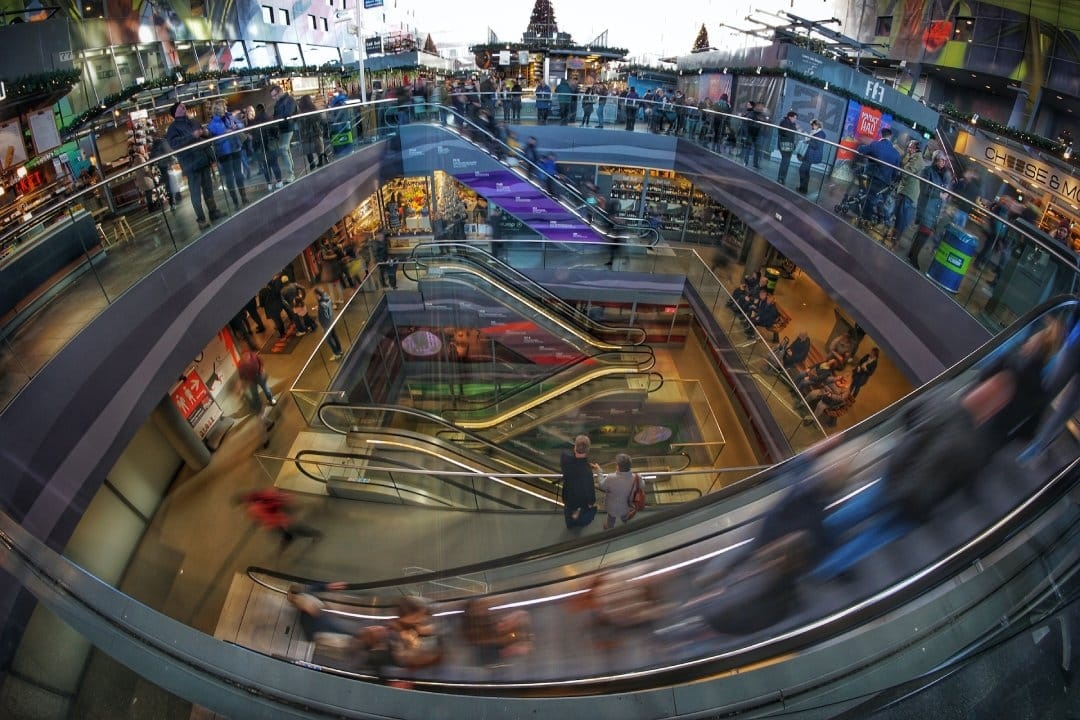
Consumer spending doesn't drive all of these businesses. Home improvement and auto parts retailers here track housing activity and vehicle ownership.
These ten U.S.-listed companies sell goods directly to consumers, running physical stores, digital channels, or a combination of both. The list covers general merchandise and warehouse memberships – Walmart Inc. ($WMT) and Costco Wholesale ($COST) – alongside home improvement chains, automotive parts retailers, off-price fashion and deep-discount variety stores.
How we built this list: We selected these companies based on their retail store chain business and ordered them by market capitalisation. Prices are updated daily, and the list and supporting content are reviewed roughly every quarter. All data is sourced from Stake. This list isn't a recommendation and isn't ordered by suitability.
Company Name | Ticker | Share Price | Market Cap | In Watchlists |
|---|---|---|---|---|
Walmart | $121.12 | $934.60B | 8668 | |
Costco Wholesale | $1,018.21 | $442.38B | 11338 | |
Home Depot | $327.73 | $313.41B | 3429 | |
TJX | $147.38 | $160.07B | 538 | |
Lowe's | $204.37 | $114.66B | 1653 | |
Target | $158.11 | $69.23B | 3034 | |
OReilly Auto | $92.00 | $72.16B | 210 | |
AutoZone | $3,270.70 | $52.90B | 319 | |
Dollar General | $139.11 | $29.15B | 646 | |
Dollar Tree | $131.04 | $23.54B | 433 |
Past performance is not a reliable indicator of future performance.
Source: Stake market data. Figures in US$. Data updated as of 22 October 2026.
Sign up in minutes and get access to a CHESS-sponsored platform, where you can explore US retail chain stocks and more.
1. Walmart ($WMT)
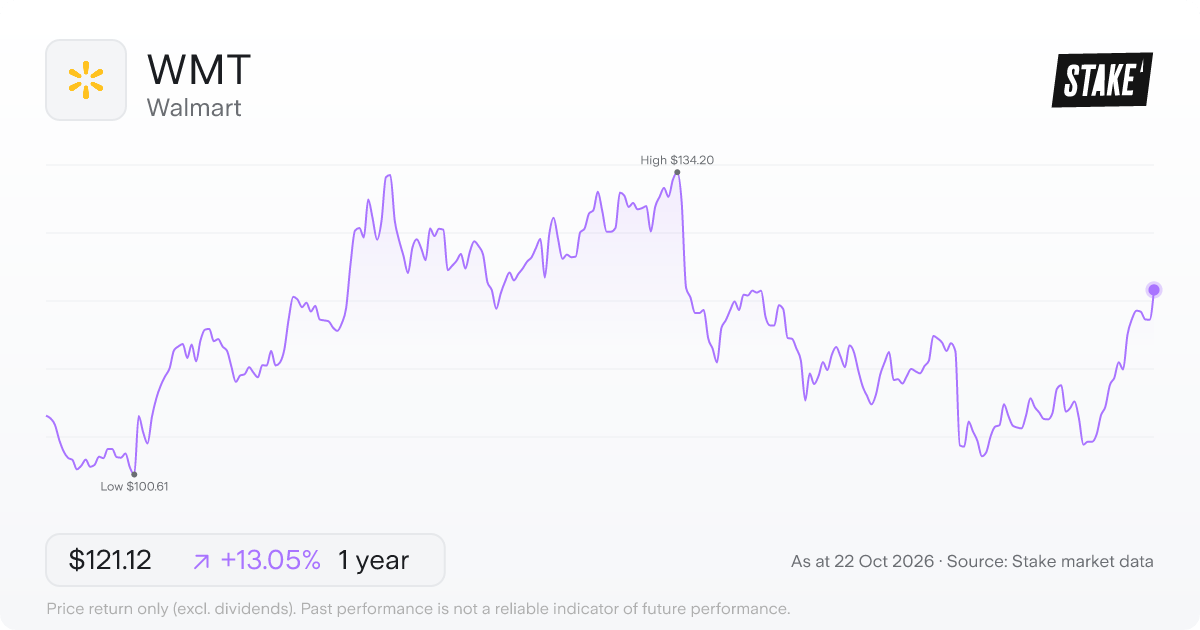
Price: US$121.12 · Daily: 2.8% · Market cap: US$934.60B · Sector: Consumer Staples · Industry: Food & Drug Retailers
Walmart Inc. ($WMT) sells general merchandise and groceries through physical stores, warehouse clubs and digital platforms across markets including the U.S., Mexico, Canada, China and India. The business runs through three segments: Walmart U.S., covering mass merchandising and eCommerce; Walmart International, covering operations outside the U.S.; and Sam's Club U.S., which runs warehouse membership clubs.
Around 2.1 million people work for $WMT, with John Furner serving as CEO. The company describes itself as a technology-powered omnichannel retailer, with physical stores and digital channels designed to function as one integrated operation. Advertising services also sit within the Walmart U.S. segment, a business line separate from direct product sales.
2. Costco Wholesale ($COST)
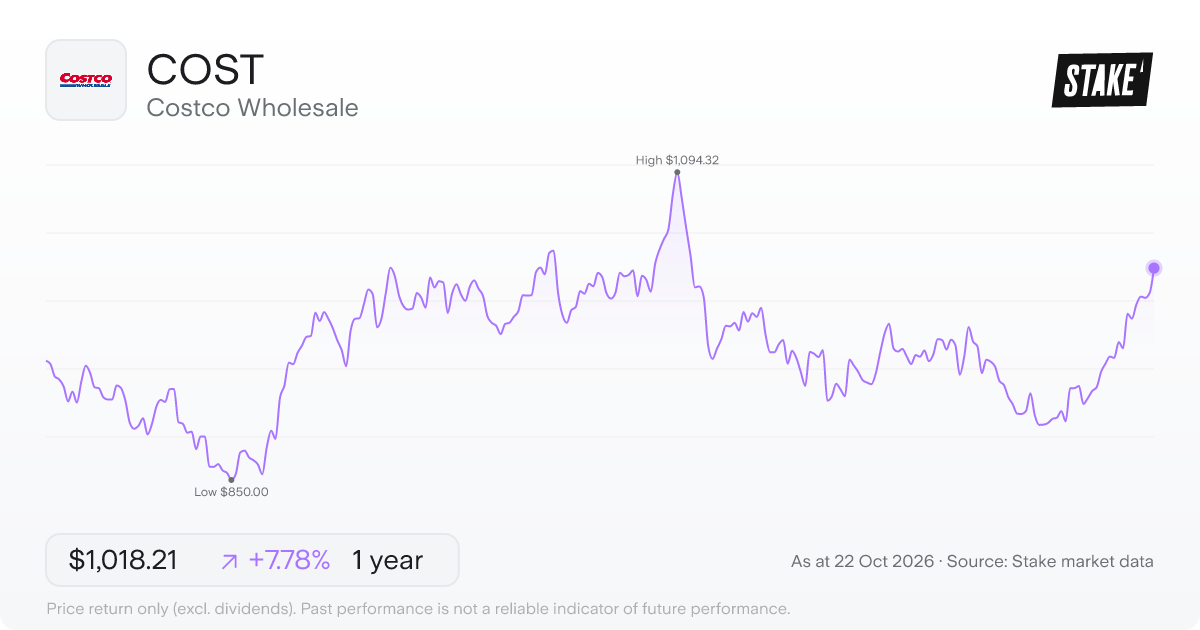
Price: US$1,018.21 · Daily: 2.0% · Market cap: US$442.38B · Sector: Consumer Discretionary · Industry: Retail Stores
Costco Wholesale ($COST) charges an annual membership fee before you can shop at any of its warehouses. The company operates 891 of them worldwide, stocking nationally branded products alongside its own private-label range. CEO Ron Vachris leads a workforce of 341,000 people across those operations.
$COST buys most of its merchandise directly from suppliers, routing stock through cross-docking consolidation points or sending it straight to individual warehouses.
Beyond 614 locations in the U.S. and Puerto Rico, the network reaches Canada, Mexico, Japan, the UK, Korea, Australia, Taiwan, China, Spain, France, Iceland, New Zealand and Sweden. E-commerce operations run across eight of those markets, including the U.S., Canada, the UK and Australia.
3. Home Depot ($HD)
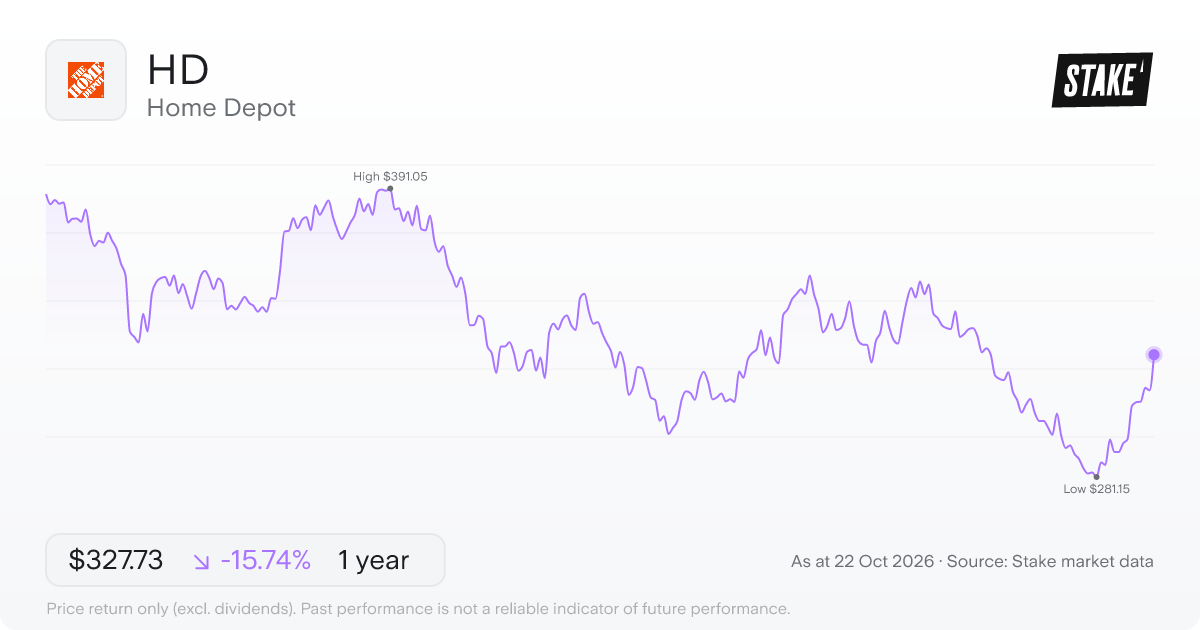
Price: US$327.73 · Daily: 4.3% · Market cap: US$313.41B · Sector: Consumer Discretionary · Industry: Specialty Retail
Home Depot, Inc. ($HD) runs 2,361 retail stores across the U.S., Canada and Mexico. Each store averages 105,000 square feet of indoor space. The product range covers four areas: roofing and building products, interior and construction products, landscaping, and pool supplies.
$HD employs 472,400 people across these operations. Services extend beyond the shelves – home improvement installation and equipment rental cater to customers who'd rather hand the job over than take it on themselves.
4. TJX ($TJX)
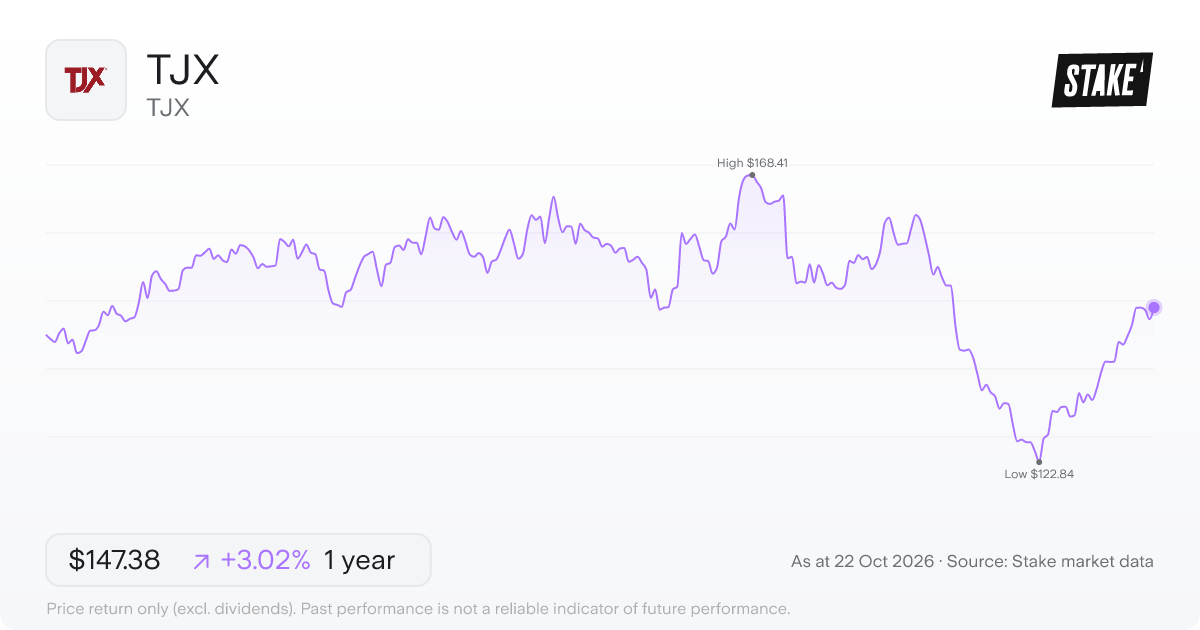
Price: US$147.38 · Daily: 1.3% · Market cap: US$160.07B · Sector: Consumer Discretionary · Industry: Retail Stores
The TJX Companies ($TJX) is an off-price retailer, selling family apparel, footwear and home fashions through a network of branded chains. In the U.S., TJ Maxx and Marshalls handle clothing and accessories, while HomeGoods and Homesense carry furniture, rugs, lighting and cookware.
$TJX extends the same model into Canada through Winners, HomeSense and Marshalls, and runs TK Maxx stores across Europe and Australia. Ernie Herrman leads the business, which employs 377,000 people across those markets.
5. Lowe's ($LOW)
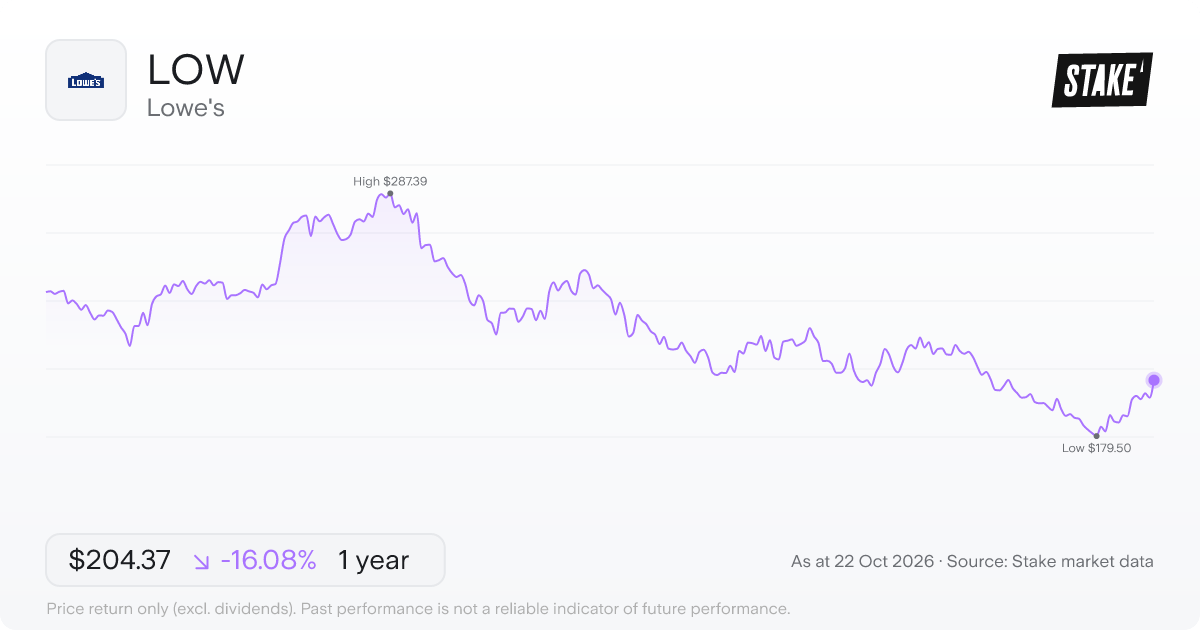
Price: US$204.37 · Daily: 4.0% · Market cap: US$114.66B · Sector: Consumer Discretionary · Industry: Specialty Retail
Lowe's Companies ($LOW) operates over 1,700 home improvement stores, carrying products for construction, maintenance, repair, remodelling and decorating. The range combines national brand-name merchandise with $LOW's own private-label lines, covering categories including lumber, appliances, kitchens, flooring and outdoor living.
$LOW also offers installation services through independent contractors and sells extended protection plans across many of its product categories. Marvin Ellison leads the company, which employs around 167,000 people.
Join 1M+ on Stake
Effortless investing in U.S. shares & ETFs
6. Target ($TGT)
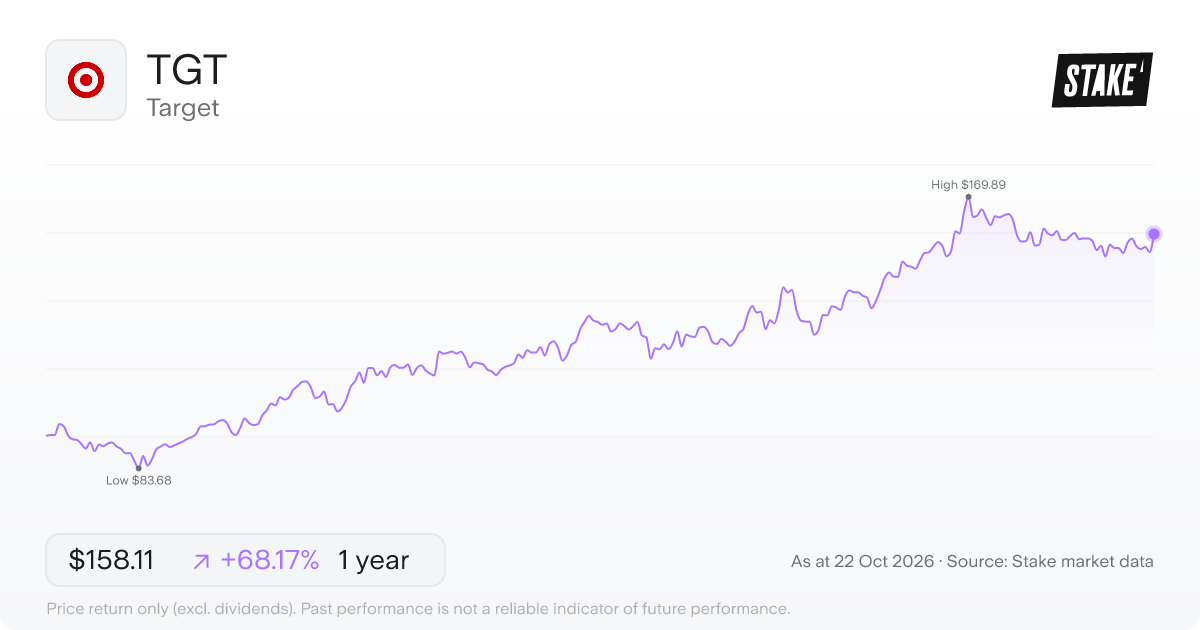
Price: US$158.11 · Daily: 3.8% · Market cap: US$69.23B · Sector: Consumer Discretionary · Industry: Retail Stores
Target Corporation ($TGT) operates large-format stores – most over 170,000 square feet – that combine general merchandise with a full grocery offering comparable to a traditional supermarket. That combination puts it in a different lane from pure-play clothing or home goods retailers. Shoppers can pick up a week's worth of groceries alongside apparel, beauty products, and furniture in a single visit.
$TGT also runs its own stable of private labels – A New Day in apparel, All in Motion in activewear, and others – alongside a digital marketplace called Target Plus, where third-party sellers list products that complement what's in the stores. With 415,000 employees and Michael Fiddelke as CEO, the company is a sizeable operation within general merchandise retail.
7. OReilly Auto ($ORLY)
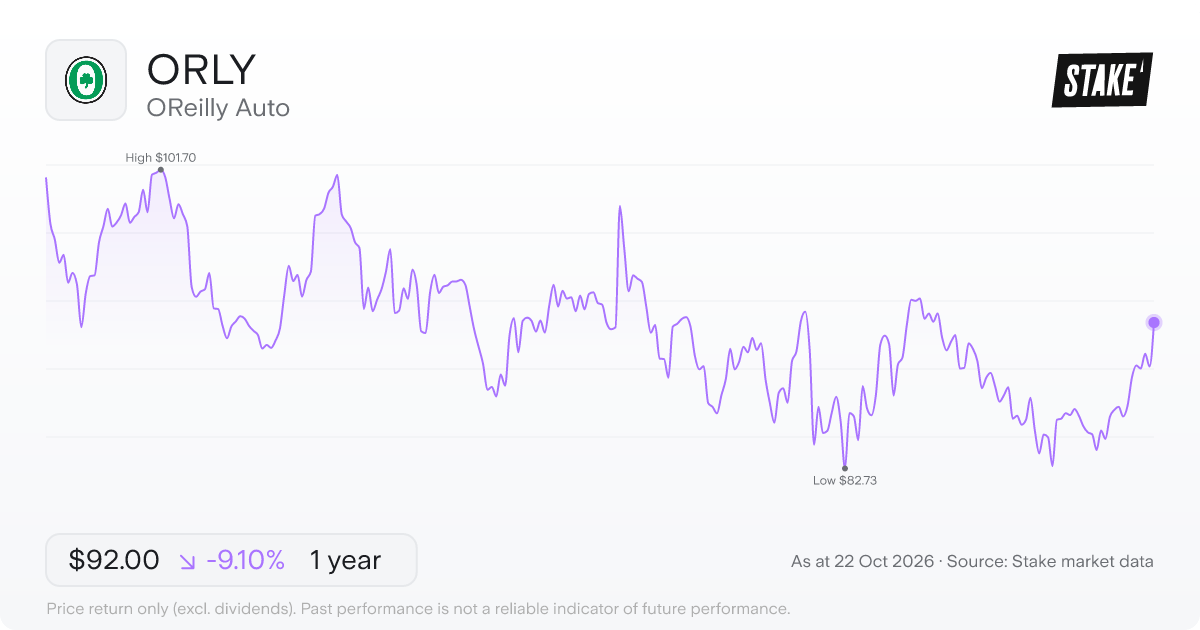
Price: US$92.00 · Daily: 3.1% · Market cap: US$72.16B · Sector: Consumer Discretionary · Industry: Specialty Retail
O'Reilly Automotive ($ORLY) sells automotive aftermarket parts, tools and accessories across the U.S., serving two distinct customer types: people fixing their own vehicles and professional mechanics who need parts fast. The stores stock a wide range of components – batteries, brake parts, alternators, fuel pumps, filters and more – alongside fluids, lighting and general maintenance items.
Beyond the shelves, $ORLY offers in-store services like battery diagnostic testing, wiper and bulb replacement, and electrical module testing. There's also a loaner tool programme and used oil recycling. Brad Beckham leads the company, which employs 78,258 people.
8. AutoZone ($AZO)
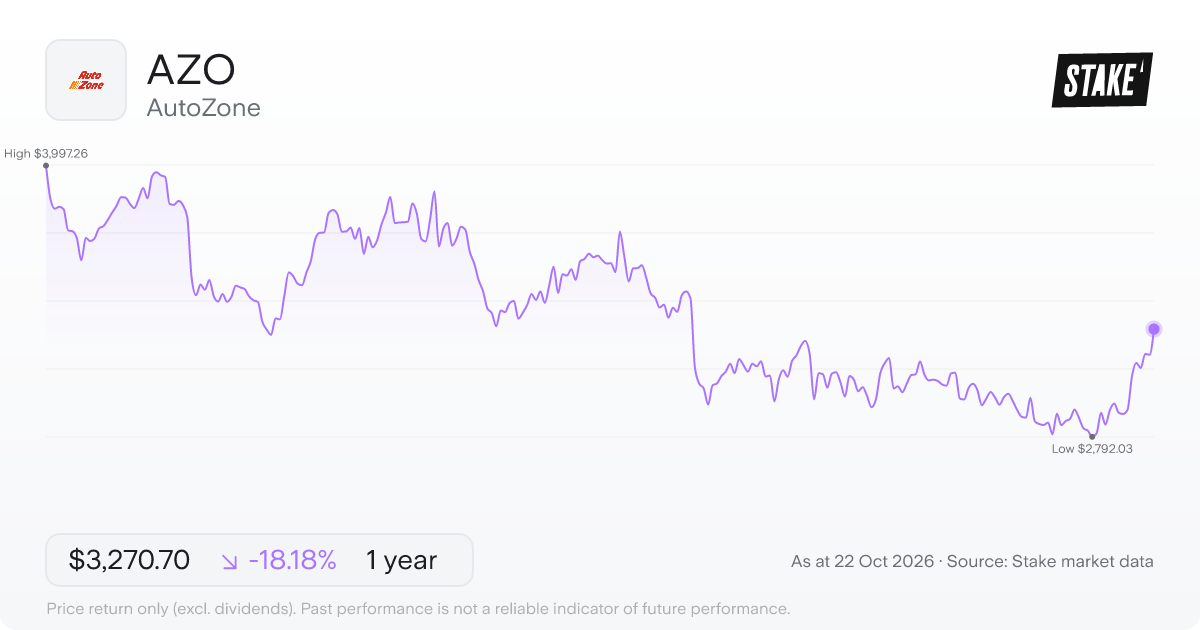
Price: US$3,270.70 · Daily: 3.6% · Market cap: US$52.90B · Sector: Consumer Discretionary · Industry: Specialty Retail
AutoZone ($AZO) sells and distributes automotive replacement parts and accessories across roughly 7,856 stores in the U.S., Mexico and Brazil. The stores stock everything from remanufactured hard parts to maintenance items and accessories for cars, SUVs, vans and light trucks.
Beyond the shop floor, $AZO runs a commercial sales channel through autozonepro.com and offers ALLDATA – its automotive diagnostic, repair and shop management software – as a separate product line. With 78,000 employees and CEO Philip Daniele at the helm, the business covers retail, distribution and software under one roof.
9. Dollar General ($DG)
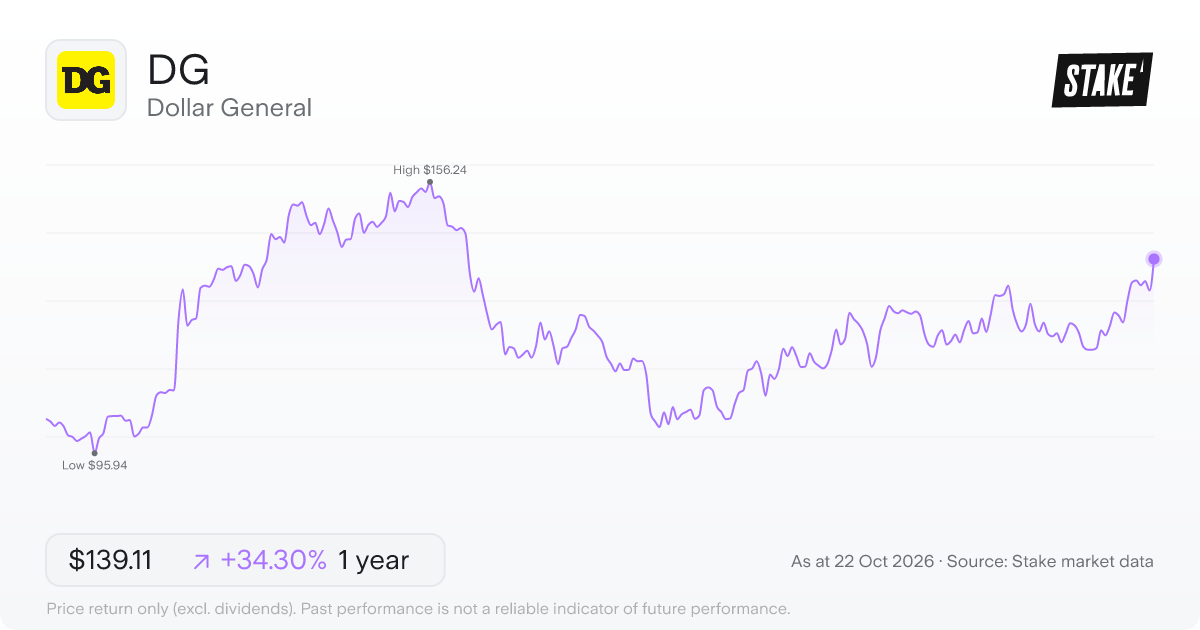
Price: US$139.11 · Daily: 5.3% · Market cap: US$29.15B · Sector: Consumer Discretionary · Industry: Retail Stores
Dollar General Corporation ($DG) is built around one straightforward idea: selling everyday essentials at a discount. The shelves carry a mix of manufacturer brands and $DG's own private-label lines, with the private-label goods priced below the branded alternatives sitting right next to them.
Consumables form the core of what the business sells – packaged food, paper and cleaning products, health and beauty items, snacks, pet supplies and tobacco products. Beyond that, $DG stocks home goods like cookware, small appliances and storage containers, plus basic apparel covering infants through to adults.
Seasonal ranges rotate in throughout the year, covering holiday items, gardening supplies, small electronics and prepaid phones. With 194,000 employees, the scale of the operation reflects just how many stores this model requires to reach its customer base.
10. Dollar Tree ($DLTR)
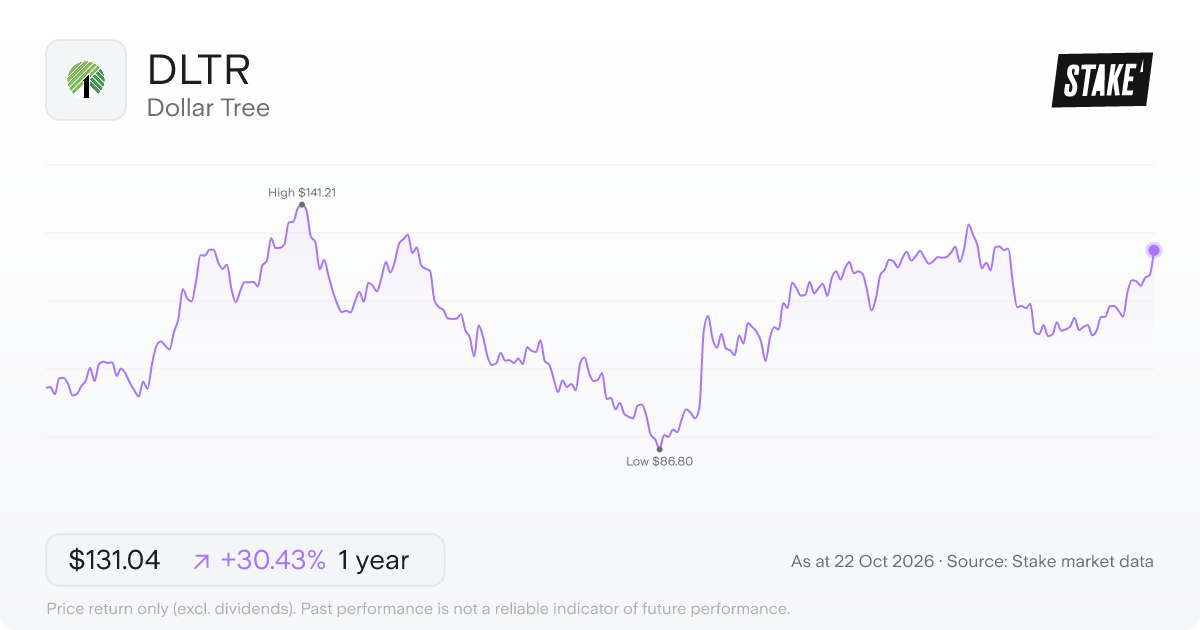
Price: US$131.04 · Daily: 4.4% · Market cap: US$23.54B · Sector: Consumer Discretionary · Industry: Retail Stores
Running approximately 9,000 discount variety stores across 48 U.S. states and Washington D.C., Dollar Tree, Inc. ($DLTR) also operates around 275 locations across seven Canadian provinces. Both the Dollar Tree and Dollar Tree Canada brands sell merchandise predominantly at an opening price point – meaning entry-level prices rather than mid-range or premium tiers.
The merchandise mix covers consumables like food, candy, household paper and health products, alongside discretionary goods including seasonal items and variety merchandise. $DLTR supplies those stores through 16 distribution centres in the U.S. and two in Canada. CEO Mike Creedon leads a workforce of 35,181 employees across the business.
Common questions
How can I invest in US retail stocks in Australia?
You can buy shares in any of these companies through a share trading platform that offers access to U.S. markets – you search the ticker, place an order, and the shares are held in your account. All ten stocks trade in USD, so the AUD/USD exchange rate affects what you pay and what your holdings are worth in Australian dollar terms.
What are the key risks of US retail stocks?
Retail revenue is tied to consumer spending, which tends to pull back during economic downturns – though the companies in this list are exposed to different degrees. Some track specific markets beyond general consumption: home improvement retailers follow housing activity, and auto parts specialists are linked to vehicle ownership and maintenance patterns. Online competition can weigh on store traffic and margins for physical retailers over time. For Australian investors, there's a currency dimension too – a strengthening Australian dollar reduces the AUD value of USD-denominated holdings, regardless of how the underlying stocks perform.
What kinds of retailers does this list cover?
The ten companies fall into several distinct retail models. Home improvement is covered by $HD and $LOW; automotive aftermarket parts by $ORLY and $AZO; and discount variety stores by $DG and $DLTR. $COST operates a membership warehouse model, $TJX runs off-price chains for apparel and homewares, and $WMT and $TGT are general merchandise retailers that also carry full grocery ranges.
Disclaimer
Past performance is not a reliable indicator of future performance. When you invest, your capital is at risk. You should consider your own investment objectives, financial situation, and particular needs before making an investment decision. The value of your investments can go down as well as up and you may receive back less than your original investment. As always, do your own research and consider seeking appropriate financial advice before investing.
This is not personal financial advice nor a recommendation to invest in the securities listed. Any advice provided by Stake is of general nature only and does not take into account your specific circumstances. Trading and volume data from the Stake investing platform is for reference purposes only, the investment choices of others may not be appropriate for your needs and is not a reliable indicator of performance.
Please refer to hellostake.com/pricing for the fees that apply. When you trade securities priced in another currency, currency conversion fees may apply and movements in the exchange rate may affect your returns.

Stake Desk
The freshest market insights
This article combines AI and human review from our analysts to bring you accurate, informative investing content at speed. For questions or suggestions, contact stakedesk@stake.com.au.
Subscribe
By subscribing, you agree to our Privacy Policy.