Top 10 U.S. high yield bond ETFs to watch in 2026

'High yield bond' in the name doesn't mean every fund holds bonds. Some hold floating-rate senior loans, which rank ahead of bonds if a borrower defaults.
High yield corporate bonds are issued by companies with below-investment-grade credit ratings, and these ETFs aim to track indexes of US dollar-denominated versions of them. The funds here don't all hold the same type of instrument – Invesco Senior Loan ETF ($BKLN) and State Street SPDR Blackstone Senior Loan ETF ($SRLN) hold floating-rate bank loans, while VanEck Fallen Angel High Yield Bond ETF ($ANGL) focuses on bonds that were investment grade at issuance before losing that rating.
How we built this list: We selected these funds based on their investment category and relevance to the theme, then ordered them by assets under management. Prices are updated daily, and the list and supporting content are reviewed roughly every quarter. All data is sourced from Stake. This list isn't a recommendation and isn't ordered by suitability.
ETF Name | Ticker | Share Price | AUM | Expense Ratio | In Watchlists |
|---|---|---|---|---|---|
iShares Broad USD High Yield Corporate Bond ETF | $35.37 | $27.62B | 0.08% | 87 | |
iShares iBoxx $ High Yield Corporate Bond ETF | $76.63 | $17.51B | 0.49% | 257 | |
iShares 0-5 Year High Yield Corporate Bond ETF | $40.84 | $7.73B | 0.29% | 57 | |
State Street SPDR Bloomberg High Yield Bond ETF | $91.93 | $6.20B | 0.40% | 172 | |
Invesco Senior Loan ETF | $20.49 | $5.81B | 0.64% | 34 | |
State Street SPDR Blackstone Senior Loan ETF | $40.05 | $5.19B | 0.70% | 25 | |
State Street SPDR Bloomberg Short Term High Yield Bond ETF | $23.95 | $4.31B | 0.40% | 24 | |
Xtrackers USD High Yield Corporate Bond ETF | $34.88 | $3.33B | 0.05% | 19 | |
VanEck Fallen Angel High Yield Bond ETF | $27.20 | $2.78B | 0.25% | 56 | |
First Trust Senior Loan Fund | $44.55 | $2.50B | 0.86% | 9 |
Past performance is not a reliable indicator of future performance.
Source: Stake market data. Figures in US$. Data updated as of 17 November 2026.
✅ Learn more: Top 10 U.S.-listed bond ETFs to watch in 2026→
Sign up in minutes and get razor-sharp access to Wall St, where you can explore U.S. high-yield bond ETFs and more.
1. iShares Broad USD High Yield Corporate Bond ETF ($USHY)
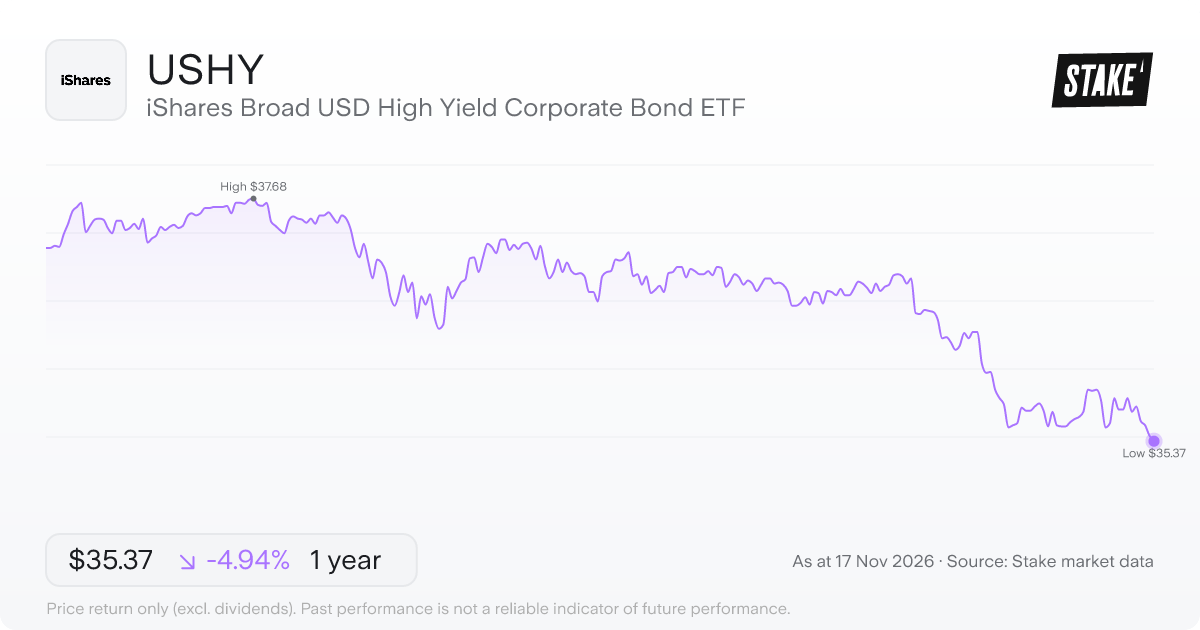
Price: US$35.37 · Daily: -0.1% · AUM: US$27.62B · MER: 0.08%
The BofA Merrill Lynch U.S. High Yield Constrained Index covers dollar-denominated, high yield corporate bonds available for sale in the United States. iShares Broad USD High Yield Corporate Bond ETF ($USHY) aims to track that index. The fund is designed to put at least 90% of its assets into the bonds that make up the index.
The 'broad' in the name signals wide-market coverage rather than a focus on any particular corner of the high yield universe. iShares Broad USD High Yield Corporate Bond ETF ($USHY) is intended as a general tracker of the asset class – corporate bonds issued below investment grade and denominated in U.S. dollars.
2. iShares iBoxx $ High Yield Corporate Bond ETF ($HYG)
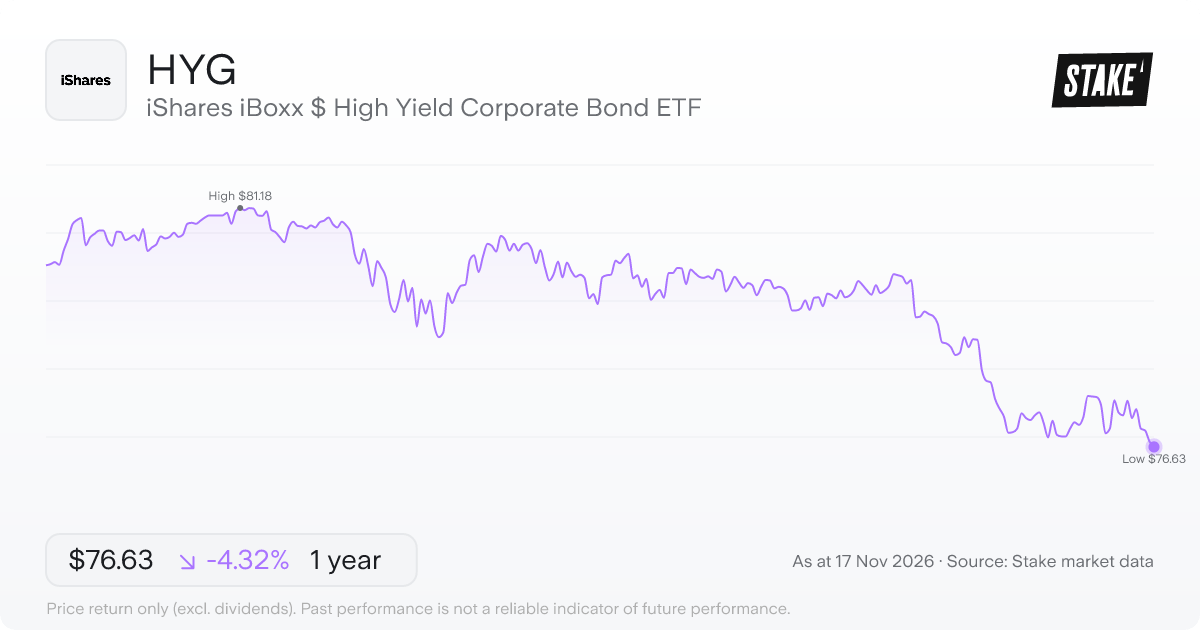
Price: US$76.63 · Daily: -0.1% · AUM: US$17.51B · MER: 0.49%
iShares iBoxx $ High Yield Corporate Bond ETF ($HYG) is designed to track the Markit iBoxx USD Liquid High Yield Index, a benchmark composed of US dollar-denominated bonds issued by companies with below-investment-grade credit ratings. At least 90% of the fund's assets are held in the index's component securities, with up to 10% allocated to certain futures contracts.
The underlying index focuses on liquidity, pulling from the broader high yield universe to hold bonds that meet minimum size and trading thresholds. That construction means $HYG is oriented toward the more actively traded corner of the US high yield market, rather than the full spectrum of below-investment-grade debt.
Because the fund holds fixed-rate corporate bonds rather than floating-rate instruments, its income profile moves differently to loan-based funds like $BKLN or $SRLN, which are also in this list. That's a structural difference worth noting when comparing how each fund responds to shifts in interest rates.
3. iShares 0-5 Year High Yield Corporate Bond ETF ($SHYG)
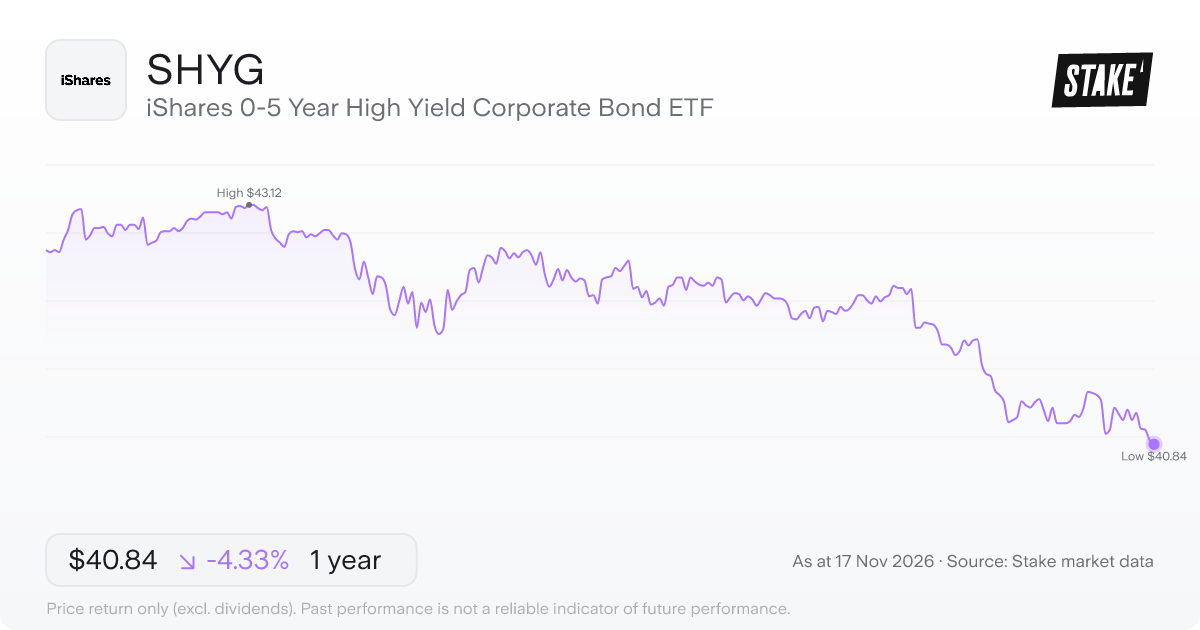
Price: US$40.84 · Daily: -0.10% · AUM: US$7.73B · MER: 0.29%
iShares 0-5 Year High Yield Corporate Bond ETF ($SHYG) aims to track the Markit iBoxx USD Liquid High Yield 0-5 Index, which covers US dollar-denominated high yield corporate bonds with remaining maturities of less than five years. That short-maturity focus is a defining feature of how the fund is constructed – it stays at the shorter end of the high yield universe rather than holding bonds across the full maturity spectrum.
Because bond prices tend to be more sensitive to interest rate moves as maturities extend, keeping maturities under five years is intended to reduce that rate sensitivity compared to broader high yield indexes. The fund holds corporate debt that carries below-investment-grade credit ratings, so credit risk remains a real consideration even as duration is kept short.
4. State Street SPDR Bloomberg High Yield Bond ETF ($JNK)
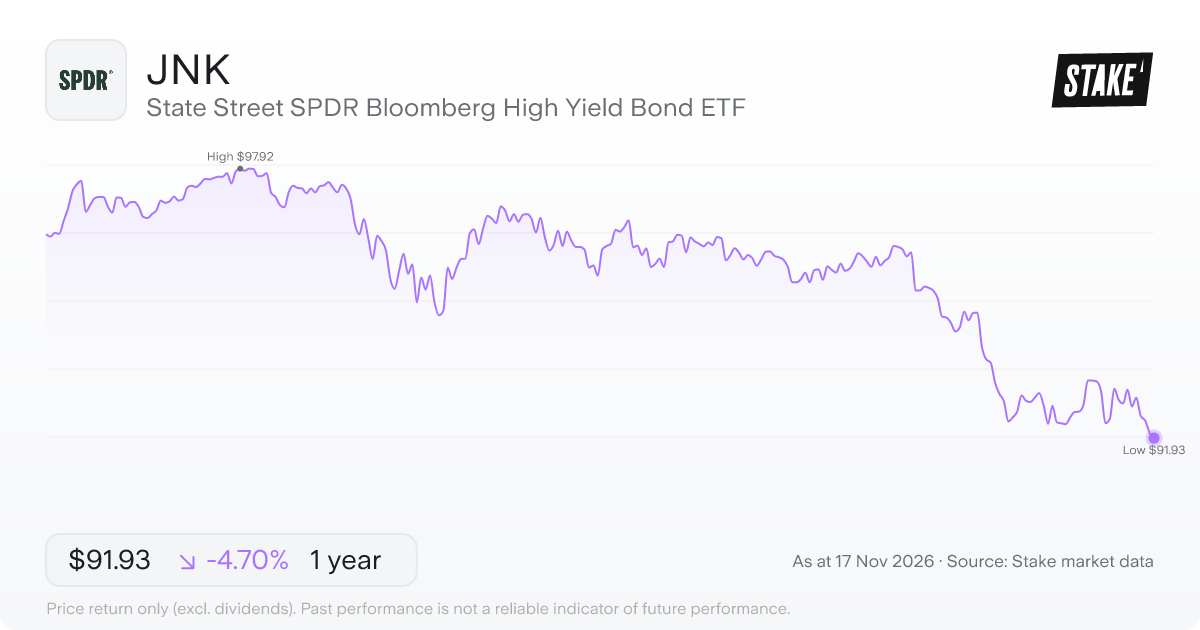
Price: US$91.93 · Daily: -0.1% · AUM: US$6.20B · MER: 0.40%
Tracking a Bloomberg index of U.S. high yield corporate bonds, State Street SPDR Bloomberg High Yield Bond ETF ($JNK) aims to reflect the price and yield performance of that market in broad terms. The mandate covers the wider high yield universe, rather than a specific corner of it like floating-rate loans or fallen angels. Performance is intended to correspond generally to the index, before fees and expenses.
5. Invesco Senior Loan ETF ($BKLN)
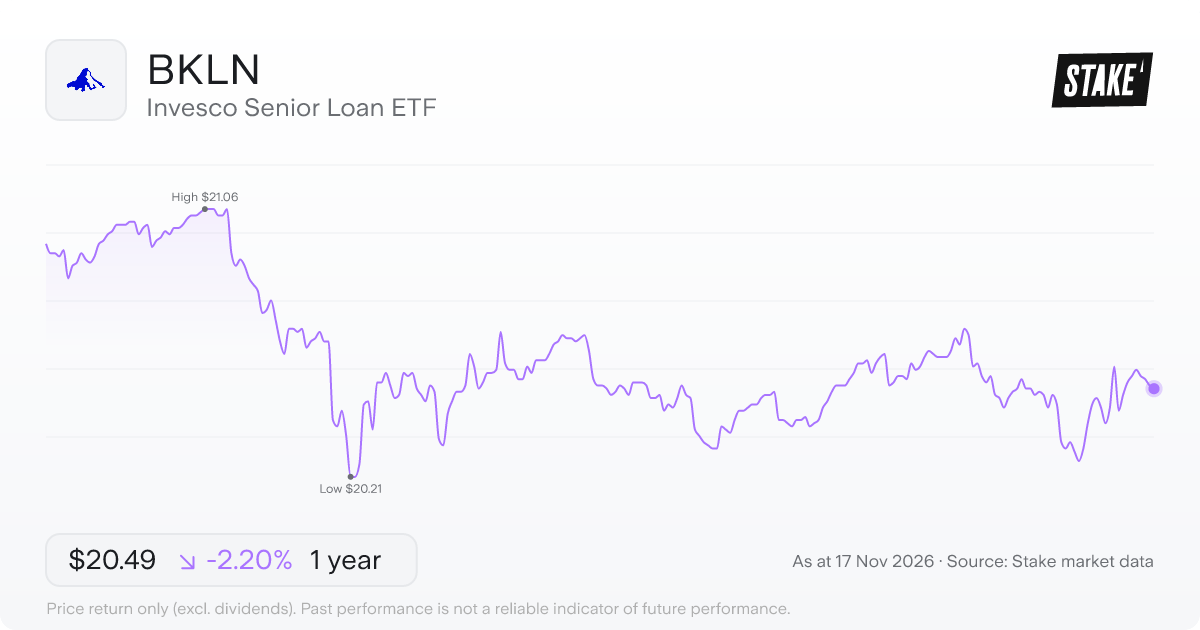
Price: US$20.49 · Daily: -0.05% · AUM: US$5.81B · MER: 0.64%
Invesco Senior Loan ETF ($BKLN) aims to track the S&P/LSTA U.S. Leveraged Loan 100 Index, which covers 100 of the largest U.S. leveraged loans by loan size. Rather than holding corporate bonds, the fund invests at least 80% of its assets in bank loans – also called senior loans or leveraged loans – made to companies with below-investment-grade credit ratings.
Senior loans sit higher in the repayment order than bonds if a borrower defaults, which is a structural feature of the instrument rather than a reflection of credit quality. These loans also typically carry floating interest rates, so the income they generate moves with prevailing rate benchmarks rather than being fixed at issuance.
Join 1M+ on Stake
Effortless investing in U.S. shares & ETFs
6. State Street SPDR Blackstone Senior Loan ETF ($SRLN)
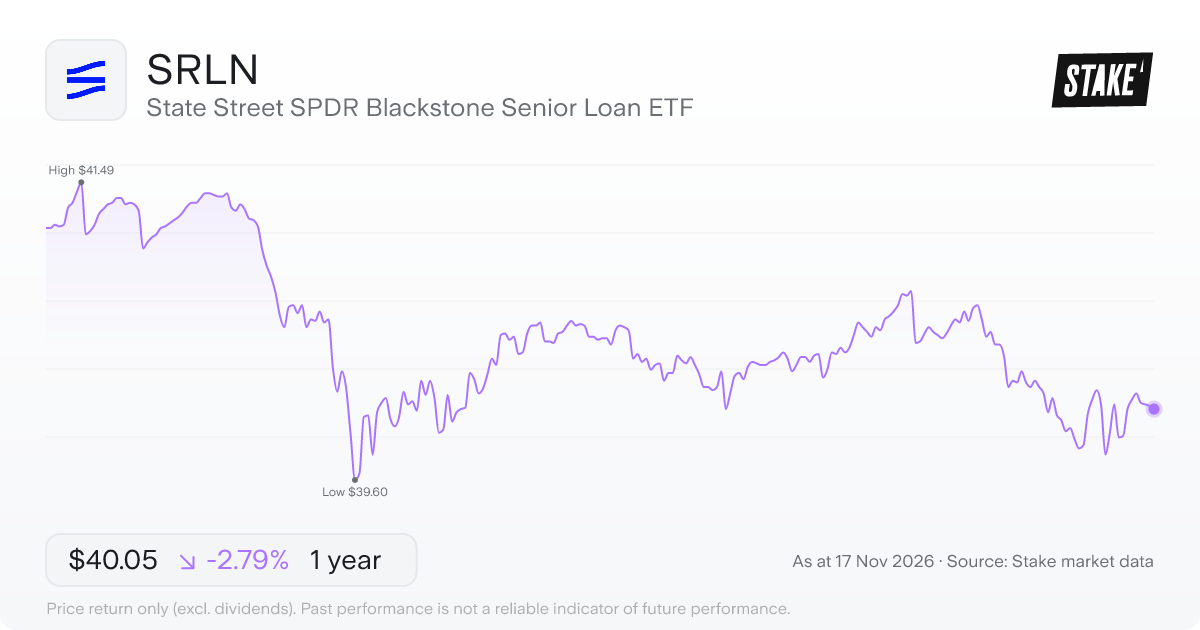
Price: US$40.05 · Daily: -0.05% · AUM: US$5.19B · MER: 0.70%
State Street SPDR Blackstone Senior Loan ETF ($SRLN) takes an active approach rather than simply tracking the Morningstar LSTA US Leveraged Loan Index – it aims to outperform that benchmark. At least 80% of the fund's assets go into senior loans, specifically first lien senior secured floating rate bank loans.
Because the loans are floating rate, their interest payments adjust as rates move. That's a structural feature of the instrument the fund holds, not an outcome the fund promises.
7. State Street SPDR Bloomberg Short Term High Yield Bond ETF ($SJNK)
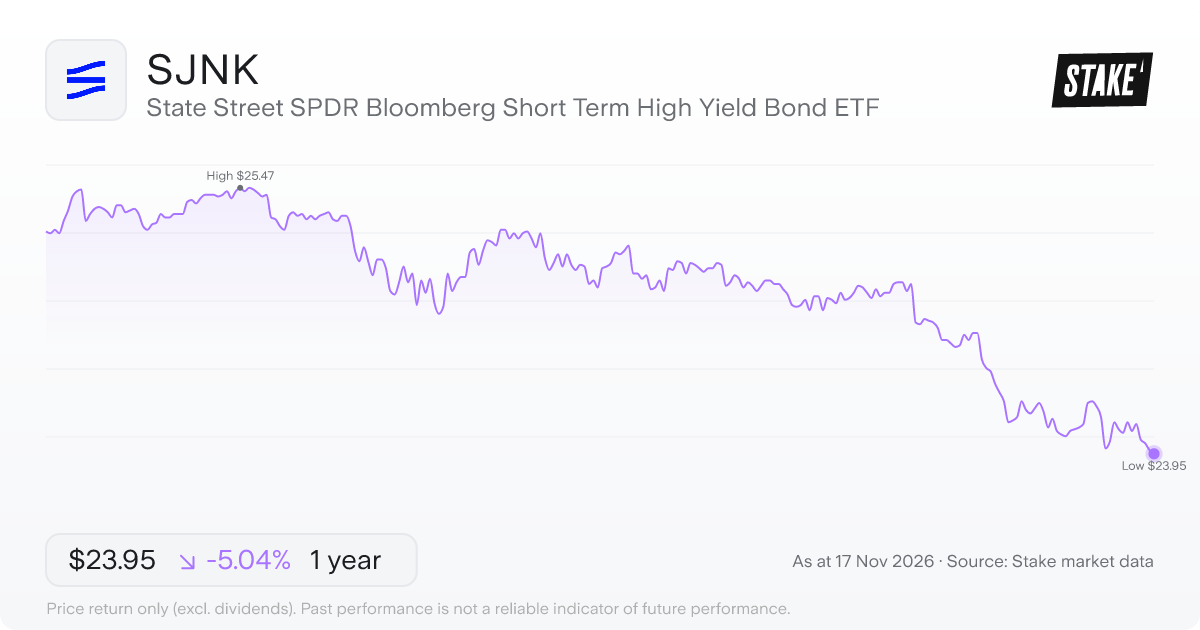
Price: US$23.95 · Daily: -0.08% · AUM: US$4.31B · MER: 0.40%
State Street SPDR Bloomberg Short Term High Yield Bond ETF ($SJNK) is designed to track the Bloomberg US High Yield 350mn Cash Pay 0-5 Yr 2% Capped Index. That index focuses on US dollar-denominated high yield bonds with maturities of up to five years, with individual issuers capped at a 2% weight.
$SJNK uses a sampling strategy, meaning the fund aims to replicate the index's characteristics without necessarily holding every security in it. The short-term maturity focus means the portfolio is concentrated on the nearer end of the high yield bond curve, which tends to behave differently to longer-dated issues when interest rates move.
8. Xtrackers USD High Yield Corporate Bond ETF ($HYLB)
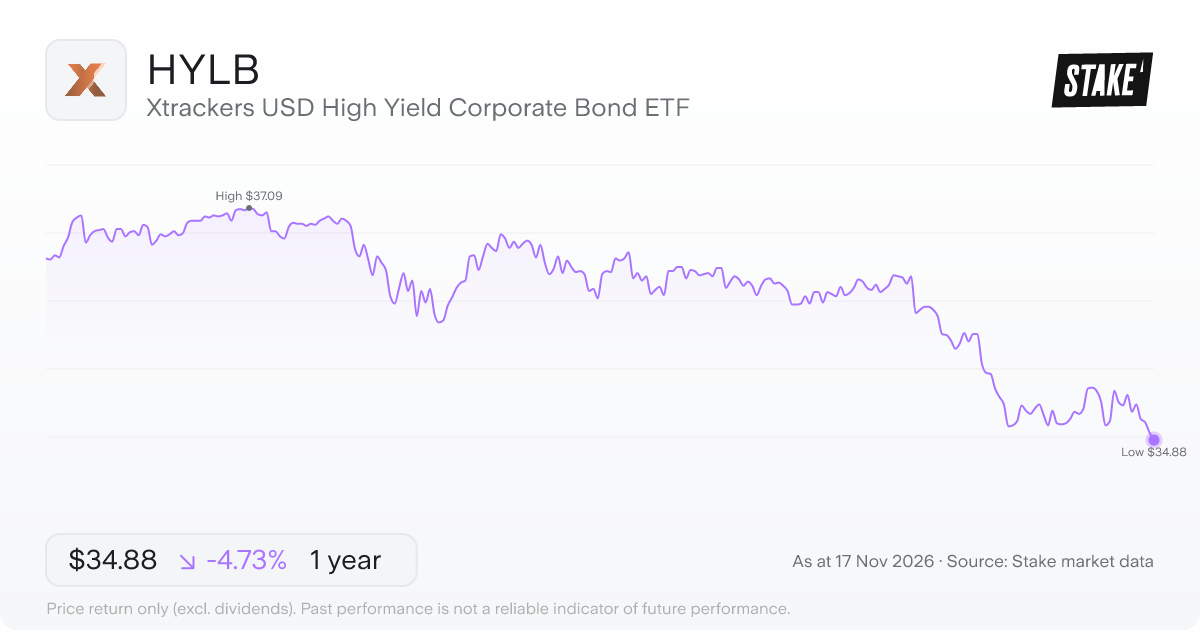
Price: US$34.88 · Daily: -0.2% · AUM: US$3.33B · MER: 0.05%
Xtrackers USD High Yield Corporate Bond ETF ($HYLB) aims to track the Solactive USD High Yield Corporates Total Market Index, which covers U.S. dollar-denominated bonds issued by companies rated below investment grade. The fund is required to keep at least 80% of its net assets in those bonds, so the index exposure is intended to stay fairly direct.
Unlike some funds in this article that focus on floating-rate loans or a specific subset like fallen angels, $HYLB is designed to cover the broader high yield corporate bond market as a whole.
9. VanEck Fallen Angel High Yield Bond ETF ($ANGL)
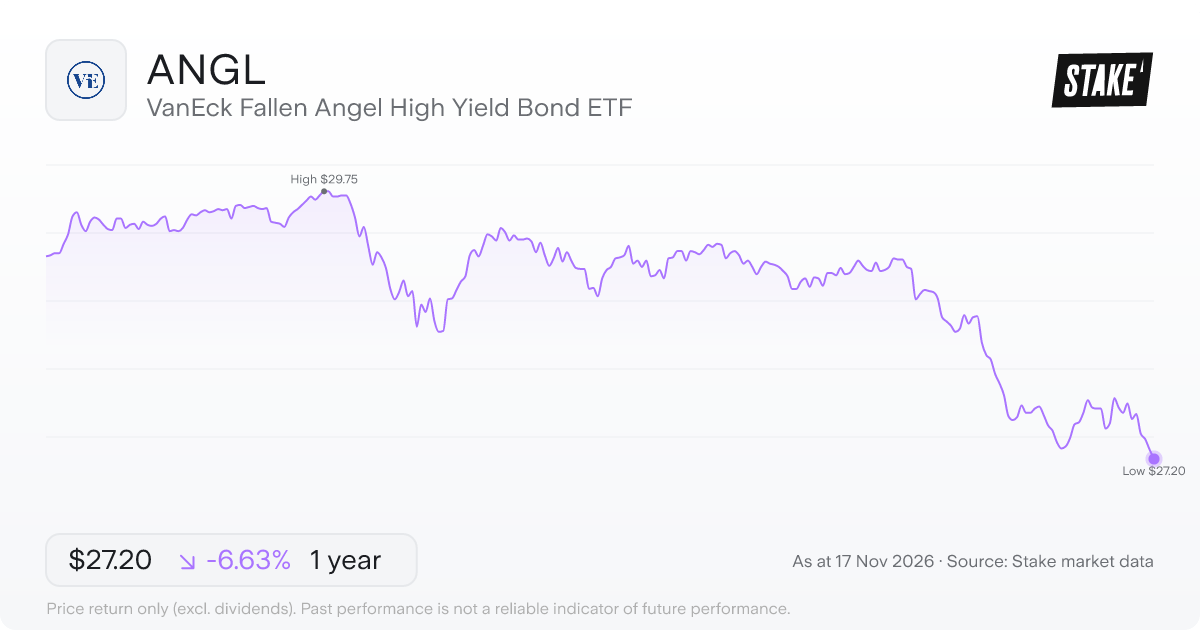
Price: US$27.20 · Daily: -0.3% · AUM: US$2.78B · MER: 0.25%
VanEck Fallen Angel High Yield Bond ETF ($ANGL) aims to replicate the performance of the BofA Merrill Lynch US Fallen Angel High Yield Index. That index holds US dollar-denominated corporate bonds with one thing in common: they were investment grade when first issued, then lost that status after a downgrade.
The 'fallen angel' label refers to that journey – from investment grade to below investment grade. These bonds sit in high yield territory by rating, yet they started life to a higher standard than bonds issued directly into the high yield market. $ANGL is designed to capture that specific slice of the below-investment-grade universe, rather than the broader high yield market as a whole.
10. First Trust Senior Loan Fund ($FTSL)
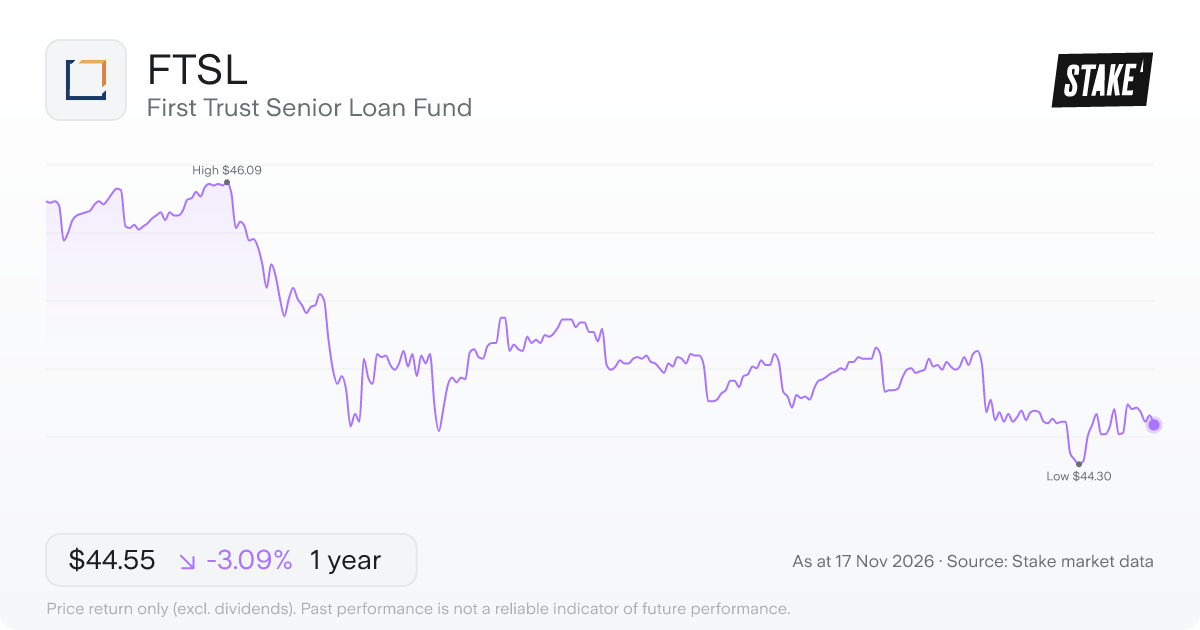
Price: US$44.55 · Daily: -0.1% · AUM: US$2.50B · MER: 0.86%
First lien senior floating rate bank loans rank ahead of other creditors in a borrower's capital structure. First Trust Senior Loan Fund ($FTSL) concentrates on these instruments, with at least 80% of the portfolio intended to stay in them. The floating rate structure means interest payments adjust with benchmark rates rather than staying fixed for the life of the loan.
$FTSL is actively managed, aiming to outperform its benchmark indexes rather than simply replicate them. High current income is the primary objective, with capital preservation as a secondary aim.
➡️ Top 10 U.S.-listed index funds to watch in 2026→
Common questions
How do I invest in U.S. high yield bond ETFs in New Zealand?
All ten funds in this list trade on U.S. exchanges, so you'd access them through a share trading platform that supports U.S. markets. You search the ticker and place an order much as you would for any U.S.-listed stock. Each fund then holds the underlying portfolio of corporate bonds or senior loans, so the asset class sits a step removed from buying and selling individual bonds yourself.
What are the key risks of U.S. high yield bond ETFs?
Some of the key risks include credit risk, interest rate sensitivity, currency exposure and – for the actively managed funds in this list – manager risk. High yield means below investment grade: the companies behind these bonds and loans carry weaker credit profiles, which raises the likelihood of default compared to investment-grade debt. Fixed-rate bond funds also tend to fall in price when rates rise, though the floating-rate loan funds in this list respond to rate moves differently. For NZ investors, movements between the NZD and USD affect what a purchase costs and what proceeds are worth in New Zealand dollars.
How do high yield bond ETFs differ from senior loan ETFs?
High yield bond ETFs hold corporate bonds that typically pay a fixed rate of interest. Senior loan ETFs – including $BKLN, $SRLN and $FTSL in this list – hold bank loans that carry floating interest rates, so the income they generate adjusts as benchmark rates move rather than staying fixed. Senior loans also rank ahead of bonds in the repayment order if a borrower defaults, which is a feature of where the instrument sits in a company's capital structure. Both types carry below-investment-grade credit risk; the distinction is in how income is set and where each instrument ranks in a default scenario.
What are fallen angel bonds?
A fallen angel bond is a corporate bond that held an investment-grade rating when it was first issued but was later downgraded to below investment grade. $ANGL tracks an index made up exclusively of these bonds, which puts it in a different part of the high yield universe from funds that hold bonds originally issued below investment grade. Because fallen angels started life to a higher credit standard, the index captures a specific subset of the below-investment-grade market rather than representing it broadly.
Disclaimer
Past performance is not a reliable indicator of future performance. When you invest, your capital is at risk. You should consider your own investment objectives, financial situation, and particular needs before making an investment decision. The value of your investments can go down as well as up and you may receive back less than your original investment. As always, do your own research and consider seeking appropriate financial advice before investing.
This is not personal financial advice nor a recommendation to invest in the securities listed. Any advice provided by Stake is of general nature only and does not take into account your specific circumstances. Trading and volume data from the Stake investing platform is for reference purposes only, the investment choices of others may not be appropriate for your needs and is not a reliable indicator of performance.
Please refer to hellostake.com/pricing for the fees that apply. When you trade securities priced in another currency, currency conversion fees may apply and movements in the exchange rate may affect your returns.

Stake Desk
The freshest market insights
This article combines AI and human review from our analysts to bring you accurate, informative investing content at speed. For questions or suggestions, contact stakedesk@stake.com.au.
Subscribe
By subscribing, you agree to our Privacy Policy.