
Top 10 U.S. high yield bond ETFs to watch in 2026

'High yield bond ETF' doesn't always mean the fund holds bonds. Some hold floating-rate bank loans instead, which rank above bonds in a borrower's debt stack.
High yield bonds are debt issued by companies with below-investment-grade credit ratings – they pay higher interest rates than investment-grade bonds to reflect a greater chance of default. The funds here differ more than the category name suggests: Invesco Senior Loan ETF ($BKLN) holds floating-rate bank loans rather than bonds, and VanEck Fallen Angel High Yield Bond ETF ($ANGL) tracks only bonds that held an investment-grade rating at issuance before being cut to junk.
How we built this list: We selected these funds based on their industry or investment category and ordered them by assets under management. Prices are updated daily, and the list and supporting content are reviewed roughly every quarter. All data is sourced from Stake. This list isn't a recommendation and isn't ordered by suitability.
ETF Name | Ticker | Share Price | AUM | Expense Ratio | In Watchlists |
|---|---|---|---|---|---|
iShares Broad USD High Yield Corporate Bond ETF | $35.55 | $25.61B | 0.08% | 85 | |
iShares iBoxx $ High Yield Corporate Bond ETF | $76.98 | $16.20B | 0.49% | 254 | |
iShares 0-5 Year High Yield Corporate Bond ETF | $41.06 | $7.62B | 0.29% | 59 | |
State Street SPDR Bloomberg High Yield Bond ETF | $92.39 | $5.54B | 0.40% | 173 | |
Invesco Senior Loan ETF | $20.32 | $6.02B | 0.63% | 35 | |
State Street SPDR Blackstone Senior Loan ETF | $39.93 | $5.38B | 0.70% | 26 | |
State Street SPDR Bloomberg Short Term High Yield Bond ETF | $24.08 | $4.36B | 0.40% | 25 | |
Xtrackers USD High Yield Corporate Bond ETF | $35.08 | $3.17B | 0.05% | 20 | |
VanEck Fallen Angel High Yield Bond ETF | $27.40 | $2.94B | 0.25% | 57 | |
First Trust Senior Loan Fund | $44.37 | $2.47B | 0.86% | 10 |
Past performance is not a reliable indicator of future performance.
Source: Stake market data. Figures in US$. Data updated as of 21 October 2026.
✅ Learn more: Top 10 U.S.-listed bond ETFs to watch in 2026→
Sign up in minutes and get access to a CHESS-sponsored platform, where you can explore U.S. high-yield bond ETFs and more.
1. iShares Broad USD High Yield Corporate Bond ETF ($USHY)
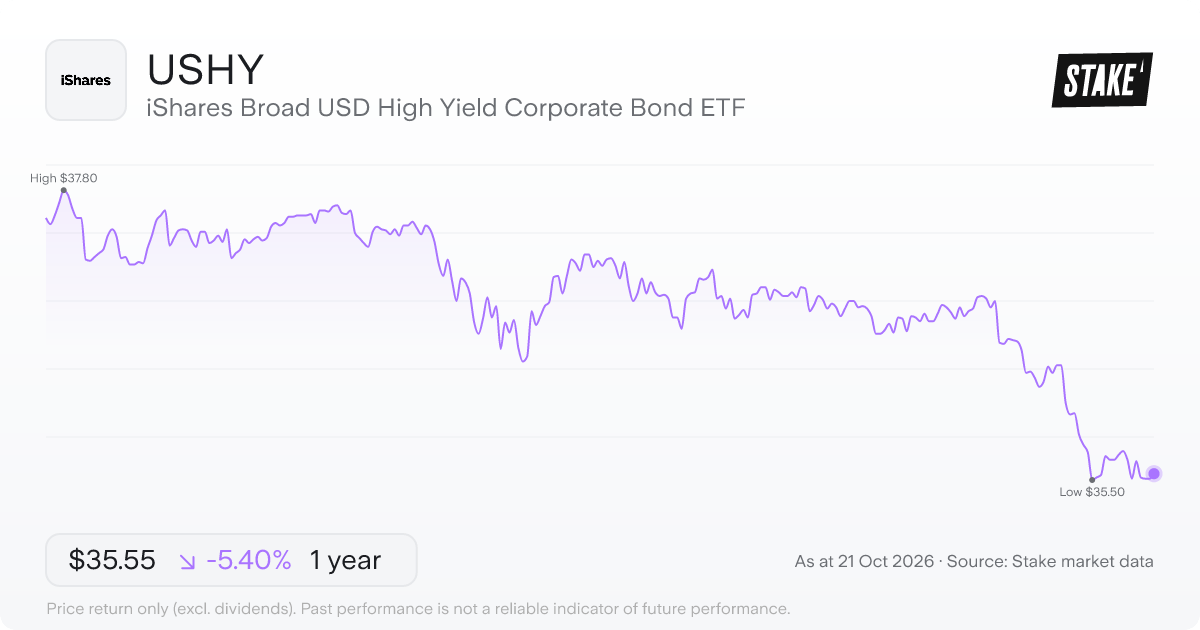
Price: US$35.55 · Daily: 0.1% · AUM: US$25.61B · MER: 0.08%
The iShares Broad USD High Yield Corporate Bond ETF ($USHY) aims to track the BofA Merrill Lynch U.S. High Yield Constrained Index, a benchmark covering dollar-denominated corporate bonds sitting below investment-grade. At least 90% of the fund's assets are held in the index's component securities, according to the fund's mandate.
The underlying index is designed to give broad exposure to the U.S. high yield market rather than a narrow slice of it. That breadth means $USHY holds bonds across a wide range of issuers rather than concentrating in any particular segment of the below-investment-grade universe. As with any high yield strategy, the portfolio carries meaningful credit risk – bonds in this category have higher default rates than investment-grade debt, and that possibility is reflected in their higher coupons.
2. iShares iBoxx $ High Yield Corporate Bond ETF ($HYG)
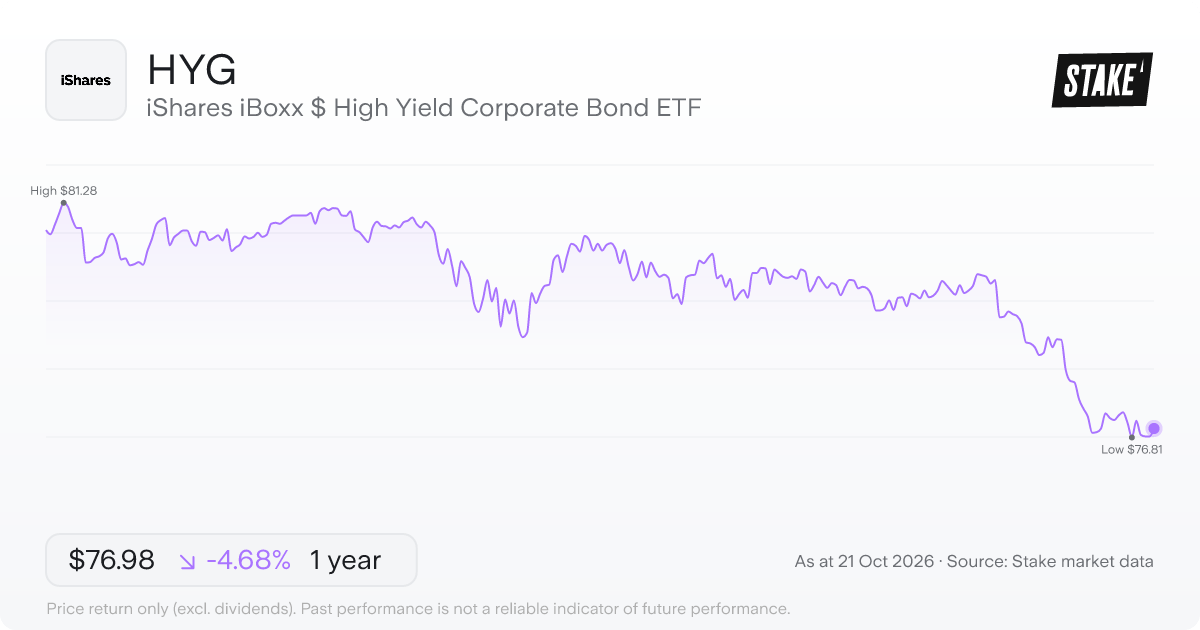
Price: US$76.98 · Daily: 0.2% · AUM: US$16.20B · MER: 0.49%
The iShares iBoxx $ High Yield Corporate Bond ETF ($HYG) is designed to track the Markit iBoxx USD Liquid High Yield Index. That benchmark is made up of US dollar-denominated bonds from companies with below-investment-grade credit ratings. The fund places at least 90% of its assets into the bonds that make up the index.
$HYG may also hold up to 10% in certain futures as part of its replication approach. The 'liquid' qualifier in the index name indicates the benchmark targets a more actively traded portion of the high yield market, rather than the full universe of below-investment-grade bonds on issue.
3. iShares 0-5 Year High Yield Corporate Bond ETF ($SHYG)
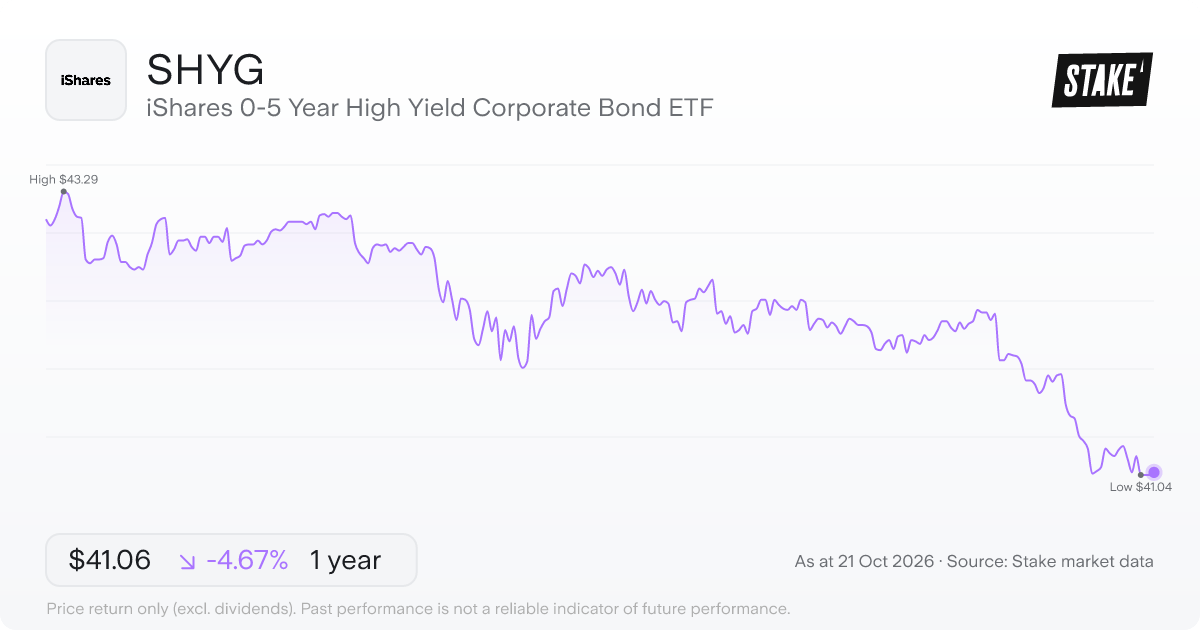
Price: US$41.06 · Daily: 0.05% · AUM: US$7.62B · MER: 0.29%
The iShares 0-5 Year High Yield Corporate Bond ETF ($SHYG) aims to track the Markit iBoxx USD Liquid High Yield 0-5 Index, which covers US dollar-denominated high yield corporate bonds with less than five years remaining until maturity. The short-maturity focus is the defining characteristic here – the index is constructed to capture the junk-rated end of the corporate debt market while excluding longer-dated paper.
Because bond prices tend to be more sensitive to interest rate moves the longer their maturity, a fund concentrated on the shorter end of the curve carries a different interest rate risk profile than a broad high yield fund with no maturity ceiling. The trade-off is that shorter maturities also mean less time to collect coupon payments before bonds are repaid or roll out of the index.
4. State Street SPDR Bloomberg High Yield Bond ETF ($JNK)
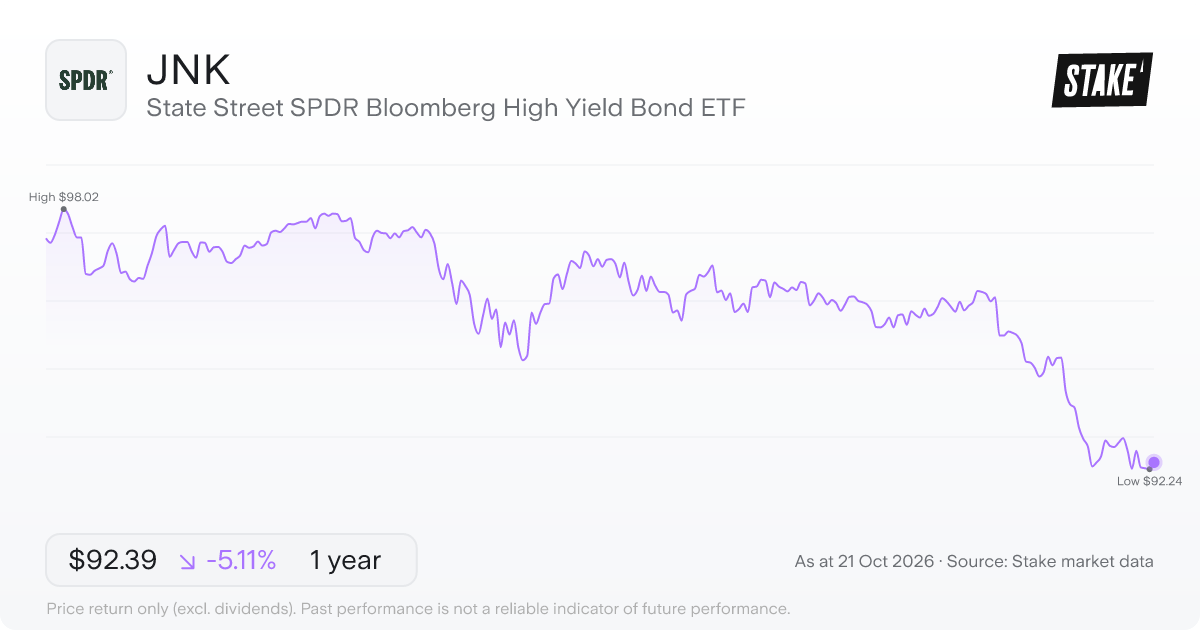
Price: US$92.39 · Daily: 0.2% · AUM: US$5.54B · MER: 0.40%
State Street SPDR Bloomberg High Yield Bond ETF ($JNK) aims to match the price and yield performance of a U.S. high yield corporate bond index, before fees and expenses. High yield bonds are issued by companies with below-investment-grade credit ratings, which means they carry a higher risk of default than investment-grade debt.
The fund's MER is 0.40%. Because the underlying bonds are issued by lower-rated companies, the portfolio carries meaningful credit risk – price movements can be sharper than those of investment-grade bond funds when credit conditions tighten.
5. Invesco Senior Loan ETF ($BKLN)
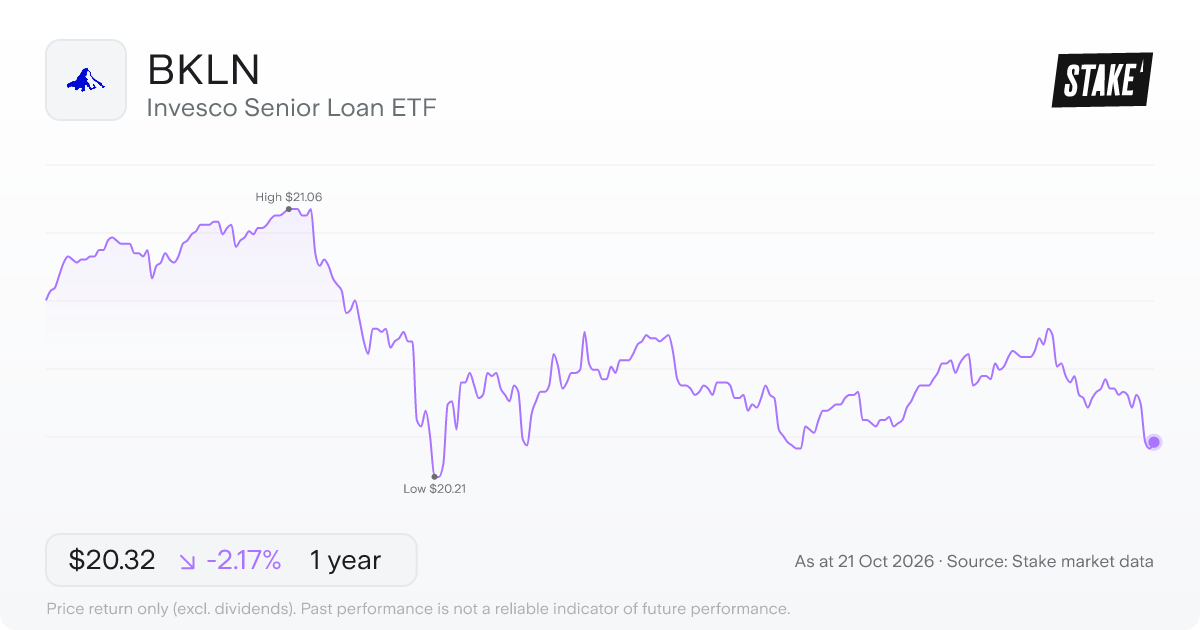
Price: US$20.32 · Daily: 0.10% · AUM: US$6.02B · MER: 0.63%
Invesco Senior Loan ETF ($BKLN) is designed to track the S&P/LSTA U.S. Leveraged Loan 100 Index, which covers a segment of the credit market that works differently from the bond funds elsewhere in this article. The fund aims to hold at least 80% of its assets in bank loans – debt instruments that sit higher in a company's capital structure than bonds, meaning lenders are typically repaid first if a borrower runs into trouble.
Bank loans usually carry floating interest rates, so the income they generate tends to move with prevailing rates rather than staying fixed. That mechanic shapes how $BKLN behaves relative to traditional high yield bond funds, where fixed coupon payments are locked in at issuance.
Join 1M+ on Stake
Effortless investing in U.S. shares & ETFs
6. State Street SPDR Blackstone Senior Loan ETF ($SRLN)
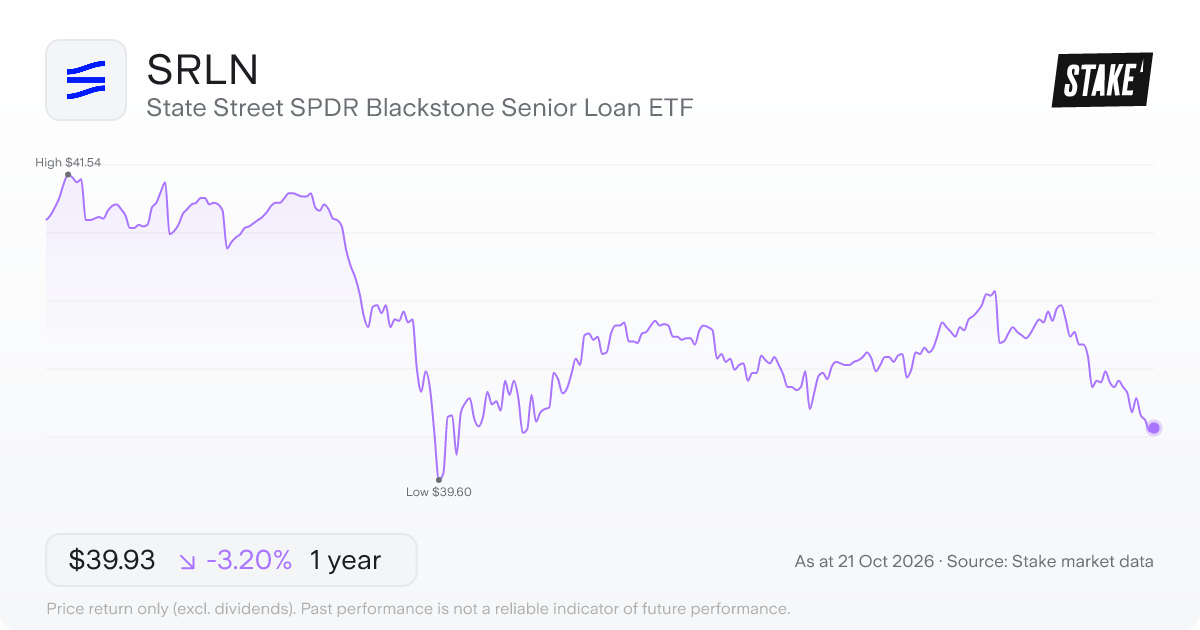
Price: US$39.93 · Daily: 0.05% · AUM: US$5.38B · MER: 0.70%
State Street SPDR Blackstone Senior Loan ETF ($SRLN) is actively managed, aiming to outperform the Morningstar LSTA US Leveraged Loan Index rather than simply track it. The fund's mandate requires at least 80% of assets be held in first lien senior secured floating rate bank loans. First lien means these instruments sit at the top of a borrower's debt stack, ahead of other creditors. The floating rate structure means the interest each loan pays adjusts as benchmark rates move.
7. State Street SPDR Bloomberg Short Term High Yield Bond ETF ($SJNK)
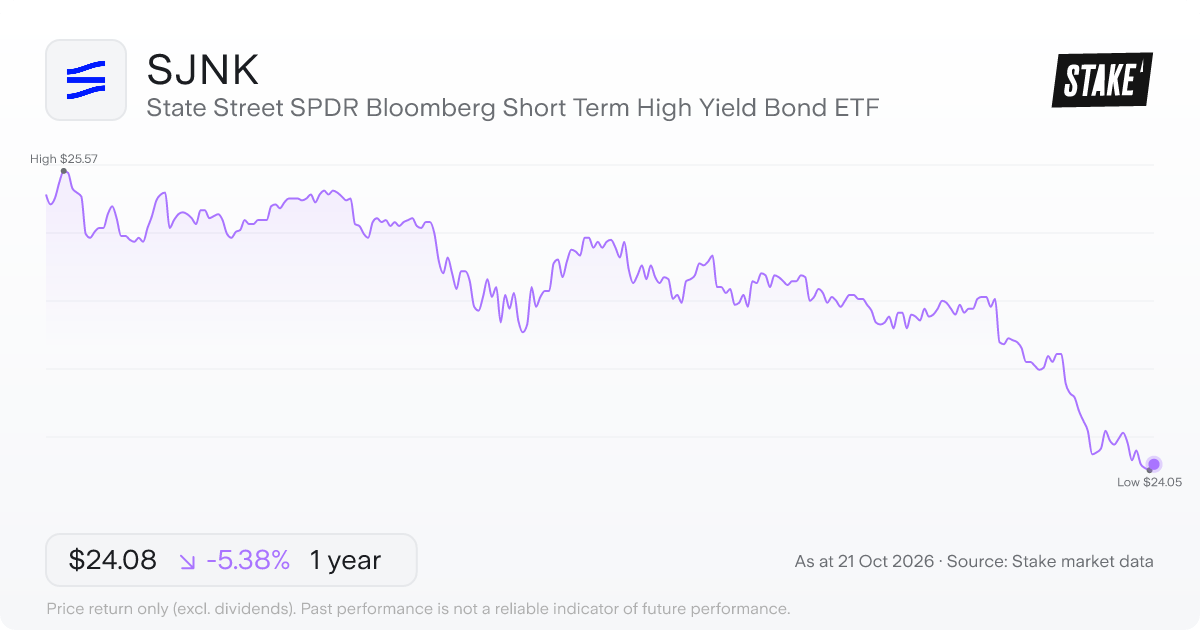
Price: US$24.08 · Daily: 0.1% · AUM: US$4.36B · MER: 0.40%
State Street SPDR Bloomberg Short Term High Yield Bond ETF ($SJNK) aims to track the Bloomberg US High Yield 350mn Cash Pay 0-5 Yr 2% Capped Index, a benchmark covering below-investment-grade, cash-paying bonds with maturities of up to five years. The 2% issuer cap means no single company can make up more than 2% of the index. Rather than buying every bond the index contains, the fund uses a sampling approach – holding a representative selection designed to mirror the index's overall characteristics.
8. Xtrackers USD High Yield Corporate Bond ETF ($HYLB)
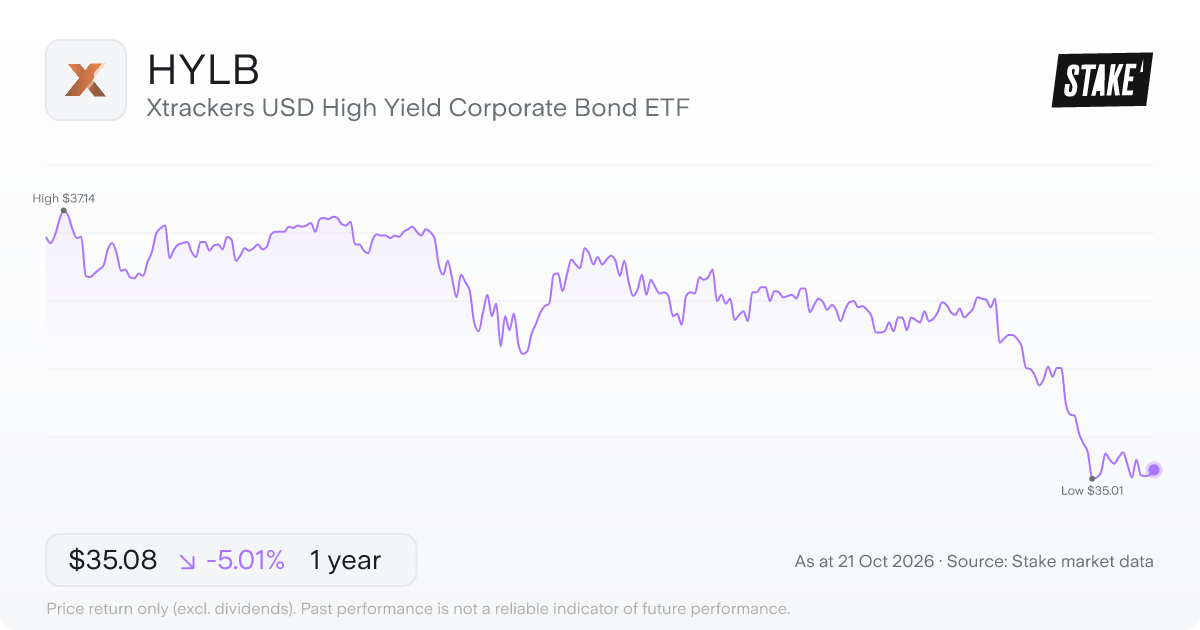
Price: US$35.08 · Daily: 0.1% · AUM: US$3.17B · MER: 0.05%
Xtrackers USD High Yield Corporate Bond ETF ($HYLB) aims to track the Solactive USD High Yield Corporates Total Market Index, which covers U.S. dollar-denominated bonds issued by companies rated below investment grade. The fund is designed to put at least 80% of its net assets into those bonds, according to its mandate.
The 'total market' framing in the index name matters: the index is intended to capture the high yield corporate bond market broadly rather than filtering by sector, maturity band, or issuer origin. That means the portfolio is designed to move broadly in line with the overall U.S. high yield bond market.
9. VanEck Fallen Angel High Yield Bond ETF ($ANGL)
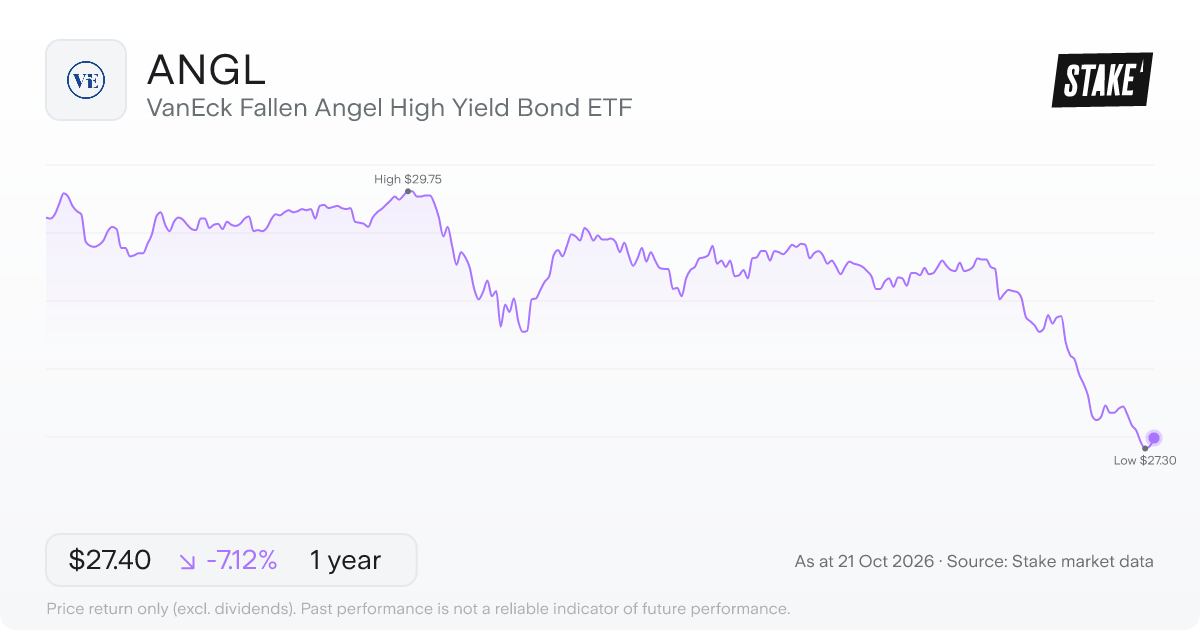
Price: US$27.40 · Daily: 0.3% · AUM: US$2.94B · MER: 0.25%
VanEck Fallen Angel High Yield Bond ETF ($ANGL) aims to replicate the performance of the BofA Merrill Lynch US Fallen Angel High Yield Index. That index holds US dollar-denominated corporate bonds that carried an investment-grade credit rating when they were first issued. The 'fallen angel' label applies when a company's rating is later cut below investment grade, pushing those bonds into high yield territory.
The index composition shifts over time as bonds are downgraded in, or exit through upgrades and maturities. That means $ANGL holds debt from companies that originally borrowed at investment-grade terms – a different starting point from high yield bonds issued as below-investment-grade from day one.
10. First Trust Senior Loan Fund ($FTSL)
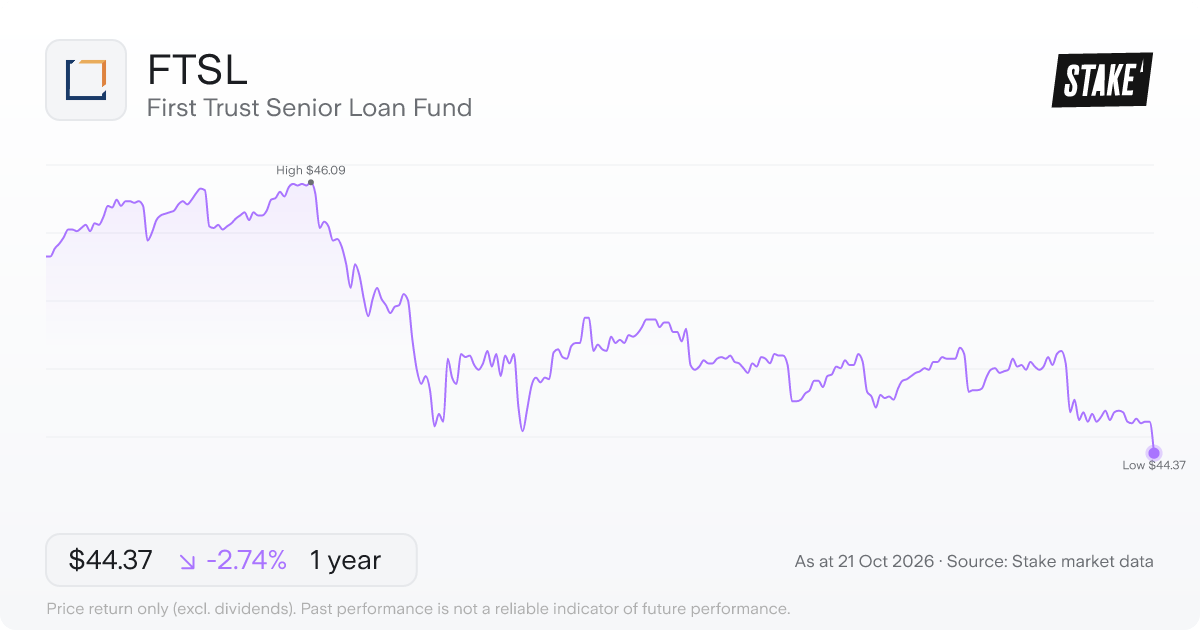
Price: US$44.37 · Daily: -0.4% · AUM: US$2.47B · MER: 0.86%
First Trust Senior Loan Fund ($FTSL) holds first lien senior floating rate bank loans – debt issued to companies and sitting at the top of the repayment queue if a borrower runs into trouble. Unlike fixed-rate bonds, these loans carry interest rates that adjust with prevailing benchmark rates, so coupon payments move rather than stay locked in place.
$FTSL is actively managed. The fund aims to outperform both a primary and a secondary index, rather than simply replicate one. At least 80% of its net assets stay in these senior loans, according to the fund's mandate.
That active approach comes at a cost – the MER is 0.86%. The fund's primary objective is high current income, with capital preservation sitting as a secondary goal.
➡️ Top 10 U.S.-listed index funds to watch in 2026→
Common questions
How can Australian investors access US high yield bond ETFs?
Every fund in this list trades on U.S. exchanges, so you'll need a platform with access to U.S. markets to buy them. All purchases settle in USD, which means your returns move with both the bond market and the AUD/USD exchange rate. There are no ASX-listed equivalents among the ten funds here.
What are the key risks of high yield bond ETFs?
Credit risk is central to this asset class. High yield bonds are issued by companies rated below investment grade, which means default rates tend to be higher than for investment-grade debt. In periods of economic stress, prices can fall sharply as credit spreads widen sharply. Australian investors in these funds also carry currency risk, since all holdings are denominated in USD.
What's the difference between the high yield bond funds and the senior loan funds in this list?
Three funds here – $BKLN, $SRLN and $FTSL – hold senior loans rather than traditional high yield bonds. Senior loans carry floating interest rates that reset periodically with a reference rate, so the income they pay rises and falls with prevailing rates rather than being fixed at issuance. The remaining funds hold fixed-rate high yield bonds, where the coupon is set at issuance and the bond's price tends to move inversely with interest rates. $SHYG and $SJNK narrow that fixed-rate exposure to bonds with less than five years remaining to maturity, while $ANGL focuses specifically on bonds that were originally rated investment grade but have since been downgraded below that threshold.
How do fees compare across these funds?
MERs in this list range from 0.05% ($HYLB) to 0.86% ($FTSL). The two funds that aim to outperform their benchmarks rather than simply track them – $SRLN and $FTSL – carry the highest fees, at 0.70% and 0.86% respectively. The eight index-tracking funds range from 0.05% ($HYLB) to 0.63% ($BKLN).
More resources
✅ Top 10 ASX bond ETFs to watch in 2026→
Disclaimer
Past performance is not a reliable indicator of future performance. When you invest, your capital is at risk. You should consider your own investment objectives, financial situation, and particular needs before making an investment decision. The value of your investments can go down as well as up and you may receive back less than your original investment. As always, do your own research and consider seeking appropriate financial advice before investing.
This is not personal financial advice nor a recommendation to invest in the securities listed. Any advice provided by Stake is of general nature only and does not take into account your specific circumstances. Trading and volume data from the Stake investing platform is for reference purposes only, the investment choices of others may not be appropriate for your needs and is not a reliable indicator of performance.
Please refer to hellostake.com/pricing for the fees that apply. When you trade securities priced in another currency, currency conversion fees may apply and movements in the exchange rate may affect your returns.

Stake Desk
The freshest market insights
This article combines AI and human review from our analysts to bring you accurate, informative investing content at speed. For questions or suggestions, contact stakedesk@stake.com.au.
Subscribe
By subscribing, you agree to our Privacy Policy.