
Top 10 fashion stocks to watch in 2026

Several of these U.S.-listed stocks are based in France, Spain, Japan and Switzerland. Consumer spending in those home markets shapes their revenues alongside U.S. demand.
Fashion and apparel companies design and sell clothing, footwear and accessories – through their own stores, wholesale partners and online. The ten stocks in this list run from luxury conglomerates like LVMH Moet Hennessy Louis Vuitton SE ($LVMUY), which houses brands including Louis Vuitton and Givenchy, to performance-focused labels like lululemon athletica ($LULU) and On Holding ($ONON).
How we built this list: We selected these companies based on their industry and ordered them by market capitalisation. Prices are updated daily, and the list and supporting content are reviewed roughly every quarter. All data is sourced from Stake. This list isn't a recommendation and isn't ordered by suitability.
Company Name | Ticker | Share Price | Market Cap | In Watchlists |
|---|---|---|---|---|
Lvmh Moet Hennessy Louis Vuitton SE | $85.83 | $212.43B | 2659 | |
Industria de Diseno Textil SA | $15.89 | $198.31B | 45 | |
FAST RETAILING CO., LTD. | $48.41 | $154.04B | 167 | |
Tapestry | $110.37 | $21.90B | 586 | |
Ralph Lauren | $377.40 | $22.76B | 862 | |
Deckers Outdoor | $81.09 | $11.04B | 550 | |
Lululemon | $99.01 | $11.52B | 5187 | |
On Holding | $32.51 | $11.36B | 946 | |
Levi Strauss | $21.13 | $8.19B | 439 | |
Gap | $22.32 | $8.05B | 833 |
Past performance is not a reliable indicator of future performance.
Source: Stake market data. Figures in US$. Data updated as of 23 October 2026.
✅ Learn more: Top 10 e-commerce stocks to watch in 2026→
Sign up in minutes and get access to a CHESS-sponsored platform, where you can explore Fashion stocks and more.
1. Lvmh Moet Hennessy Louis Vuitton SE ($LVMUY)
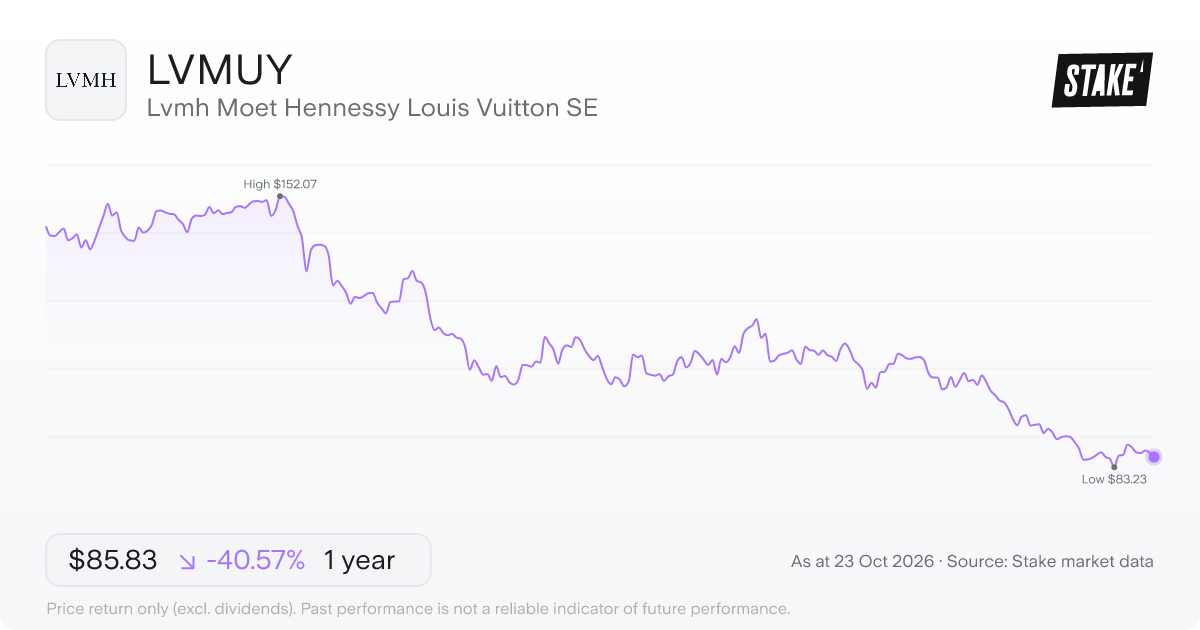
Price: US$85.83 · Daily: -1.3% · Market cap: US$212.43B · Sector: Consumer Discretionary · Industry: Textiles & Apparel
LVMH Moët Hennessy Louis Vuitton SE ($LVMUY) is a France-based luxury goods group led by CEO Bernard Arnault. Its fashion and leather goods segment covers brands including Louis Vuitton, Celine, Fendi, Givenchy, Marc Jacobs and Kenzo. The watches and jewellery segment includes Bulgari, Tiffany, TAG Heuer, Hublot and Chaumet. Perfumes and cosmetics runs labels including Christian Dior, Guerlain, Loewe and Acqua di Parma.
$LVMUY also operates a wines and spirits division, which takes in champagne houses Moët & Chandon, Veuve Clicquot Ponsardin and Dom Pérignon, along with wines from Château d'Yquem and spirits including Glenmorangie whisky.
2. Industria de Diseno Textil SA ($IDEXY)
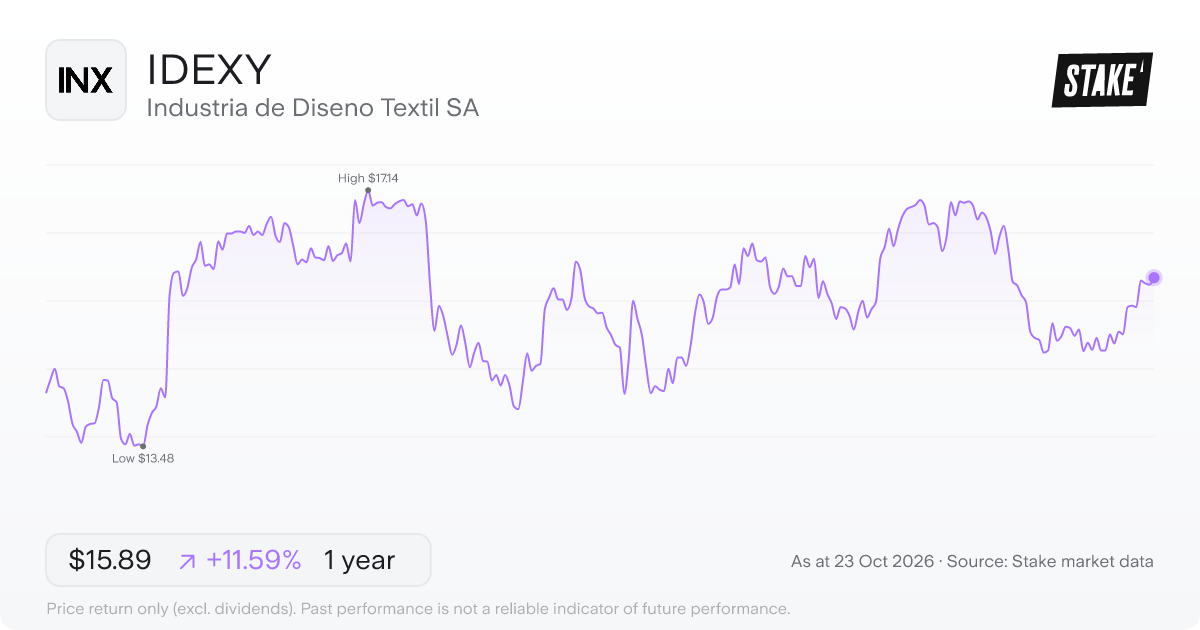
Price: US$15.89 · Daily: 0.6% · Market cap: US$198.31B · Sector: Consumer Discretionary · Industry: Specialty Retail
Industria de Diseno Textil SA ($IDEXY) – better known as Inditex – is the Spain-based group behind some of the most recognisable names in everyday fashion. Its eight brands include Zara, Pull&Bear, Massimo Dutti, Bershka, Stradivarius, Oysho, Zara Home and Uterque, covering everything from fast-fashion staples to home textiles.
The business covers the full chain: design, manufacturing, distribution and retail, all under one roof. The company sells across approximately 215 markets through its online platform and through physical stores in 95 countries.
Zara is by far the largest segment, anchoring the group's fashion and homeware offer. Bershka handles the younger-skewing end of the market. With 163,047 employees worldwide and Oscar Garcia Maceiras Gonzalez as CEO, $IDEXY is a substantial operation by any measure. Controlling shareholder Pontegadea Inversiones SL holds the majority stake, giving the founding family a long-term grip on the business.
3. FAST RETAILING CO., LTD. ($FRCOY)
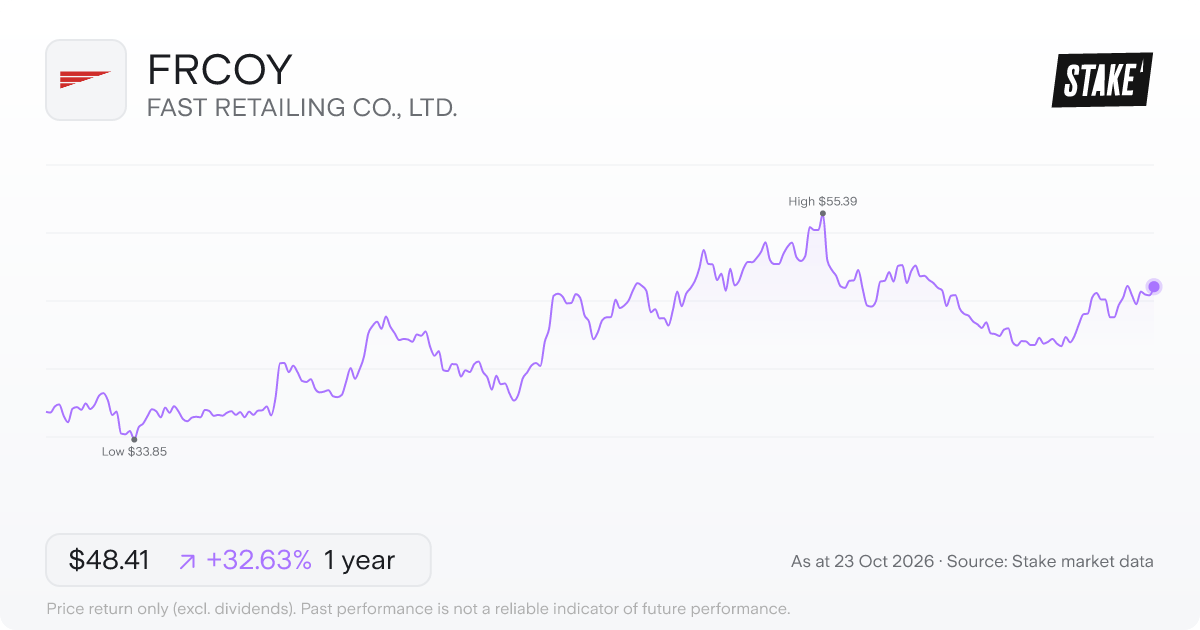
Price: US$48.41 · Daily: 1.7% · Market cap: US$154.04B · Sector: Consumer Discretionary · Industry: Specialty Retail
Fast Retailing Co., Ltd. ($FRCOY) is the holding company behind UNIQLO, the Japanese casual clothing brand with stores across Japan and a growing network of overseas markets. A second label, GU, sells casual clothing in Japan and select international locations under its own distinct identity. The Global Brand segment adds Theory, PLST, Comptoir Des Cotonniers and Princesse Tam.Tam to the portfolio – each designing and selling clothing across Japan and overseas markets.
Tadashi Yanai leads the company, which employs 59,522 people across its retail and corporate operations.
4. Tapestry ($TPR)
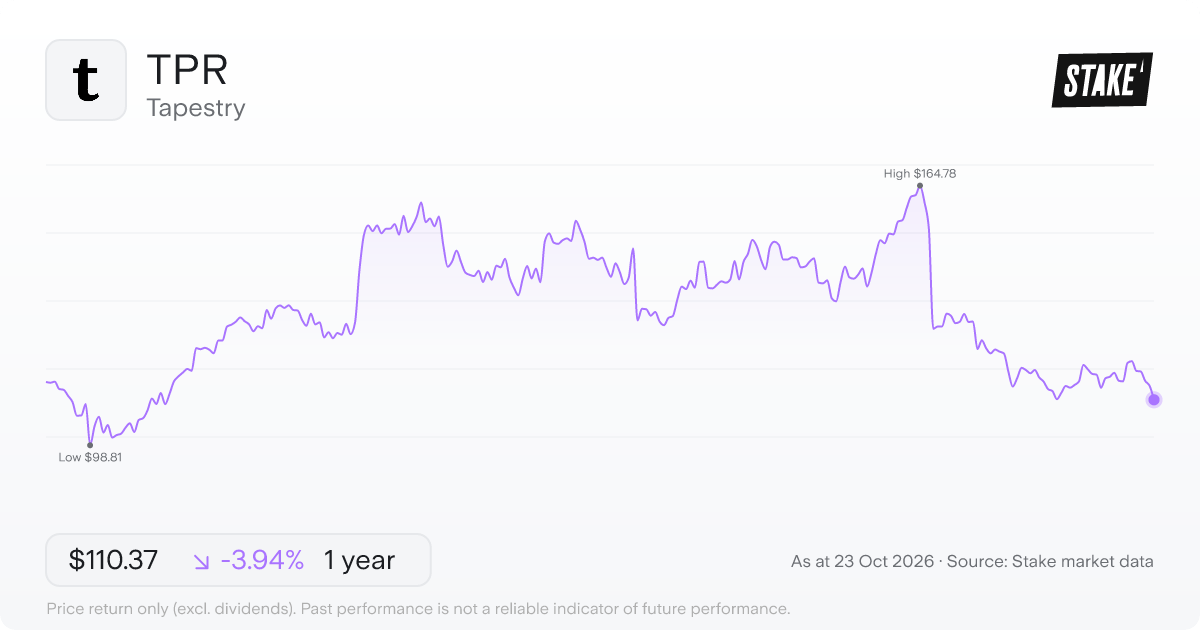
Price: US$110.37 · Daily: -3.1% · Market cap: US$21.90B · Sector: Consumer Discretionary · Industry: Specialty Retail
Behind both Coach and Kate Spade New York sits a single parent company. Tapestry, Inc. ($TPR) houses the two brands, with CEO Joanne Crevoiserat leading a team of 16,800 people. Coach focuses on accessories and lifestyle collections. Kate Spade New York covers a broader range – handbags, ready-to-wear, jewellery, footwear, gifts and home décor – sold through $TPR's own stores, branded websites and wholesale partners.
5. Ralph Lauren ($RL)
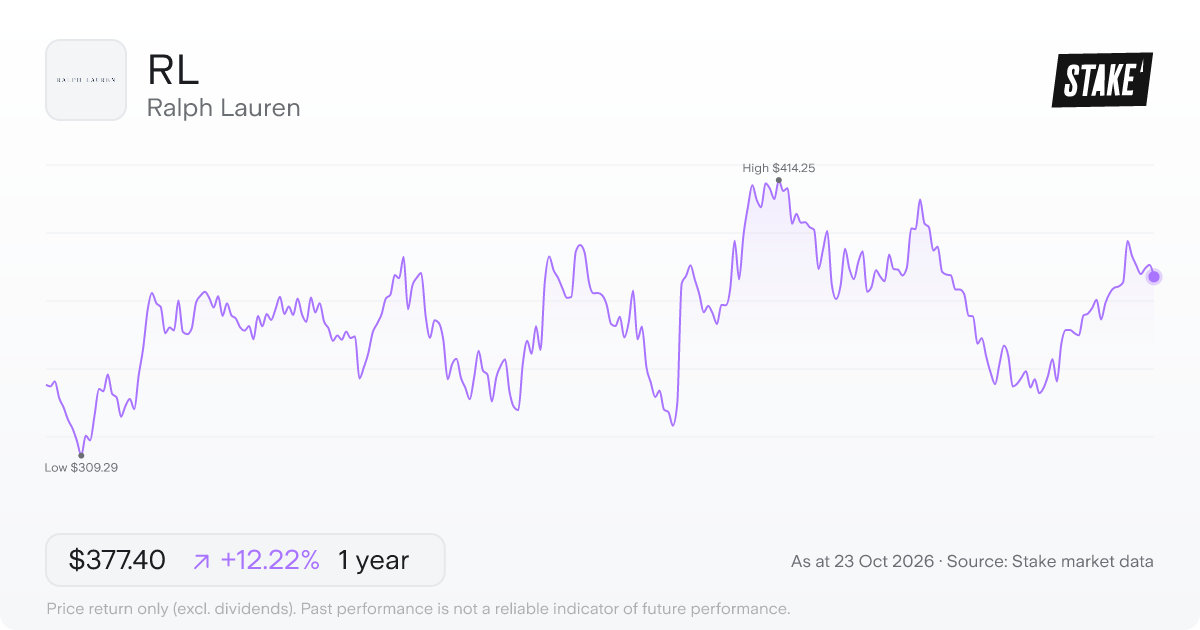
Price: US$377.40 · Daily: -1.2% · Market cap: US$22.76B · Sector: Consumer Discretionary · Industry: Textiles & Apparel
Ralph Lauren Corporation ($RL) sits at the point where apparel, accessories, home goods, fragrances and hospitality all meet under one roof. Chief executive Patrice Louvet oversees a portfolio that runs from the everyday Polo Ralph Lauren line through to the tailored pieces under Ralph Lauren Purple Label, with 15,600 employees spread across North America, Europe and Asia.
The hospitality side is worth a mention – The Polo Bar in New York City and RL Restaurant in Chicago extend the brand into dining. Bed and bath lines, lighting, floor coverings and giftware round out a home collection that sits alongside the clothing and footwear.
Join 1M+ on Stake
Effortless investing in U.S. shares & ETFs
6. Deckers Outdoor ($DECK)
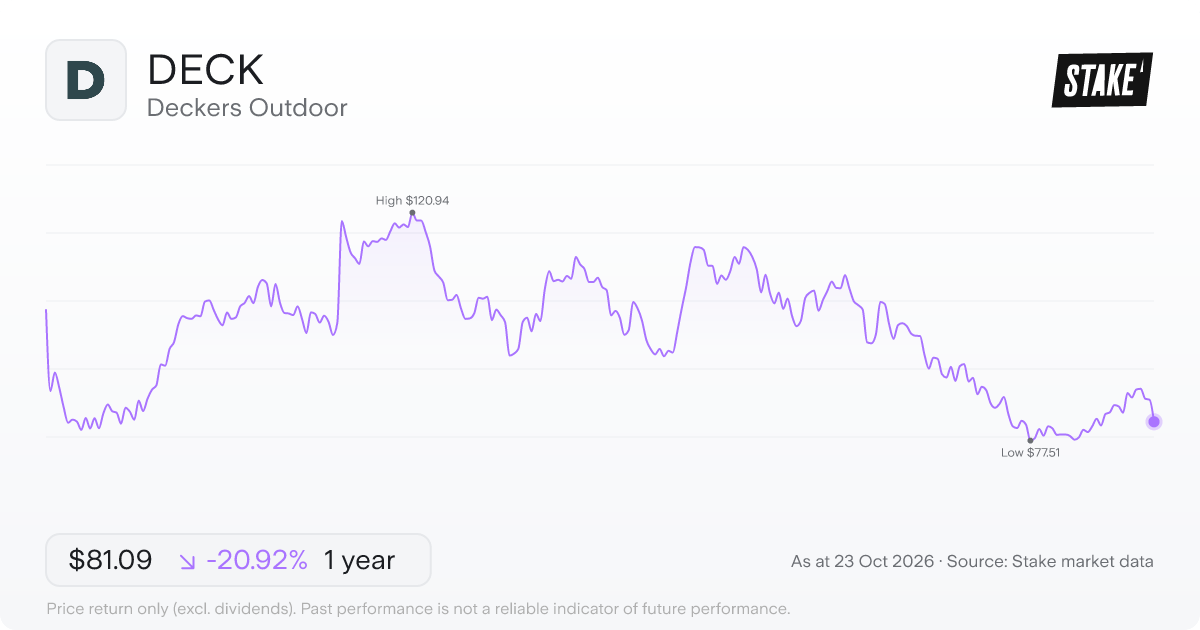
Price: US$81.09 · Daily: -4.9% · Market cap: US$11.04B · Sector: Consumer Discretionary · Industry: Textiles & Apparel
Deckers Outdoor ($DECK) manages four footwear brands, each serving a different corner of the market. UGG centres on premium lifestyle boots and apparel, while HOKA targets runners, hikers and fitness enthusiasts with performance-focused shoes. Teva focuses on sandals and outdoor footwear; Koolaburra takes a more casual direction with plush-material styles. $DECK reaches buyers through retailers and international distributors, with Stefano Caroti as CEO.
7. Lululemon ($LULU)
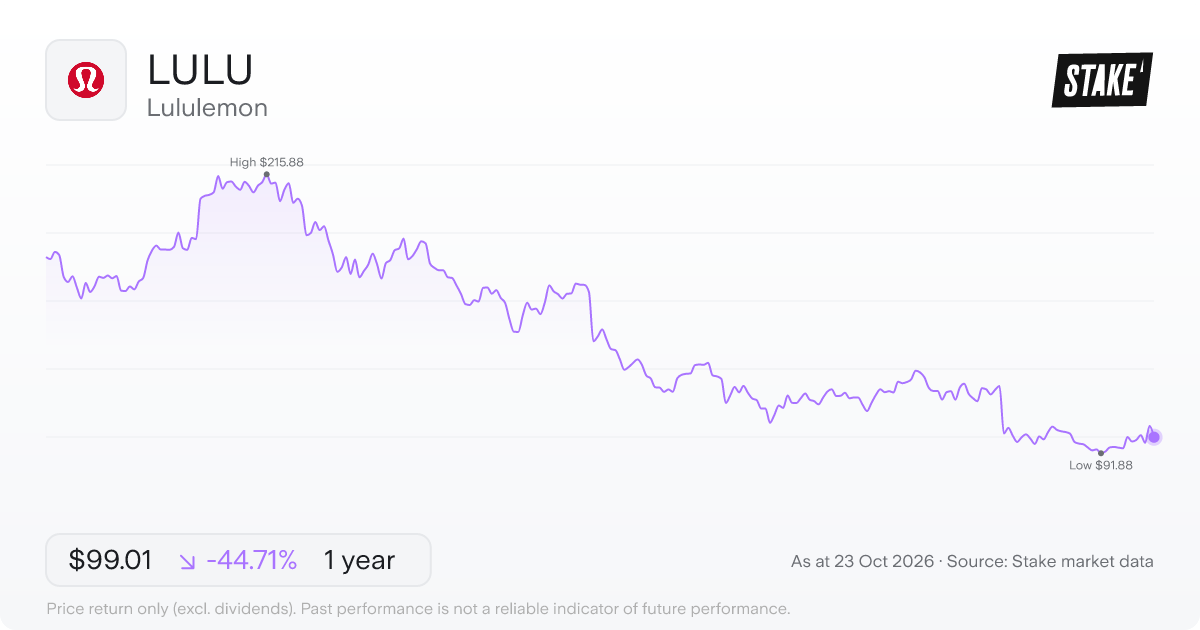
Price: US$99.01 · Daily: -4.9% · Market cap: US$11.52B · Sector: Consumer Discretionary · Industry: Textiles & Apparel
lululemon athletica ($LULU) designs and sells technical athletic apparel, footwear and accessories under a single brand. The range includes shorts, tops and jackets built for yoga, running and training, alongside fitness-inspired accessories and lifestyle apparel.
$LULU sells through company-operated stores, e-commerce, wholesale and outlet channels, with markets across the Americas, China Mainland, Asia Pacific and Europe and the Middle East. The company employs 39,000 people across those operations.
8. On Holding ($ONON)
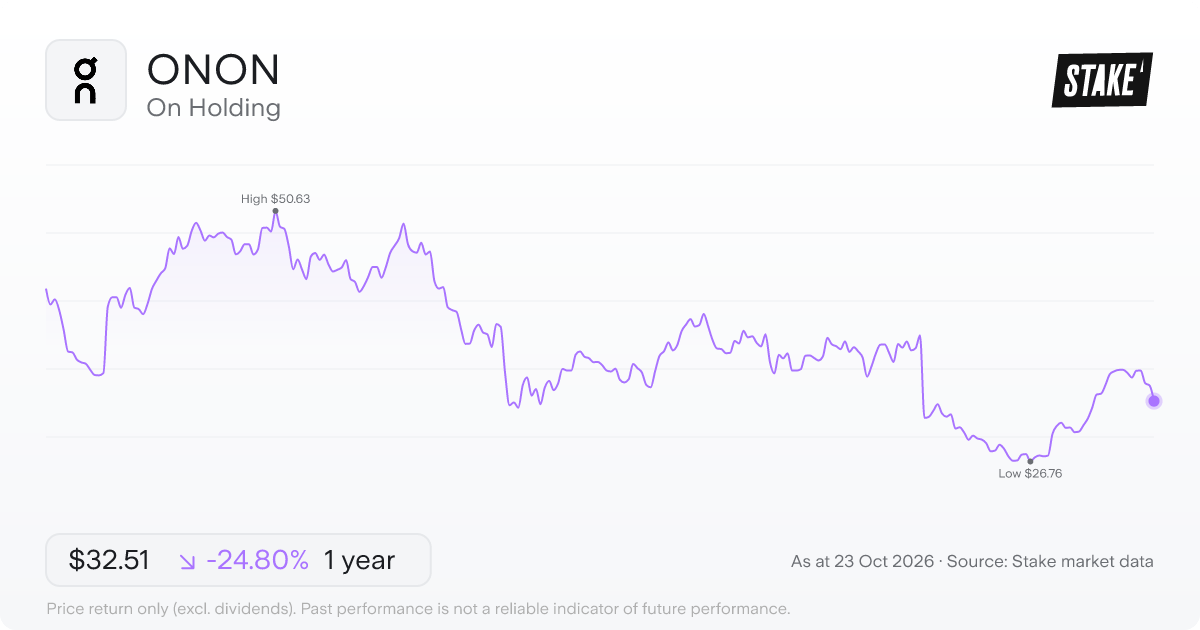
Price: US$32.51 · Daily: -4.4% · Market cap: US$11.36B · Sector: Consumer Discretionary · Industry: Textiles & Apparel
On Holding ($ONON) makes performance running shoes and sports apparel, selling through its own stores, its website and a network of independent retailers and global distributors. The company is headquartered in Switzerland and employs 3,963 people, with Martin Hoffmann serving as CEO.
$ONON built its profile around a distinctive cushioning design in its footwear, and it has extended that into a broader sports apparel range. It reaches customers both through direct digital channels and through retail partners, which gives the brand a mix of owned and wholesale distribution.
9. Levi Strauss ($LEVI)
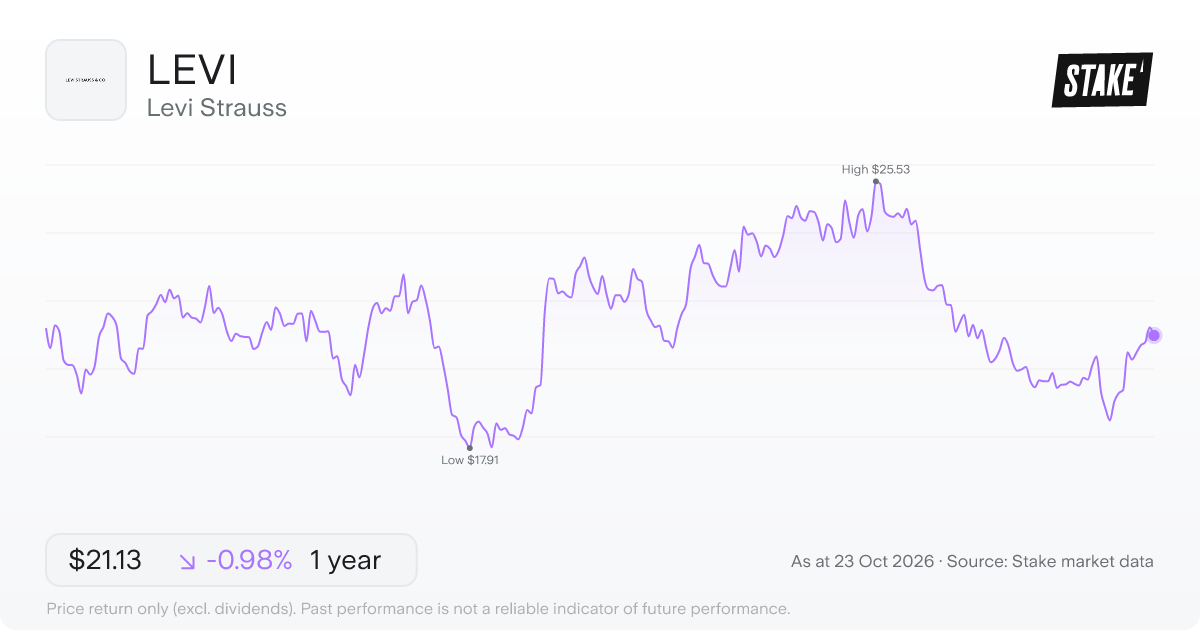
Price: US$21.13 · Daily: -1.1% · Market cap: US$8.19B · Sector: Consumer Discretionary · Industry: Textiles & Apparel
Jeans are at the centre of what Levi Strauss & Co. ($LEVI) makes and sells. The company designs and markets denim, casual wear and accessories for men, women and children under the Levi's, Levi Strauss Signature and Beyond Yoga brands. The product range extends to activewear, tops, dresses, jackets and related accessories.
$LEVI sells in approximately 120 countries, through a mix of chain retailers, department stores, online channels and approximately 3,300 retail stores and shop-in-shops. The business runs across three geographical segments – Americas, Europe and Asia. Michelle Gass serves as CEO, overseeing a workforce of 19,000 people.
10. Gap ($GAP)
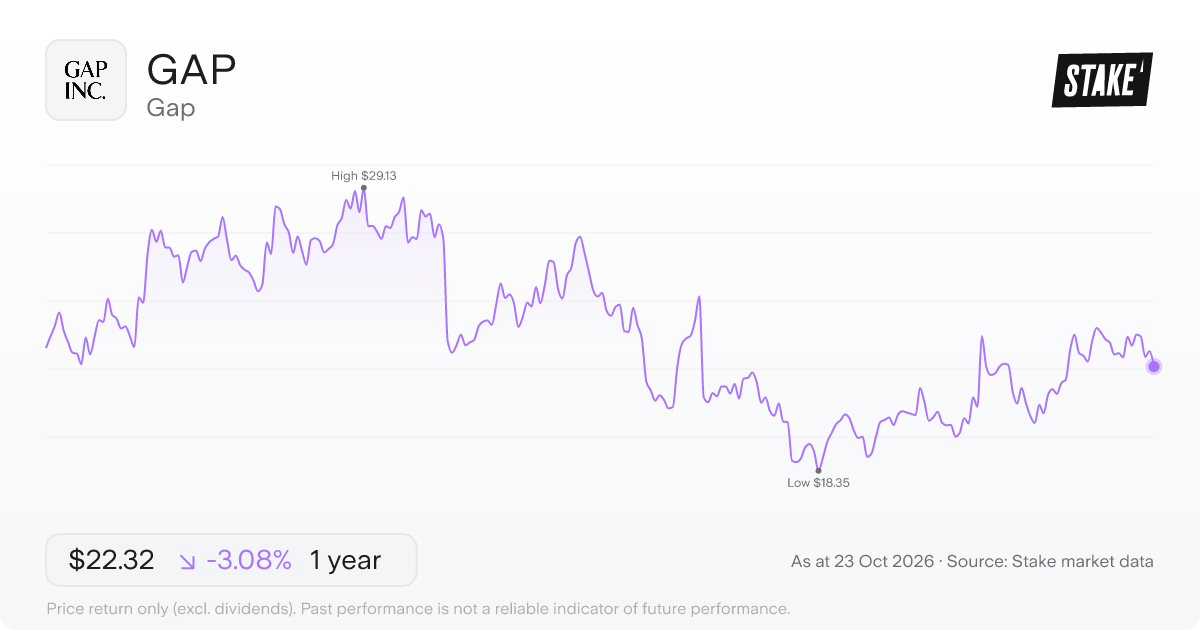
Price: US$22.32 · Daily: -2.6% · Market cap: US$8.05B · Sector: Consumer Discretionary · Industry: Specialty Retail
Gap, Inc. ($GAP) runs four distinct apparel brands under one roof: Old Navy, Gap, Banana Republic and Athleta. Each targets a different part of the market – Old Navy at value-conscious families, Banana Republic at the professional end, and Athleta at women's performance and lifestyle wear.
The company employs around 79,000 people and is led by chief executive Rick Dickson. It sells through Company-operated stores, franchise locations and online, with services that let customers buy online and pick up in store, ship from store, or order in store.
Athleta is the brand with the narrowest focus – premium activewear for women and girls, available in the U.S., Canada and through franchise stores internationally. The Gap brand itself extends into sub-lines including GapKids, babyGap and GapFit, giving it reach across age groups and categories within a single nameplate.
➡️ Top 9 drone stocks to watch in 2026→
Common questions
How can I invest in fashion stocks in Australia?
Every company in this list trades on U.S. exchanges, so you'd need a share trading platform that offers U.S. market access. Once you're set up, you buy shares the same way as any U.S.-listed stock – search the ticker and place an order in USD. Because these stocks are priced in USD, any returns you see in Australian dollars will also reflect how the AUD moves against the USD over that period.
What are the key risks of fashion stocks?
Clothing, footwear and accessories are discretionary purchases, meaning consumers cut them when budgets tighten – so these companies tend to be sensitive to the broader spending cycle. Brand relevance is a persistent risk too: fashion is trend-driven, and a label that loses cultural momentum can see sales soften quickly regardless of its heritage. On the cost side, manufacturing and logistics expenses can squeeze margins, particularly for volume-driven retailers. For Australian investors, there's also the AUD/USD rate to keep in mind, since all ten stocks here are priced in USD.
How do luxury, fast fashion and athletic brands differ from each other?
Luxury houses like LVMH and Ralph Lauren tend to anchor their pricing on heritage and exclusivity, keeping volumes deliberately constrained to protect that positioning. Fast-fashion retailers like Inditex compete on speed and accessibility – turning new designs into store inventory quickly and pricing them within reach of a broad consumer base. Athletic and performance brands such as Lululemon and On Holding occupy a different space, typically priced at a premium but driven more by function and fitness culture than by fashion heritage. Accessories-focused names like Tapestry sit across all of those worlds, with leather goods and handbags often carrying different margin structures than apparel.
More resources
✅ Magnificent 7 stocks: How to invest in 2026→
Disclaimer
Past performance is not a reliable indicator of future performance. When you invest, your capital is at risk. You should consider your own investment objectives, financial situation, and particular needs before making an investment decision. The value of your investments can go down as well as up and you may receive back less than your original investment. As always, do your own research and consider seeking appropriate financial advice before investing.
This is not personal financial advice nor a recommendation to invest in the securities listed. Any advice provided by Stake is of general nature only and does not take into account your specific circumstances. Trading and volume data from the Stake investing platform is for reference purposes only, the investment choices of others may not be appropriate for your needs and is not a reliable indicator of performance.
Please refer to hellostake.com/pricing for the fees that apply. When you trade securities priced in another currency, currency conversion fees may apply and movements in the exchange rate may affect your returns.

Stake Desk
The freshest market insights
This article combines AI and human review from our analysts to bring you accurate, informative investing content at speed. For questions or suggestions, contact stakedesk@stake.com.au.
Subscribe
By subscribing, you agree to our Privacy Policy.